Molecular diagnostic freeze-drying technology, with its advantages of normal temperature storage and transportation, long shelf life and immediate use upon opening, is increasingly widely applied in the IVD field. However, at present, the vast majority of freeze-dried dosage forms present a single white appearance. In actual production and application, especially in scenarios where multiple project are carried out in parallel, high-throughput detection is required, or rapid emergency response is needed, they face new challenges such as confusion and difficulty in identification. The industry urgently needs innovative solutions to address this pain point.
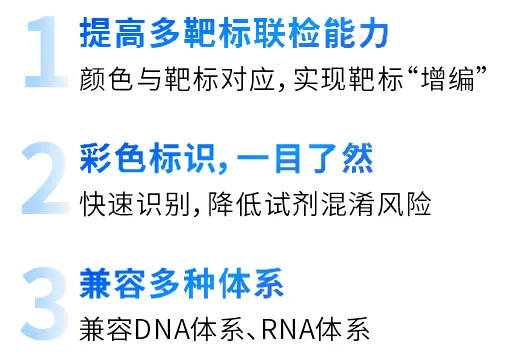
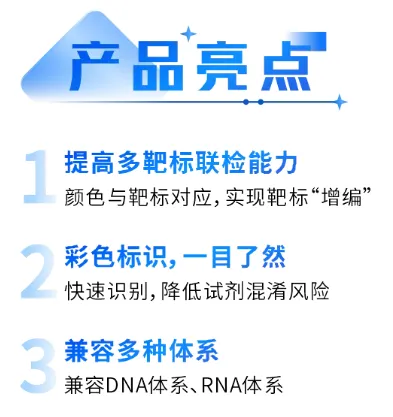
The core of colored freeze-drying lies in the innovative integration of safe, stable and non-interfering pigments while freeze-drying and solidifying molecular diagnostic reagents, endowing freeze-dried reagents with distinct and exclusive colors for different functions/project, achieving visual identification functions and solving the identification problems of traditional freeze-dried reagents during packaging, transportation and use.
Baorui Biotechnology focuses on the core raw materials field of molecular diagnostic reagents and is actively promoting the development and application of multi-color freeze-drying technology. It has successfully established a core technology platform for multi-color freeze-dried microspheres/microcores, providing stable and reliable upstream technical support for innovation in the molecular diagnostic industry.
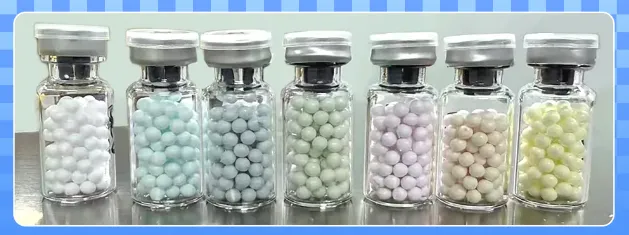


1. The freeze-dried balls have stable performance when leaving the box
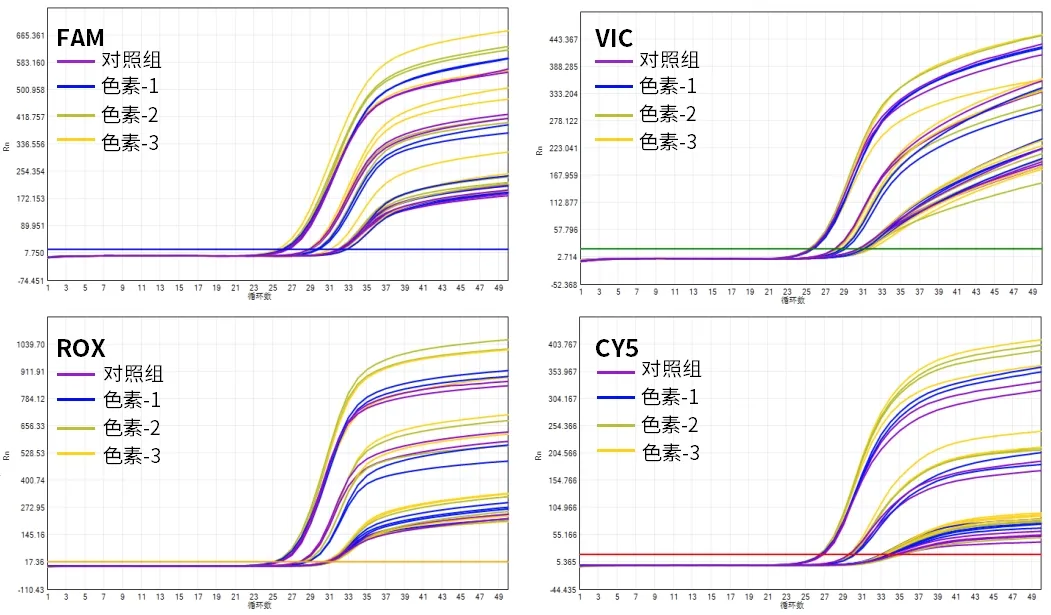
Test 1: Performance verification of the human genome quadruple detection system out of the box

Note: The control group consists of freeze-dried samples without pigments. All samples were vacuum-packed in aluminum foil bags after being taken out of the box.
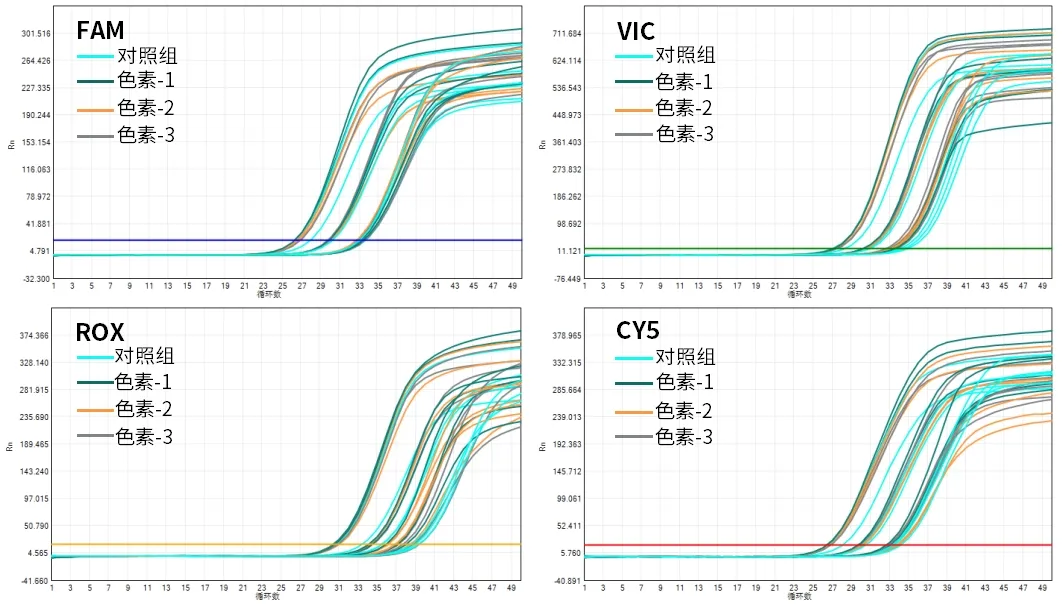
The form of the freeze-dried sample when it is taken out of the box
Test 2: Out-of-box performance verification of the human total RNA quadruple detection system

Note: The control group consists of freeze-dried samples without pigments. All samples were vacuum-packed in aluminum foil bags after being taken out of the box.
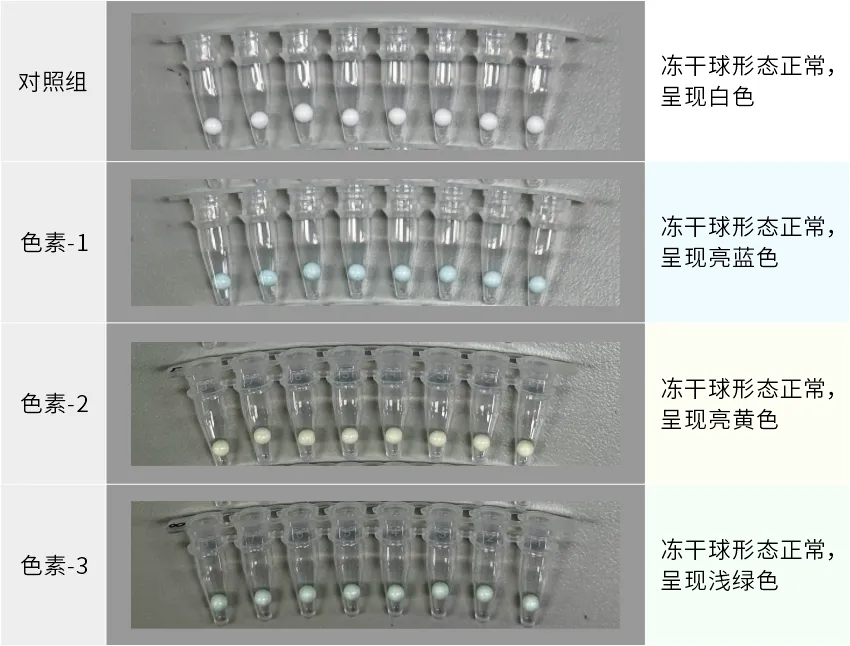
The form of the freeze-dried sample when it is taken out of the box
The performance remains stable after 14 days of acceleration at 55°C
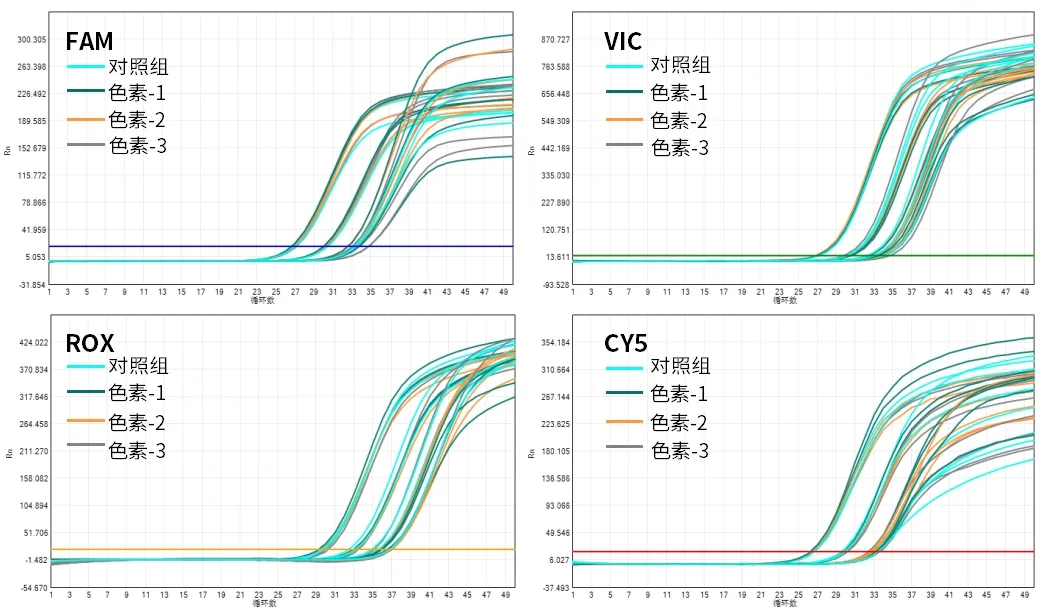
Test 1: Accelerated stability verification of the human genome quadruple detection system at 55℃

Note: The control group consists of freeze-dried samples without pigments. All samples were vacuum-packed in aluminum foil bags after being taken out of the box and then accelerated at 55℃ for 14 days.
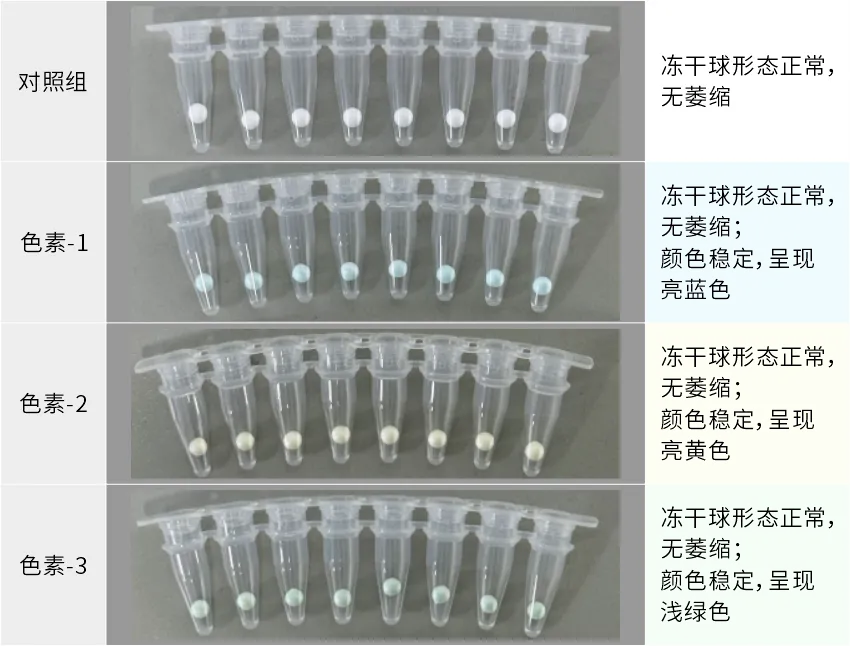
The morphology of the freeze-dried sample was accelerated at 55℃ for 14 days
Test 2: Accelerated stability verification of the human total RNA quadruplex detection system at 55℃

Note: The control group consists of freeze-dried samples without pigments. All samples were vacuum-packed in aluminum foil bags after being taken out of the box and then accelerated at 55℃ for 14 days.
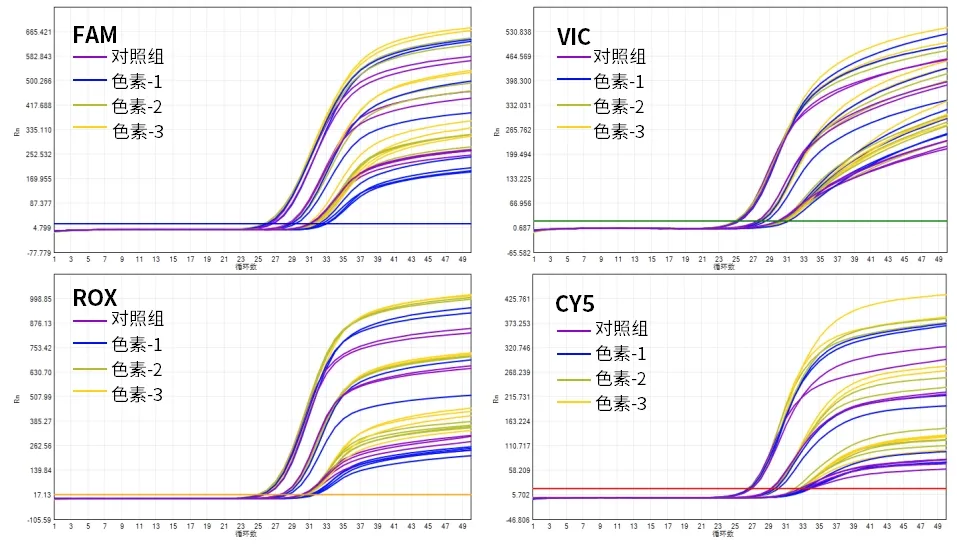
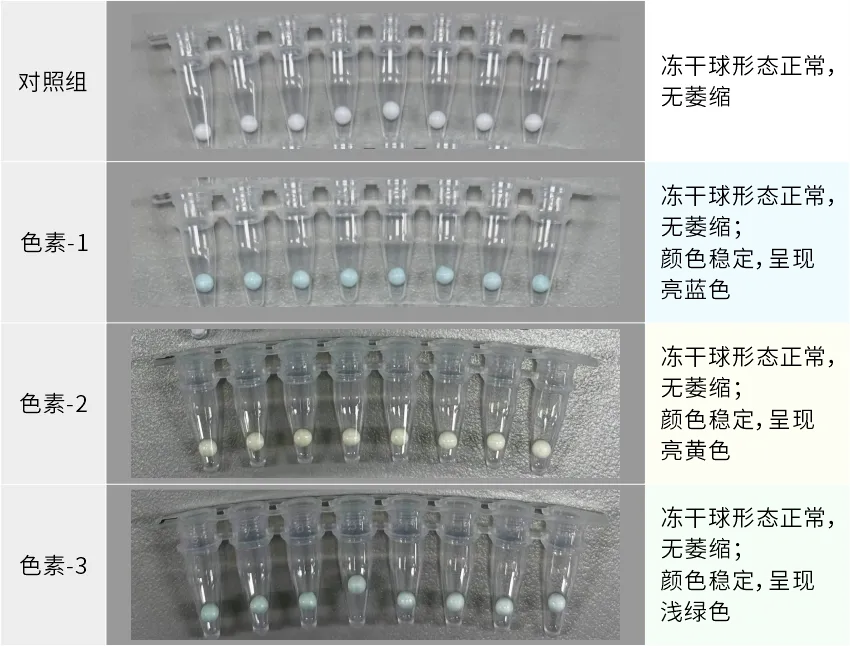
The morphology of the freeze-dried sample was accelerated at 55℃ for 14 days
Color freeze-drying technology breaks through the limitation of the single color of conventional freeze-dried reagents, making complex operations simple and reliable. It eliminates the risk of confusion for the "addition" of test items in freeze-dried multi-target joint detection, and enables molecular detection reagents to be fully visible from the production end to the detection end.
Whether it is primary medical care, home self-testing, emergency sites, or high-throughput screening, color freeze-drying technology is injecting new impetus into the industry!