Article Source: IVD Learning Notes
Information source: Gene Valley
More than 400 years BC, Hippocrates, the "father of medicine" in ancient Greece, observed that there was a kind of swelling substance in the human body that could grow rapidly. During the process of spreading, this swelling substance would extend many antennae like fingers, resembling crabs. Therefore, he named this disease after the Latin words for crabs, "carcinos" and "carcinoma".
Although cancer was defined very early, it was not until after the Renaissance that people's understanding of it gradually deepened.
The renowned Scottish surgeon John Hunter (1728-1793) once proposed that some cancers could be cured by surgery and described how surgeons decide which cancers to treat with surgery. William Halsted performed the first radical mastectomy to treat breast cancer in 1882. Until the second half of the 20th century, this surgical operation remained the standard procedure for breast cancer.
This article starts with the history of tumor diagnosis and treatment, and sorts out the history of tumor NGS testing including NGS sequencing, allowing everyone to understand the development trajectory of this industry.
A milestone in the development of tumor diagnosis and treatment
The battle between humans and cancer has never ceased. Over time, various treatment methods have gradually developed, including surgical treatment, hormone therapy, radiotherapy, chemotherapy, targeted therapy and immunotherapy.
Chemotherapy drugs have low selectivity for tumor cells and cannot distinguish between tumor cells and normal cells. They will kill both types of cells without mercy and bomb them wantonly. While killing cancer cells, they also damage some normal cells, resulting in an awkward situation of "killing a thousand enemies but losing eight hundred of one's own", and they have significant toxic and side effects.
Targeted therapy, when treating cancer, is like archery, administering medication only to the affected areas without harming the healthy ones. The key to achieving targeted therapy lies in finding the target, which means that the location of the target needs to be identified through genetic testing.
Immunotherapy mainly activates the human body's own immune system, allowing immune cells to kill cancer cells and tumor tissues. It does not directly act on tumor cells or tissues, but activates the body's own immune system, ultimately killing tumor cells. Immunotherapy is not suitable for all patients either and still relies on genetic testing for individualized treatment.
With the continuous deepening of human research on tumors and the continuous development of anti-tumor drugs, the treatment of tumors has entered the stage of precision medicine. Tumors are highly heterogeneous, and there are significant differences among different patients in terms of disease progression, treatment sensitivity, and prognosis. The transformation of tumor diagnosis from traditional morphological typing to molecular typing can achieve "different treatments for the same disease" or "same treatment for different diseases". Genetic testing is conducive to the precise diagnosis, prediction and prognosis of cancer, treatment guidance, recurrence monitoring and drug development, thereby maximizing the benefits for patients.
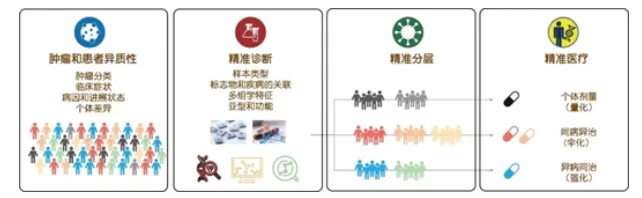
The market for tumor gene testing in China has been increasing year by year. The rapid development of gene testing is inseparable from the continuous development of testing technology, especially the continuous reduction of NGS technology and its cost.
The development history of gene sequencing technology
In 2001
Scientists from six countries spent 11 years and 3 billion US dollars jointly publishing the first working draft of the human genome.
In 2003
The world's earliest reference sequence of the human genome was released, announcing the completion of the Human Genome Project. The completion of human genome sequencing has greatly promoted the development of genetic testing technology.
In 2005
454 Life Sciences launched the first second-generation sequencer, pioneering the second-generation sequencing. The 454 technology is an ultra-high-throughput genomic sequencing system based on pyrosequencing. It is a sequencing by synthesis (SBS) technology that is 100 times faster than traditional Sanger sequencing. 454 Life Sciences sequenced the genome of James Watson, the discoverer of the double helix structure of DNA, using a new-generation sequencer.
In 2006
Solexa, a company based in Cambridge, UK, has launched a high-throughput sequencer based on sequencing by synthesis (SBS) technology. ABI spent 120 million US dollars to acquire the genetic analysis company Agencourt Personal Genomics(APG).
In 2007
Roche acquired 454 Life Science for $155 million in cash and stocks, laying the foundation for Roche to become the leader in the next-generation sequencing market in the following years. Roche completed the genome sequencing of James Watson, the discoverer of the double helix structure, at a cost of one million US dollars. Illumina acquired Solexa for 600 million US dollars, ushering ina new era of next-generation sequencing.
ABI has launched the SOLiD high-throughput sequencer. The SOLiD system is the next-generation sequencing platform with the highest throughput, capable of generating 4 Gb of data per run. In addition, due to its adoption of double-base coding technology, each base is read twice during the sequencing process, which can distinguish sequencing errors and polymorphisms. Therefore, the accuracy of the original data is close to 99.95%, which is higher than that of other new-generation sequencing platforms.
"2008
Illumina announced that it will reduce the cost of human genome sequencing to $100,000. ABI announced that the sequencing cost of the human genome using the SOLiD sequencing platform is less than $60,000.
In 2010
Illumina has launched the HiSeq2000 series sequencers, making long-term plans in terms of sequencing throughput. Jonathan Rothberg, the founder of 454 Life Sciences, established a new technology company, Ion Torrent, and successfully launched the PGM sequencer, which was then the smallest in size and had the lowest detection cost in the world, in 2010.
Ion Torrent was acquired by Life Technologies. And this Life Technologies company was formed by the merger of ABI Corporation and Invitrogen Corporation! Ion Torrent of Life technologies performed well and turned the tables in the NGS competition.
In 2014
Life Technologies was again acquired by Thermo Fisher Scientific Corporation for 13.6 billion US dollars. Thermo Fisher Scientific is capable of mass-producing clinical-grade sequencers and has occupied a certain market share.
In 2016
Roche suffered a heavy blow under the double pressure of Illumina's throughput and price, and reluctantly announced the closure of 454.
"2017
Illumina has reduced the cost of sequencing the human genome to $1,000, being the first to realize the vision of sequencing a human genome for $1,000. As a result, Illumina monopolizes over 80% of the NGS sequencing market. Themo Fisher, which follows closely behind, has a market share of less than 10%, and Roche has only about 5%. The combined market share of the top three manufacturers exceeds 98%.
In recent years, domestic sequencing platform BGI Manufacturing has also gained a foothold in the NGS field. The competition between BGI and Illumina is more about patent competition.
Thanks to the continuous updates of NGS technology and the continuous reduction of costs, the application scenarios of tumor gene testing are becoming increasingly widespread, and the number of genes and mutation types tested are becoming more and more diverse. Various products that utilize different technologies and are targeted at different application scenarios have also emerged in the market.
Tumor gene detection based on NGS
In January 2015, the US President announced the country's precision medicine program in his State of the Union address, attempting to provide personalized medical care for patients by collecting genomic and other molecular information. Subsequently, in March 2015, the Ministry of Science and Technology of China held the first national expert meeting on precision medicine strategy and planned to invest 60 billion yuan by 2030 to accelerate the development of the precision medicine industry in China.
As of now, the FDA has approved 45 companion diagnostic products from 16 companion diagnostic companies. Since the launch of the first NGS companion diagnostic product in 2016, NGS has developed rapidly in the application of tumor gene testing due to its advantages such as high detection throughput, more sample saving, the ability to obtain more comprehensive information, the ability to analyze multi-dimensional molecular targets such as MSI and TMB, and the ability to guide clinical practice more accurately. Seven NGS products have been approved by the FDA within five years. Among them, there are three large-panel products, namely FoundationOne CDx, Foundation Liquid and Guardant360; One of them is the homologous recombination defect repair product Myriad myChoice.
The NMPA has successively approved 15 multi-gene detection kits based on NGS. It is worth noting that these approved products all test a few genes and are small-panel products. However, the mechanism of tumor occurrence and development is complex. With the continuous deepening of research on tumor genomes, more and more genes and markers related to tumor treatment have been discovered. The number of genes and variant types that need to be detected for precise molecular typing of tumors is increasing. Small panel products are difficult to meet the various scenarios of the constantly evolving tumor gene detection. The FDA of the United States has set a requirement for genetic testing enterprises to be able to achieve multi-faceted detection of different tumors once and for all.
Looking at the FDA-approved tumor NGS testing products in the United States (Foundation Focus CDx BRCA ➝ Oncomine Dx Target Test approaches Praxis Extended RAS Panel approaches MSK-IMPACT 468 gene approaches) (FoundationOne CDx 324 gene), we can find that the future development trend of tumor NGS detection must be from single cancer types to multiple cancer types, from single genes to multiple genes, and from small panels to large panels. As of now, no large Panel products have been approved in China.
In terms of application scope, the most companion diagnostic reagents are used for the treatment of non-small cell lung cancer.
The CSCO guidelines have made Level I recommendations for genetic testing of EGFR mutations, ALK fusions, ROS1, RET fusions, and MET14 exon skipping in patients with non-small cell lung cancer, as well as BRAF V600E mutations, KRAS mutations, and HER2 amplification/mutations. The gene detection based on MET amplification and NTRK fusion was recommended at level II, and the TMB detection based on NGS technology was recommended at level III. The corresponding accompanying drugs mainly focus on gefitinib, icotinib, osimertinib, crizotinib, etc.
In various guidelines for other types of tumors, there are also extensive recommendations for genetic testing, which guide genetic diagnostic products to serve clinical practice and seek greater benefits for patients.
At present, tumor gene testing products mainly target tissue samples. They can identify the tumor area through pathological diagnosis and obtain a relatively high concentration of tumor DNA, with relatively low detection difficulty. In addition, the vast majority of products are built into libraries through hybridization capture methods, and the sequencing steps are almost the same. Therefore, the sensitivity and specificity of the products are relatively close. Although the bioinformatics analysis methods of each product are not exactly the same, their underlying technologies are similar.
Clinically, many patients with advanced tumors who are physically weak are unable to undergo surgery or puncture, or they have multiple metastases, making it difficult to obtain tissues, or the amount of tissue samples obtained does not meet the requirements for genetic testing. Tumor gene testing has fallen into a situation where "even the most capable housewife cannot cook without rice".
In addition, for patients after surgery, clinical concerns such as postoperative prognosis assessment, evaluation of adjuvant treatment plans, and recurrence monitoring also need to be addressed through genetic testing to obtain more guidance. Liquid biopsy using body fluid samples such as blood is non-invasive and can be sampled multiple times, which can well solve the above-mentioned problems.
In 2018, Guardant Health of the United States released the results of the largest-scale ctDNA testing study in history. The Guardant 360 platform tested 17,628 plasma specimens from 15,191 patients and 398 tissue specimens from patients. The results indicated that liquid biopsy and tissue testing had a considerable degree of consistency. In 2020, the FDA successively approved two products, Guardant360 CDx and Foundation one CDx, for tumor companion diagnosis through liquid biopsy.
Whether it is tissue-based detection or liquid biopsy, the important challenges in tumor gene detection are the sensitivity and specificity of the detection. The operational steps of tumor gene testing include nucleic acid extraction, PCR amplification, construction of sequencing libraries, and reading of gene sequences, etc. All these processes will bring about detection errors. How to eliminate mutations caused by errors during detection, truly detect different mutations in each patient, while taking into account the range of genes covered by the detection and the accuracy of the detection, is an important difficulty in tumor gene testing.
In addition, mutations with clinical guiding significance, namely declarative mutations, often account for a relatively low proportion in tumor tissues and even lower in body fluids (such as mutations in ctDNA). To obtain accurate information on declarable mutations, it is often necessary to increase the depth of sequencing, which inevitably leads to an increase in sequencing costs. How to detect declarable mutations with high specificity and sensitivity is a key issue in tumor gene testing based on NGS.
Although the tumor gene detection panel based on tissue development can improve the minimum detection limit of sequencing to a certain extent when the sequencing depth is increased, many low-frequency mutations cannot be captured due to the hybridization capture efficiency and the amount of sample input. There are still some problems in the application of tissue detection products in liquid biopsy. The pain points of liquid biopsy rely on breakthroughs in underlying technologies.
Yuer Gene invented the Blocker Displacement Amplification (BDA) technology.
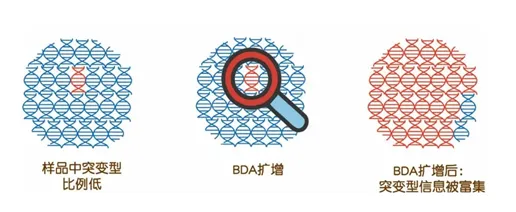
BDA is like a magnifying glass, specifically amplifying the signals of mutant molecules within tissues and significantly suppressing the amplification of wild-type sequences, making it more convenient and effortless to detect key signals.
QASeq technology (Quantitative Amplicon Sequencing) is another patented technology. QASeq removes errors generated in the PCR and gene sequencing processes by adding a Unique Molecular Identifier (UMI). And through the design of multiplex PCR, absolute quantification of DNA sequences is achieved, significantly enhancing the sensitivity of copy number variation analysis. In addition, by designing amplicon primers at both ends of hot spot mutations, QASeq can also detect gene mutations.
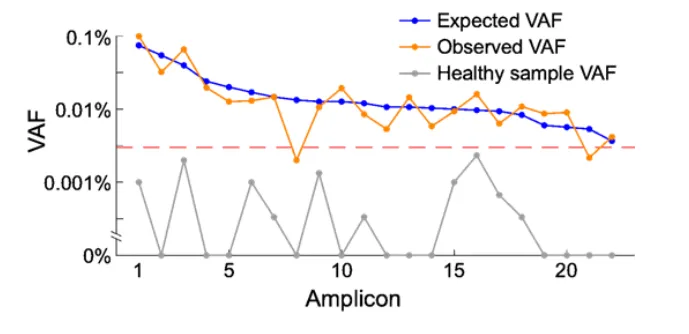
BDA can specifically enrich low-frequency mutations, significantly reducing the amplification of wild-type uninteresting molecules. Such features make it particularly suitable for application scenarios that require exceeding sensitivity, such as liquid biopsy and MRD monitoring, making liquid biopsy truly practical. By integrating mBDA technology and QASeq technology, qBDA technology was introduced: firstly, UMI tags are added to DNA molecules, and then mBDA amplification is carried out.
By using qBDA technology, its minimum detection limit can reach five parts per 100,000, meeting the detection sensitivity required for MRD testing. At the same time, the amount of detection data is very small, which can be applied to medium and low-throughput sequencing platforms, significantly reducing detection costs, hardware costs, and time costs. This meets the needs of decentralized testing within hospitals and is more conducive to the regularization of NGS testing.
Conclusion
As human understanding of tumors deepens, the diagnosis and treatment of tumors are increasingly dependent on molecular detection, and the requirements for detection are becoming more and more precise, which has given rise to continuous innovation in detection technology. The development of NGS has closely followed that of tumor gene testing. It is precisely because of the continuous decline in the cost of NGS technology and the continuous innovation of detection technology that the tumor gene testing market has flourished.
The future trend of tumor gene testing development will inevitably require appropriate data volume, high sensitivity, strong specificity, low cost, and suitability for medium and low-throughput sequencing platforms. Only in this way can it be promoted to hospitals at all levels and benefit more patients. Ultimately, to meet these requirements, it is necessary to learn from countless wise predecessors, continuously promote the innovation of underlying technologies, and promptly apply these innovations to clinical testing.
Reference materials
1.The History of Cancer | First Cancer Diagnosis
2.Milestones in Cancer Research and Discovery - NCI
3. Review: The Development History of Human Oncology Drugs
4. The Past and Present of PD-L1: Starting from the Nobel Prize - Immunity
5.Meet John: Johns Hopkins Kimmel Cancer Center
6. Bgi aims to do big things: Acquire the US sequencer company CG to connect the industrial chain
Bgi Manufacturing won a patent lawsuit against Illumina and was awarded 334 million US dollars in damages
8. Blue Book of Molecular Diagnosis of Tumors in China
9.2022 CSCO Guidelines for Non-Small Cell Lung Cancer
10.Odegaard JI, Vincent JJ, Mortimer S, Vowles JV, Ulrich BC, Banks KC, et al., Validation of a plasma-based comprehensive cancer genotyping assay utilizing orthogonal tissue- and plasma-based methodologies. Clin. Cancer. Res. 2018, 24: 3539-3549.
11.Wu LR, Chen SX, Wu Y, Patel AA, Zhang DY. Multiplexed enrichment of rare DNA variants via sequence-selective and temperature-robust amplification. Nat. Biomed. Eng., 2017, 1: 714-723.
12.Wu LR, Dai P, Wang MX, Chen SX, Cohen EN, Jayachandran G, et al.. Ensemble of nucleic acid absolute quantitation modules for copy number variation detection and RNA profiling. Nat. Commun., 2022, 13: 1791.
0756-8699969
Address: No. 88, Shuian 1st Road, Xiangzhou District, Zhuhai City, Guangdong Province
Email: marketing@biori.com
Wechat official account |
Product consultation |
Video Account |