Animal cell matrices are often used in the production of biological products, and the incidence of mycoplasma infection is very high during the process of cell culture. Research has found that among the available cell lines worldwide, the contamination rate is approximately 5% to 35%. When cells are infected by mycoplasma, the expression of DNA, RNA and proteins within the cells changes, while the growth of the cells generally does not undergo significant changes. Therefore, mycoplasma contamination is difficult to detect.
Because mycoplasma is much smaller than bacteria and has no cell wall, with a size ranging from 0.1 to 0.8μm, once contaminated, mycoplasma can easily pass through standard sterilized filters and enter the cell culture process or other biological products along with the culture medium or raw material additives. Therefore, the pharmacopoeias and drug regulatory laws of various countries have all made clear regulations on the inspection of mycoplasma in the production of biological products.
The traditional method for detecting mycoplasma requires at least 28 days of cultivation to reach a conclusion, which is quite time-consuming. The EP guidelines point out that if the sensitivity of the NAT detection method can reach the same level as the classical culture method, and it has good stability and specificity, then the NAT method can be used to replace the classical culture method as the detection method for mycoplasma.
The Mycoplasma DNA detection kit (PCR-fluorescence probe method) developed by Zhuhai Baorui Biotechnology Co., Ltd. can be used in conjunction with Baorui Biotechnology's nucleic acid extraction or Purification Kit I (magnetic bead method), providing a very rapid and easy-to-use solution for mycoplasma control in laboratories or on production lines.
Product advantages
01
High sensitivity
The detection limit reached 5 CFU/mL (containing 106 cell matrices), verifying the detection of mycoplasma types required in EP10-2.6.7, and covering the detection of over 200 types of mycoplasma. The common 10 mycoplasma standard strains (5 CFU/mL) were extracted and detected 24 times respectively, and the detection ratios could all reach 24/24.
The results are shown in Table 1
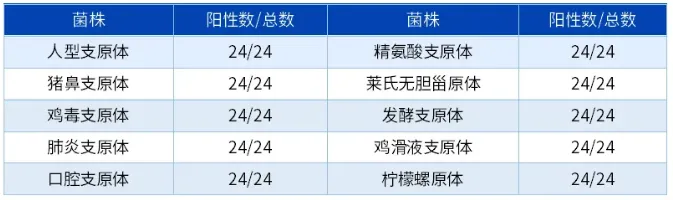
Table 1 Summary of detection limit data for 10 common Mycoplasma standard strains
02
Strong specificity
Verify the DNA of 27 structural analogues of mycoplasma and commonly used cell lines (HEK293, HEK293T, MRC-5, CHO, NS0, Vero, Sf9, MDCK, E.coli, Pichia pastoris, Lactobacillus acidophilus, Acinetobacter baumannii, Enterobacter pneumoniae, Streptococcus mutans, Staphylococcus epidermidis) Staphylococcus saprophyticus, Candida albicans, Campylobacter jejuni, Micrococcus tengifolia, Pseudomonas aeruginosa, Salmonella enterica subspecies, Streptococcus agalactiae, Staphylococcus aureus, erythromycin, Propionibacterium acnes, Staphylococcus intermedius, etc., all have no cross-reaction with mycoplasma detection reagents.
03
Convenient and fast operation
Single-tube reagents: The extracted nucleic acids can be directly added to the PCR reaction solution without the need for multiple components to be mixed.
It only takes 1.5 hours from sample extraction to the completion of the test.
04
Strong applicability
Multiple types of matrix samples were verified, and different matrix samples had no effect on the detection sensitivity, especially suitable for high-concentration cell samples.
05
The system is reliable
1. It includes internal quality control (IC) and positive quality control (PC), effectively preventing the occurrence of false negative and false positive results.
2.The UDG enzyme anti-contamination system is adopted to avoid contamination risks.
06
Interference assessment
The eight matrix samples used (RPMI1640, 10%FBS, PBS, 10% horse serum, mycoplasma broth medium, arginine mycoplasma medium, DMEM, AIM-V®mediumCTSTM, etc.) all had no interference with the mycoplasma detection reagents.
07
Durability
1. Freeze-thaw stability: The kit was repeatedly frozen and thawed 3, 5, and 7 times. The low value of mycoplasma samples was the detection limit, and the test result was positive. The precision CV of the medium value samples was ≤5%, indicating that the kit had good stability within 7 freeze-thaw cycles.
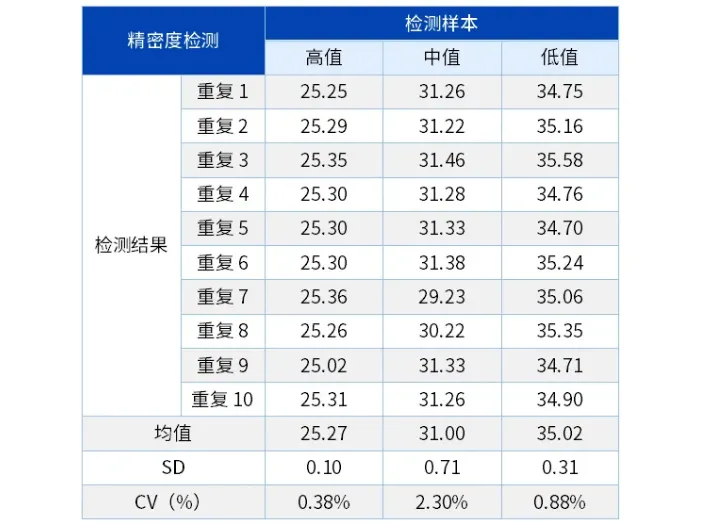
2.Precision: For high, medium and low value samples of mycoplasma, 10 replicates were conducted for each, and the CV% was all less than 5%.
3. Instrument Applicability The Mycoplasma DNA detection kit (PCR-fluorescence probe method) of Borui Bio has been tested in ABI 7500, Bio-RAD CFX96, SLAN-96P, SLAN-96S, and Roche Light cycler 480 It can be normally detected on different models of equipment such as the Borui FQD-96A.
References
1. Chinese Pharmacopoeia, 2020 Edition, Part III - Preparation and Quality Control of Animal Cell Matrix for the Production and Testing of Biological Products.
2. Chinese Pharmacopoeia, 2020 Edition, Part IV - Mycoplasma Test Method 3301.
3. European Pharmacopoeia EP10-2.6.7 Mycoplasma.
4. European Pharmacopoeia EP10-2.6.21 Nucleic Acid Amplification Techniques.
5. Japanese Pharmacopoeia (17th Edition, JP).
0756-8699969
Address: No. 88, Shuian 1st Road, Xiangzhou District, Zhuhai City, Guangdong Province
Email: marketing@biori.com
Wechat official account |
Product consultation |
Video Account |