Influenza, commonly known as the flu, is an acute respiratory infectious disease caused by a type of influenza virus. Influenza is very common all over the world. Most people recover without treatment. When people cough or sneeze, the flu can spread easily from person to person. Vaccination is the best way to prevent this disease。
Influenza virus is A enveloped single-stranded segmented RNA virus, which is classified into types A (A), B (B), C (C), and D (D) based on its matrix protein and nucleoprotein. Influenza A virus has a wide variety of hosts, the largest number of types, and is the most harmful, capable of causing seasonal influenza and pandemics [1].
The symptoms of the flu include acute fever, cough (usually dry cough), headache, sore throat, body aches, runny nose and fatigue.
Influenza epidemics show seasonal differences. Currently, the main causes of seasonal influenza epidemics are H1N1, PDM and H3N2 in IAV, as well as Bv and By in IBV. In China, H1N1pdm and Bv have distinct seasonal and cyclical characteristics, mainly prevalent in winter and spring, with an annual cycle. H3N2 is prevalent in winter and summer, with a cycle of half a year.
The influenza virus is prevalent globally and the population is generally susceptible. According to the World Health Organization (WHO), influenza causes 3 to 5 million severe cases and 290,000 to 650,000 respiratory disease-related deaths worldwide each year. The general population is susceptible to the influenza virus, and the incidence rate among children is higher than that among adults. According to the "Technical Guidelines for Influenza Vaccination in China (2023-2024)", annual influenza vaccination is an effective means of preventing influenza and can significantly reduce the risk of contracting influenza and developing severe complications for the vaccinated individuals. It is recommended that all individuals aged 6 months or above without contraindications to vaccination receive the influenza vaccine. Safe and effective vaccines have been in use for over 60 years. The immunity generated by vaccination will fade over time, so it is recommended to get vaccinated annually to prevent the flu [3].

Most of the influenza vaccines currently on the market use chicken embryos as the culture medium. However, the mutations accumulated by the influenza virus during the passage and adaptation of chicken embryos may also change the antigenicity, thereby reducing the effectiveness of the vaccine [4]. In addition, some people who are allergic to ovalbumin cannot receive the chicken embryo matrix influenza vaccine. Compared with chicken embryos, the production of influenza vaccines using cell culture technology has obvious advantages: shortened delivery time, better safety and immunogenicity [5]. Therefore, using cells as the culture medium for future influenza vaccines is one of the inevitable paths. In 1995, the WHO also proposed using cells to replace chicken embryos as the production medium for influenza vaccines [6].
At present, the cell matrices mainly used in the research and development and production of influenza vaccines include canine kidney cells MDCK (Madin-Darby canine kidney cells), African monkey kidney cells Vero, human retinal cells PER.C6 and insect cells. Cell matrix influenza vaccines have been marketed abroad (see Tables 1 and 2).。
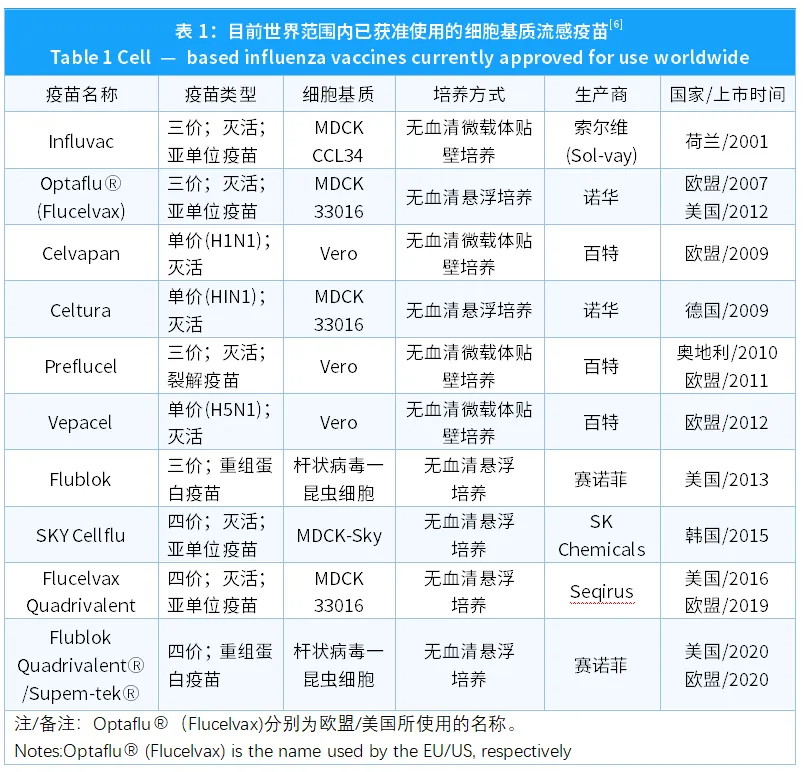
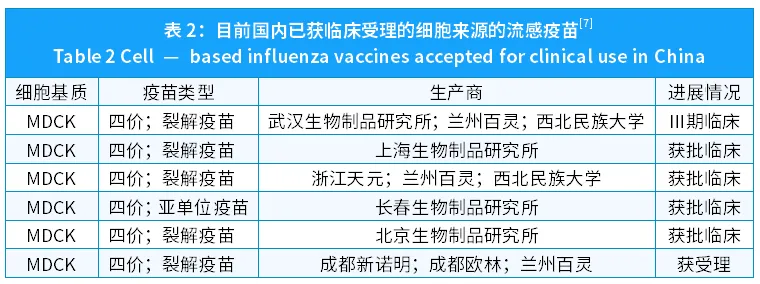
During the process of preparing vaccines using passage cell lines as vaccine production substrates, the virus harvest solution produced may have residues of host DNA and host cell proteins after downstream purification.
Residual host DNA may pose safety risks to the body. Research has demonstrated that if there is 1ng of cellular DNA in the body and 100 copies of activated oncogenes in the genome, the probability of transformation is 1/109. The average number of base pairs in mammalian genes is 3,000 to 10,000. Assuming that the residual amount of DNA in the mammalian genome is 10ng, Then the oncogenes in the animal genome range from 0.00001 to 0.0001ng. Currently, there is no evidence to suggest that oncogenes and other DNA have biological activity at this order of magnitude [8]. According to the World Health Organization's requirements for cell matrices, the residual amount of DNA in each dose of vaccine must not exceed 10ng. Generally, the residual host DNA needs to be controlled at 100pg to 10ng per dose, with a size of less than 200bp[4].

Residual proteins in host cells may cause allergic reactions in the body and have a certain impact on the immune effect of biological products such as vaccines [4]. The residual amount of host cell proteins in biological products not only reflects the consistency between batches of the products but also serves as an important indicator for evaluating the quality of biological products. The third part of the Chinese Pharmacopoeia (2015 Edition) has put forward certain requirements for the control of host cell protein (HCP) content in viral vaccines based on passage cell culture. The residual mass concentration of HCP in Vero cells of the freeze-dried inactivated Japanese encephalitis vaccine produced based on Vero cell matrix should not exceed 2μg/mL. Therefore, controlling the residual protein content of host cells in biological products is a key factor in ensuring the quality of vaccines. [9] Double antibody sandwich ELISA is one of the main methods for detecting residual proteins derived from cell matrices. This method features high sensitivity, strong specificity and good stability, and has been widely applied in various antigen detection.
Product advantages
1
It has no cross-reactivity with host cell proteins such as SP2/0, CHO, and HEK293T。
2
The coefficient of variation within the board is less than 10%, and the coefficient of variation between boards is less than 15%, ensuring the stability of customer testing。
3
The detection limit reaches 1.5ng/mL, meeting the customer's requirements for sensitivity performance。
4
The recovery rate of the simulated samples reached 80% to 120%。
5
The components of the kit are stable, facilitating transportation and long-term storage。
6
Performance verification is carried out strictly in accordance with national standards, and a complete set of performance evaluation materials can be provided。
7
The one-step method only requires sample addition and washing once throughout the entire process at room temperature to complete the detection。
8
The operation is simple and there is no need to prepare multiple liquids。

The MDCK Host Protein Residue Detection Kit is designed for the quantitative detection of residual host cell proteins (HCP) in MDCK cell (canine kidney cell) matrix influenza virus vaccines. It can be used for monitoring the residual protein content of host cells in the downstream process development of influenza vaccines based on MDCK cell culture, quality control of vaccine production processes, quality inspection and evaluation of vaccine products, and ensuring the safety of vaccines.
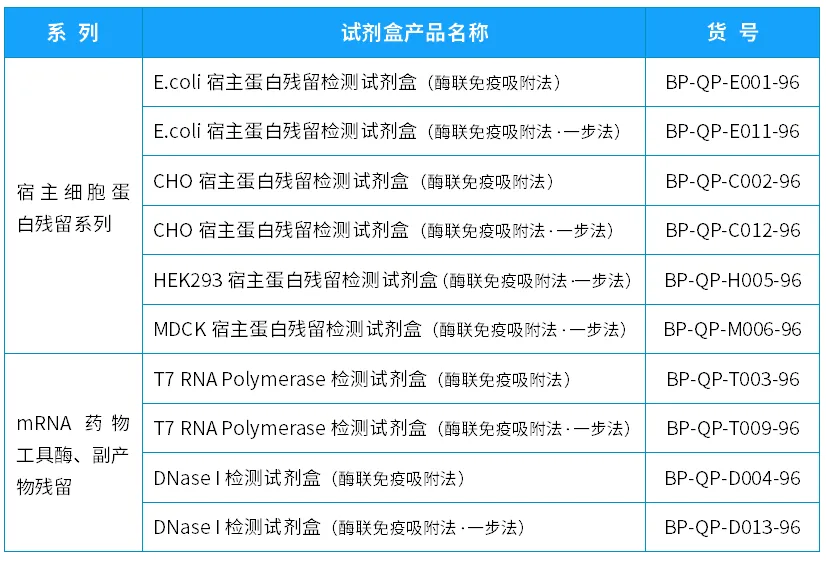

Kit consultation
0756-8699969
Address: No. 88, Shuian 1st Road, Xiangzhou District, Zhuhai City, Guangdong Province
Email: marketing@biori.com
Wechat official account |
Product consultation |
Video Account |