The residual nucleic acids in molecular diagnostic raw materials mainly come from the host residual nucleic acids during the microbial fermentation process, as well as microbial or human nucleic acid contamination in the production environment and materials. For molecular diagnosis, the above-mentioned nucleic acid residues in raw materials are an important cause of false positives in some PCR amplification tests, especially for the detection of multiple pathogenic microorganisms. Unknown nucleic acid residue contamination can seriously affect the accuracy of the test results. Therefore, effectively controlling the ultra-low nucleic acid residue in molecular diagnostic raw materials has become an urgent problem that molecular diagnostic raw material manufacturers need to solve。
In addition, in the field of quality control of biological products, to ensure the safety of biological products, various regulatory agencies (such as WHO, FDA, NMPA, etc.) will set strict standards for residual DNA in biological products used in the treatment of diseases. According to the third part of the 2020 edition of the Chinese Pharmacopoeia, the residual DNA content of biological preparations produced from cell matrices shall not exceed 100pg per dose, and the residual DNA content of vaccines produced from bacterial or fungal matrices shall not exceed 10ng per dose。
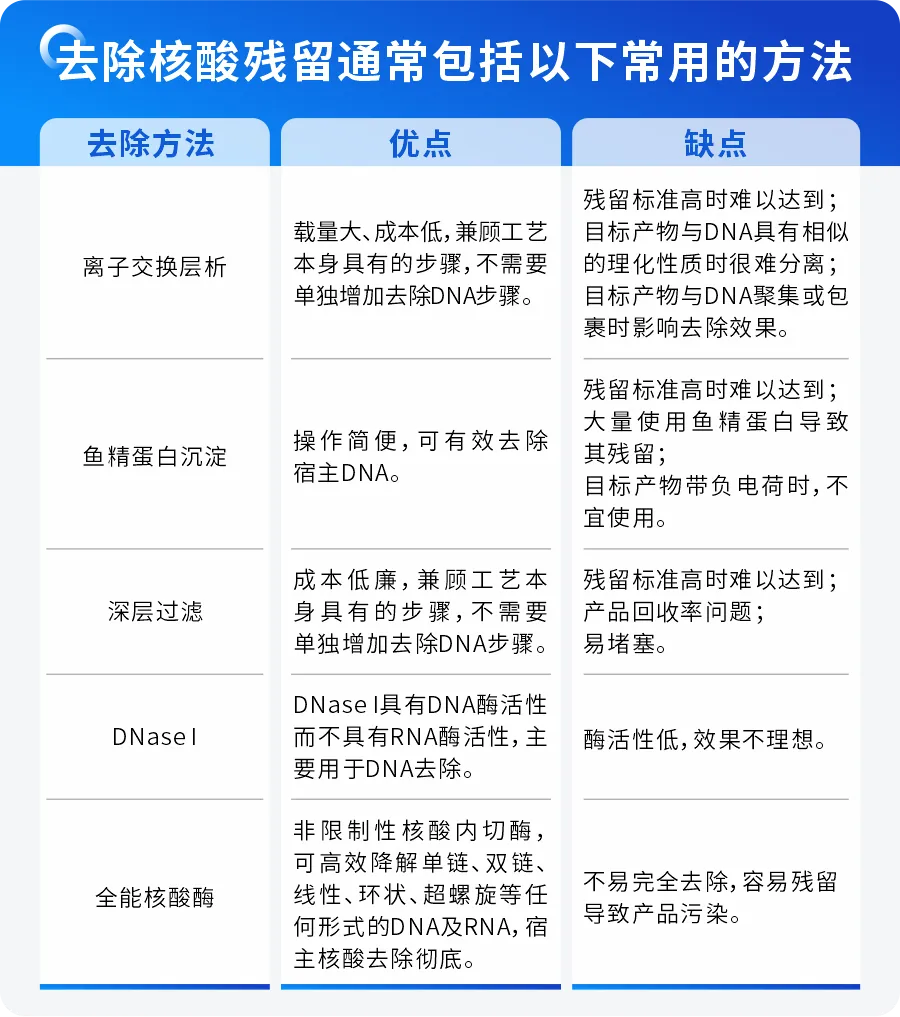
Factors to be considered in the production process of ultra-low nucleic acid residue
1. Comprehensive analysis and integrated control (environmental and process integrated management).
2. The process method is stable and reliable (stable process, controllable quality).
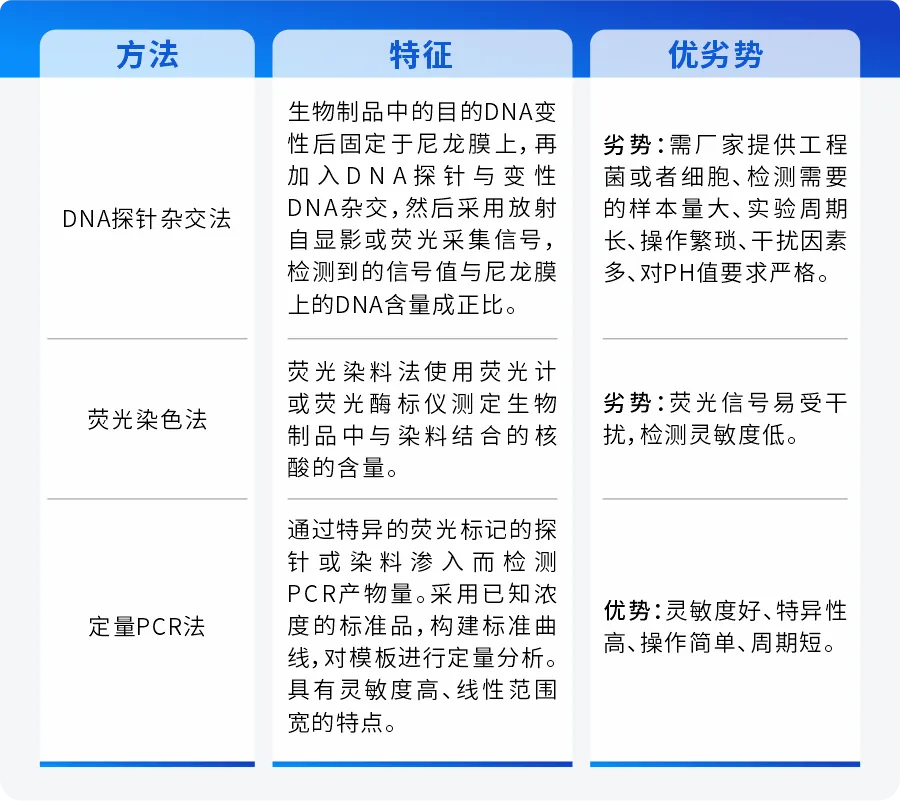
For those with extremely low host nucleic acid residuesFor biological products, it is crucial to establish an appropriate method for detecting residual DNA in host cells. According to General Chapter 3407 of the Chinese Pharmacopoeia 2020 Edition, Part III, the methods for detecting the residual amount of host cell DNA are DNA probe hybridization, fluorescence staining and quantitative PCR. Among them, the qPCR method features extremely high sensitivity, sequence specificity and accuracy, and has now become the preferred detection method for various biological product manufacturers.
forIn response to the increasing clinical demand for the detection of pathogenic microorganisms, Baorui Biotechnology has established itself by optimizing the production management of enzyme raw materials, upgrading process technology, and improving the quality inspection systemNAA series of dedicated production systems for molecular diagnostic raw materials ensure a significant reduction or removal of nucleic acid residue contamination in the raw materials, achieving stable and large-scale production of ultra-low nucleic acid residue raw materials。
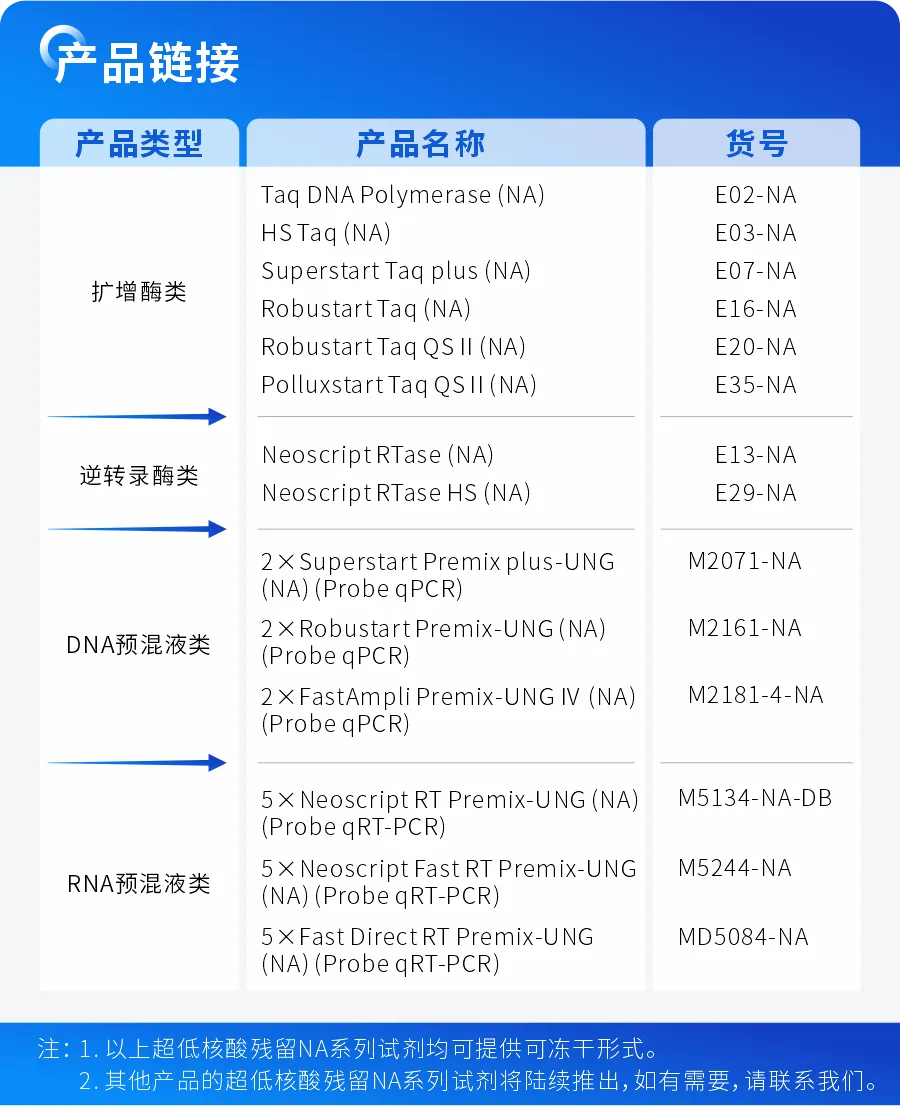
Baorui Biology can provide regular services/Ultra-low nucleic acid residue that can be freeze-driedNAA series of molecular diagnostic raw materials provide a comprehensive one-stop solution to the residue problems of host and environmental microorganisms, offering customers highly sensitive solutions to facilitate the molecular diagnosis of pathogenic microorganisms。





1. Host nucleic acid testing for NA series products
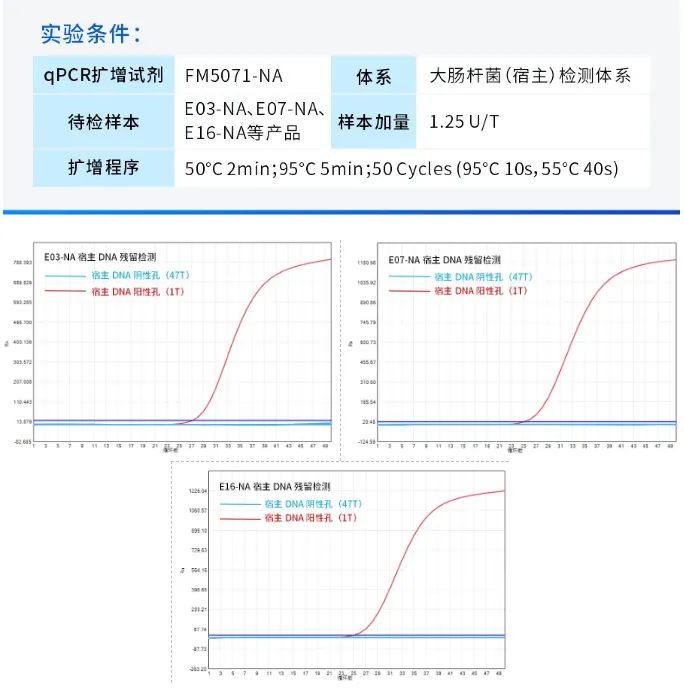
Conclusion: No residual host DNA of Escherichia coli was detected in single-enzyme products such as E03-NA, E07-NA, and E16-NA.
2. Verification of other background bacteria
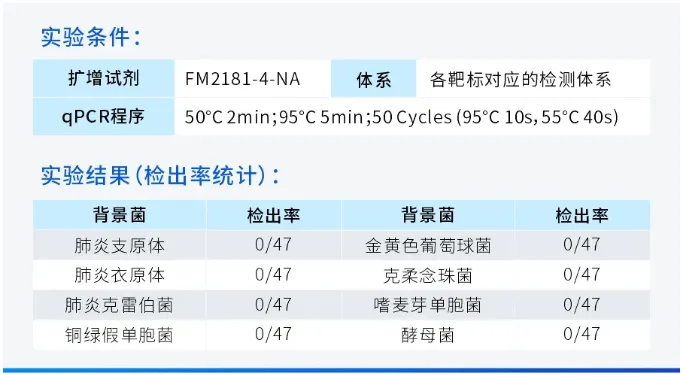
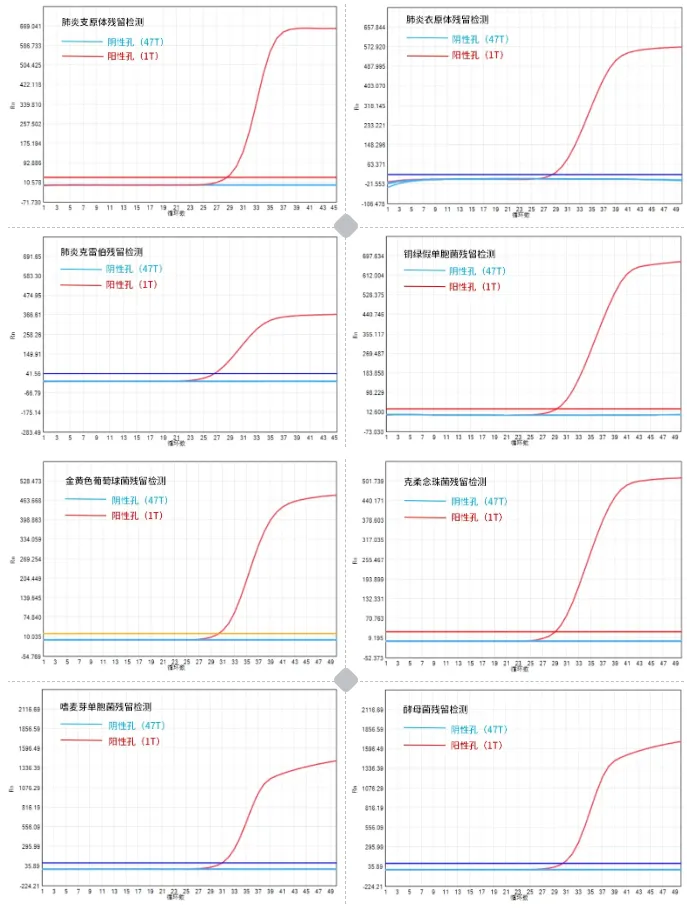
Conclusion: Detection of Mycoplasma pneumoniae, Chlamydia pneumoniae, Klebsiella pneumoniae, Pseudomonas aeruginosa, Staphylococcus aureus in FM2181-4-NA
Contamination and residue of Candida krona, maltophila and yeast were not detected.
3. Verification of residual nucleic acid from human sources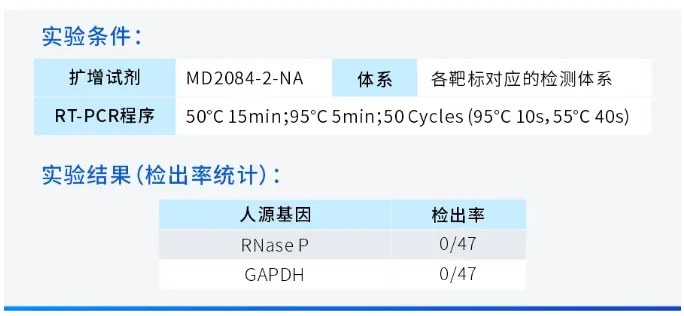
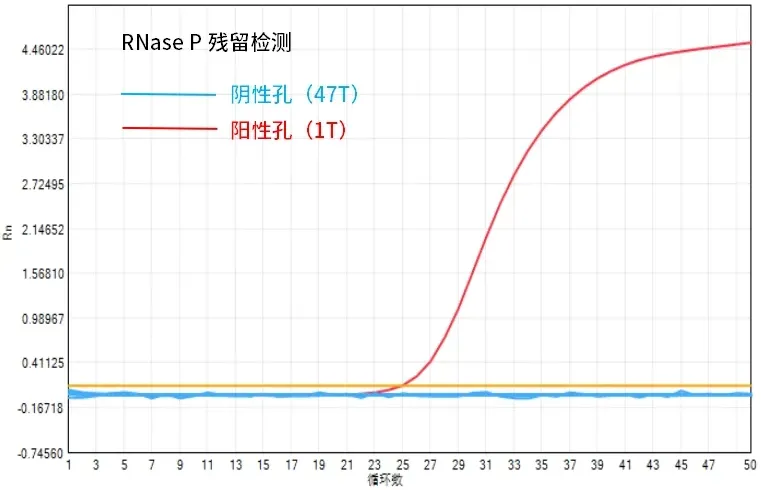
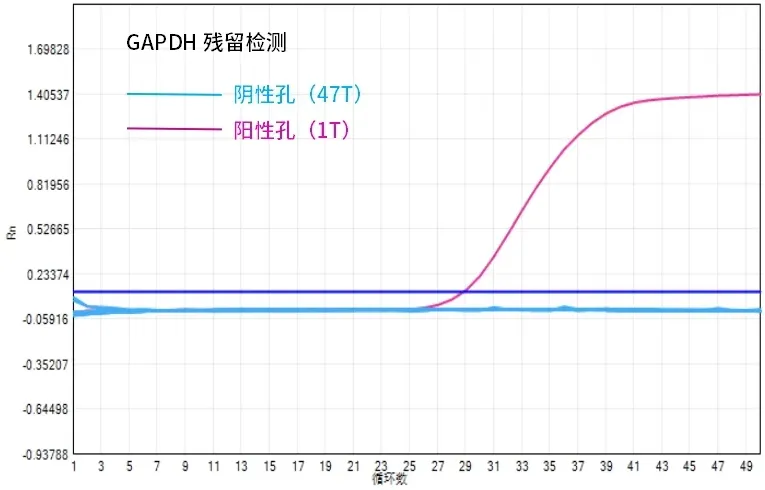
Conclusion: The contamination and residue of human genomes (RNase P, GAPDH) in MD2084-2-NA were detected, but none were found.
4. Stability verification
4-1 Acceleration stability
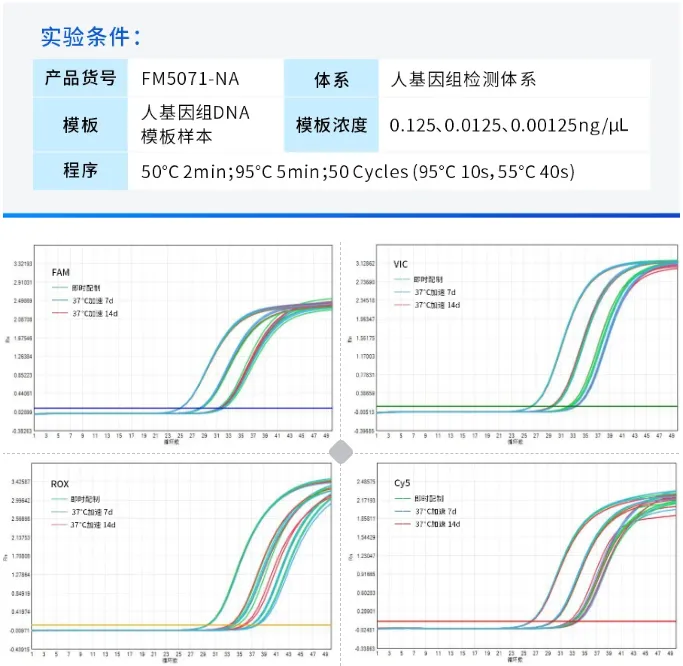
Conclusion: After being placed at 37 ° C and accelerated for 7 days and 14 days, the amplification performance of the Baorui FM5071-NA premix reagent was consistent with that of the unaccelerated reagent and could remain stable.
4-2 Freeze-thaw stability
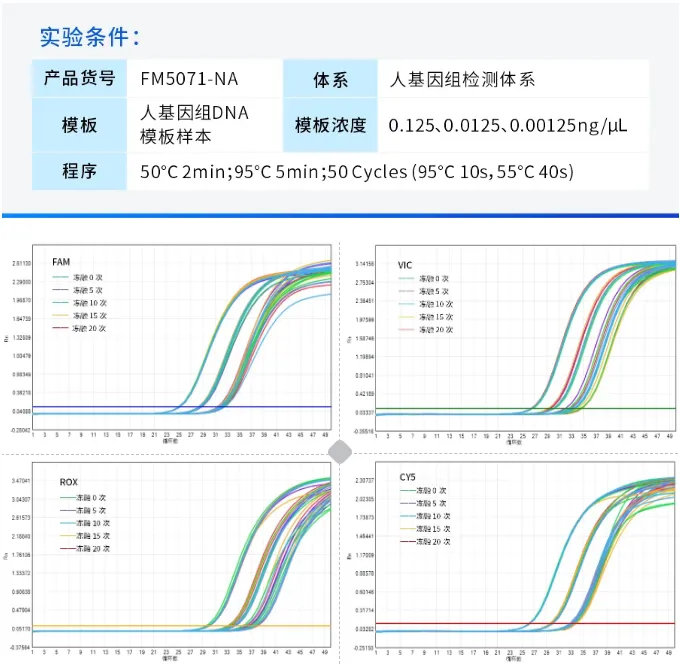
Conclusion: After 5, 10, 15, and 20 freeze-thaw cycles, the amplification performance of the Baorui FM5071-NA premix reagent was consistent with that of the non-freeze-thaw reagent and could remain stable.