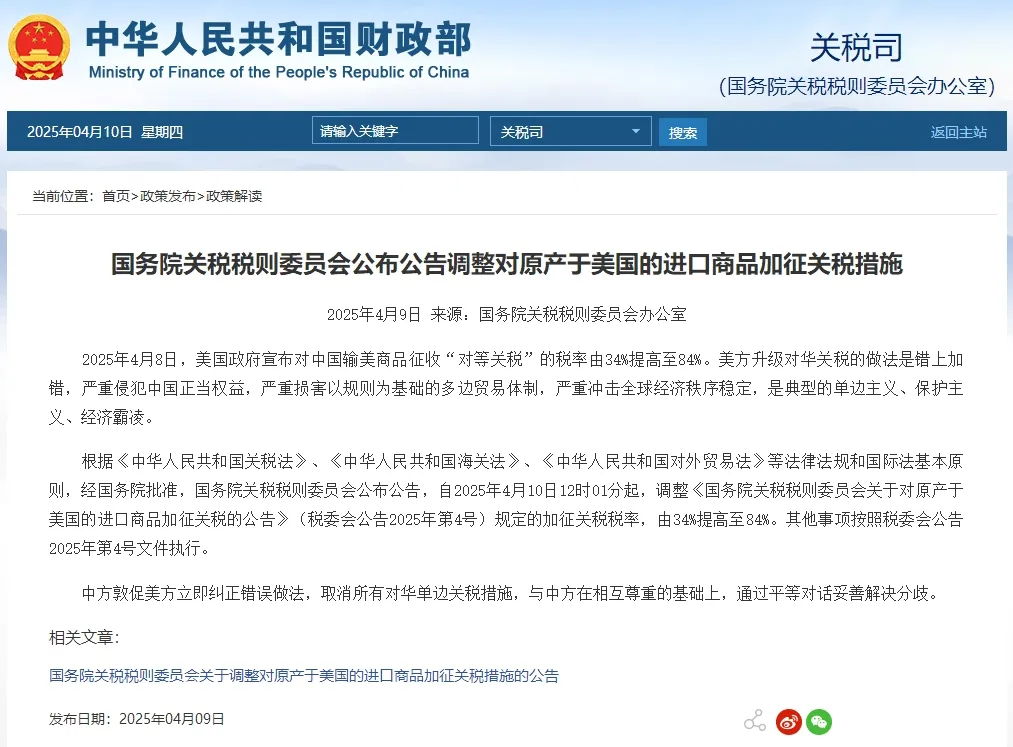
Recently, the United StatesThe Trump administration launched a tariff war and has now raised tariffs on Chinese goods to125%Effective immediately.
In this regard, in accordance with the Tariff Law of the People's Republic of China, the Customs Law of the People's Republic of China, the Foreign Trade Law of the People's Republic of China and other laws and regulations as well as the basic principles of international law, with the approval of The State Council, starting from 12:01 on April 10, 2025, the measures to impose additional tariffs on imported goods originating from the United States will be adjusted.
Among them, the additional tariff rates on all imported goods originated from the United States have been raised to84%. Twelve US entities were added to the export control list, and six US enterprises were placed on the list of unreliable entities.
Focusing on the pharmaceutical sector, the rising import costs and market shocks are bringing challenges and pressure to the industry.
01
Nucleic acid type
Mycoplasma detection
Detection significance
Mycoplasma is one of the common contaminants in mammalian cell culture, seriously affecting the quality of biological products. Regulations in various countries require that "all products derived from cell culture must be ensured to be free from mycoplasma contamination", which has led pharmaceutical enterprises to pay increasing attention to mycoplasma detection.
Relevant regulations
In the 2020 edition of the Chinese Pharmacopoeia, Part III, "Preparation and Quality Control of Animal Cell Matrix for the Production and Inspection of Biological Products", it is proposed that for production cells, both the master cell bank (MCB) and the working cell bank are required(WCB)Produce terminal cells(EOPC)Conduct a mycoplasma test.
With the development of cell therapy drugs and other advanced therapeutic drugs, the requirements for the timeliness and sensitivity of mycoplasma detection are getting higher and higher. Traditional mycoplasma detection methods are time-consuming and can no longer meet their timeliness requirements. Therefore, the PCR method based on Nucleic acid amplification technology (Nucleic acid amplification technology, NAT) stands out as a rapid and reliable potential alternative.
With the support of Baorui Biology
Mycoplasma contamination prevention and control and rapid detection!
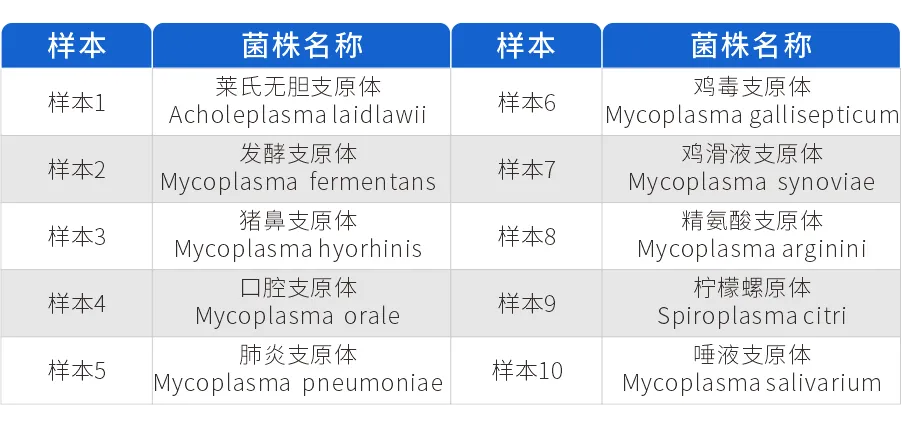
The Mycoplasma DNA detection kit (PCR-fluorescence probe method) independently developed by Baorui Biotechnology complies with the pharmacopoeia detection standards of many countries including China, Europe, Japan and the United States. Covering the strains required by the pharmacopoeias of China, Europe, Japan and the United States, it provides more complete scientific evidence for testing efficacy.
Detection of animal-derived viruses and validation of virus clearance processes
Detection significance
Viral contamination is one of the major threats to the safety of therapeutic biological products. Historically, due to a lack of full understanding of the risk of virus contamination and the limitations of virus detection technologies and virus inactivation/clearance methods, blood-derived biological products and those produced through engineered cells and engineered bacteria expression have experienced severe virus contamination incidents during the production process。
Relevant regulations
The "General Rules for Biological Products" of the 2020 Edition of the Chinese Pharmacopoeia, Part Three, stipulates and controls the control of virus safety in biological products from aspects such as raw materials, intermediate processes, virus clearance processes, and virus detection in the final product. ICH Q5A, USP and EP also have similar requirements for virus security control。
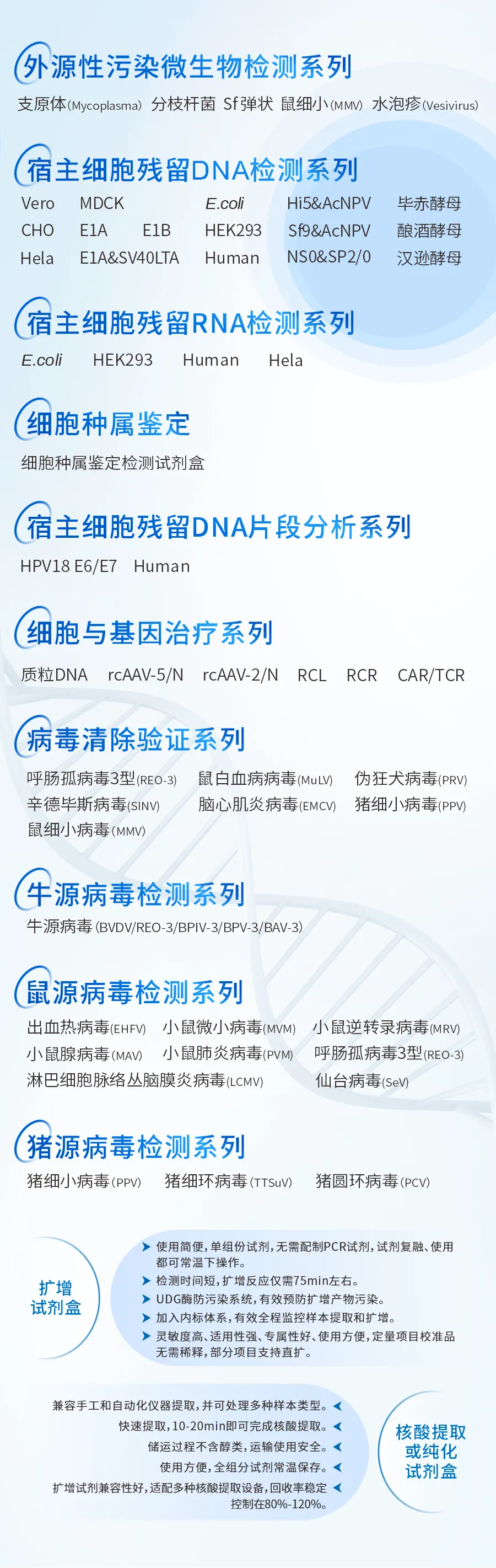
In the raw material and final product stages, Baorui Biotechnology's series of nucleic acid detection reagents for bovine, murine and porcine viruses can effectively assist in the safe control of viruses in biological products.
The virus clearance process validation series of nucleic acid test reagents from Baorui Biotech includes commonly used indicator viruses in the biopharmaceutical field, such as MuLV, MMV, REO-3, PRV, etc., which are essential validation project for the IND and BLA stages of biological products reported in both China and the United States. It also includes other related viruses, such as SINV, EMCV, PPV, etc. The Baorui Biological virus clearance process validation series of nucleic acid detection reagents, when combined with the corresponding nucleic acid extraction or purification reagents, have excellent detection effects on samples of various complex matrices。
02
Proteins
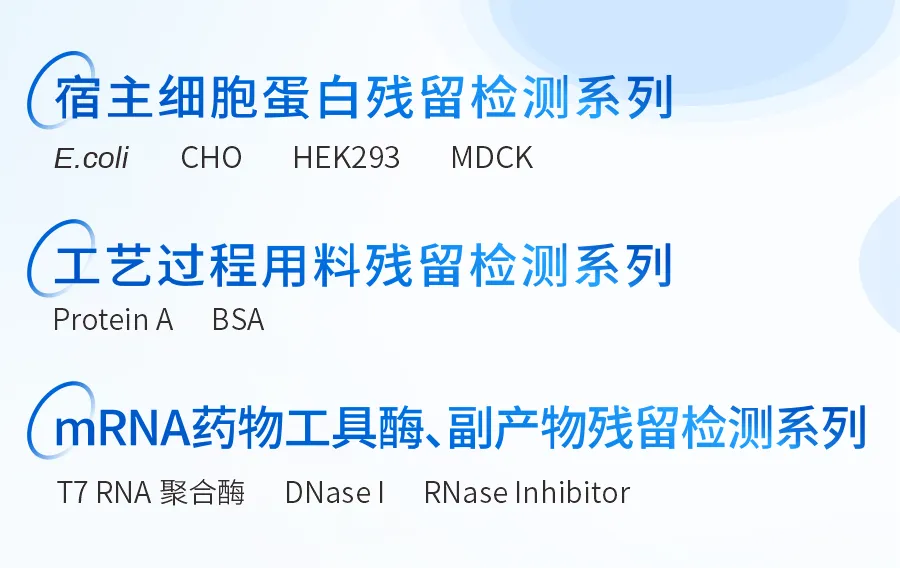
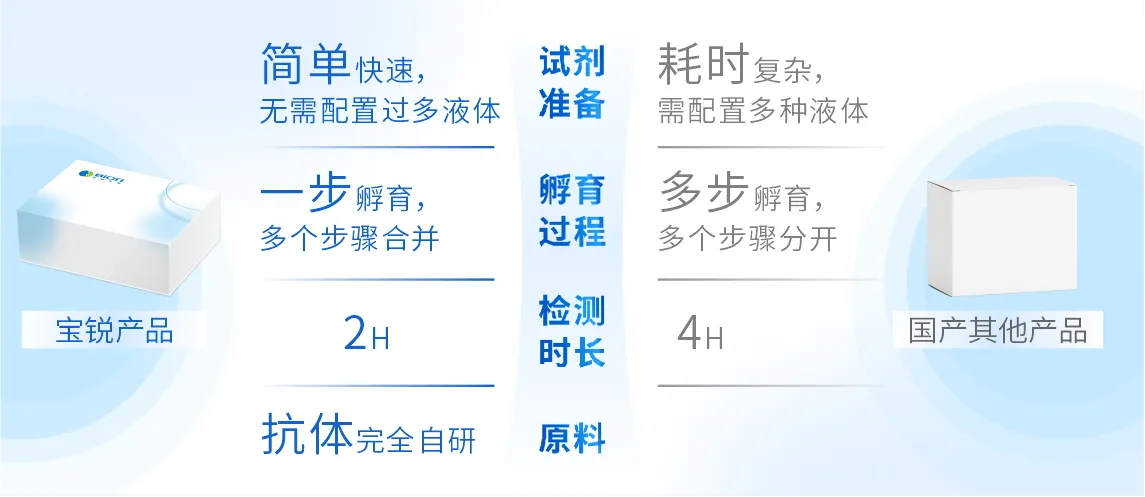
The raw materials of the E.coli host protein Residue detection kit and CHO host protein residue detection kit of Baorui Biology are completely self-developed, and can be stably supplied in large quantities.
The selected host protein immunogens are derived from a variety of representative cell lines in the downstream production process, ensuring more comprehensive coverage of host cell proteins. At the same time, based on the molecular weight, isoelectric point and other characteristics of the protein, the total HCP protein is subjected to graded immunity, effectively reducing the immune competitive effect and enhancing the immune system's response and recognition ability to weak immunogenic proteins.
Baorui Biotech strictly controls the conditions for antigen production, as well as the breeding environment, age, gender, and health status of immunized animals, to minimize the differences between different batches of antibodies to the greatest extent. The antibodies prepared in this way have outstanding advantages such as high coverage, strong specificity, good affinity and good repeatability.
Enzyme-linked immunosorbent assay · One-step method
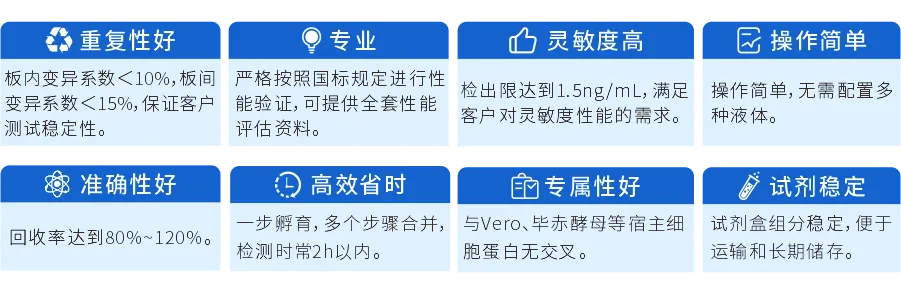
Recombinant expression using Escherichia coli in the production of some proteins and plasmid DNA is a relatively simple and cost-effective approach. During the production process of products using Escherichia coli, it is highly likely that host cell proteins (HCP) from Escherichia coli will be contaminated.
Application fieldsQuality monitoring of the production process of biological drugs such as recombinant proteins, antibodies and vaccines.
Product advantages
Enzyme-linked immunosorbent assay · One-step method
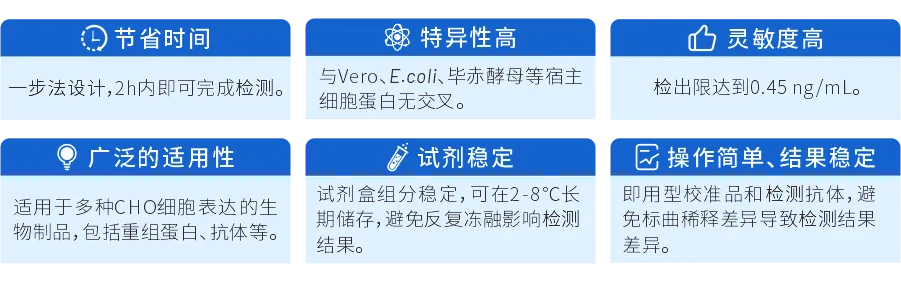
The CHO cell line is a commonly used mammalian cell line and is widely applied in the commercial production of therapeutic proteins. However, the drugs produced by the CHO cell expression system may contain residual host cell proteins (HCP), which can cause immune responses in the human body and affect the safety and efficacy of the drugs. Therefore, the residual amount of CHO HCP needs to be controlled.
Application fieldsIt is used for the quantitative detection of host proteins in biological products (recombinant proteins, antibodies, vaccines, etc.) expressed and amplified using CHO cells.
Product advantages
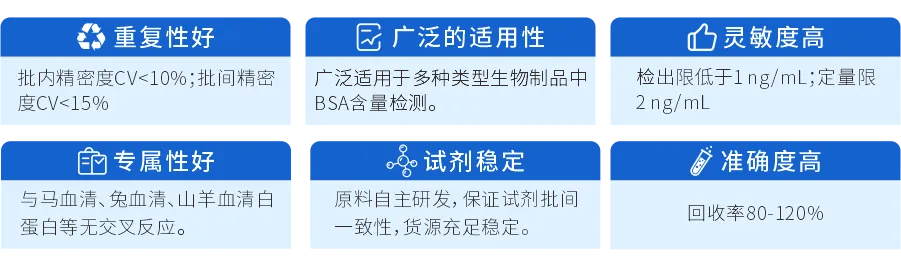
Bovine serum albumin (BSA) is a commonly used additive in cell culture and is widely applied in the field of biomedicine. Although most BSA can be removed through purification during the production process, trace amounts of BSA may still be present in biological products. These trace amounts of BSA may cause severe allergic reactions after entering the human body, affecting the safety of biological products.
Application fieldsIt is applicable to the detection of BSA residues in biological preparations such as vaccine drugs (such as rabies, measles, mumps, rubella, varicella vaccines, etc.), cell therapy, stem cells and tissue engineering products.
Product advantages

Scan the product code for consultation
0756-8699969
Address: No. 88, Shuian 1st Road, Xiangzhou District, Zhuhai City, Guangdong Province
Email: marketing@biori.com
Wechat official account |
Product consultation |
Join us |
Video Account |