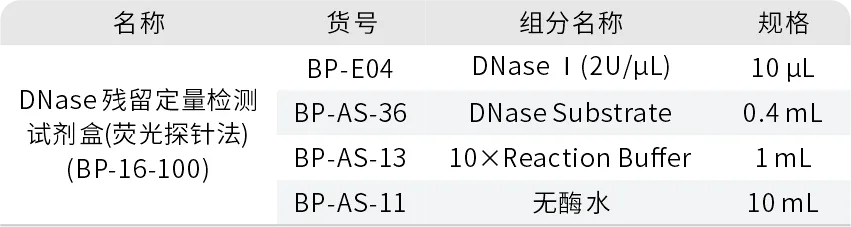
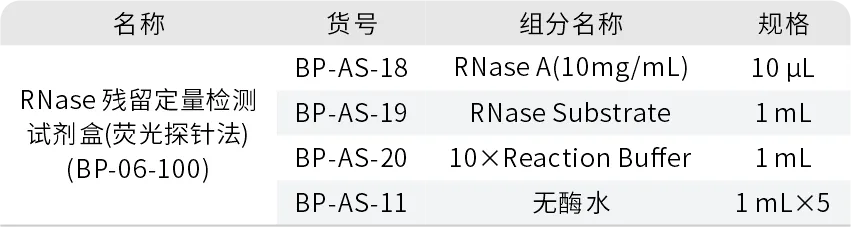
Product Introduction
Deoxyribonuclease (DNase) and ribonuclease (RNase) are a class of hydrolases that can sever the phosphodiester bonds in polynucleotide chains to degrade DNA and RNA molecules. They are widely present in experimental environments and living organisms. Since nucleases can degrade nucleic acids, their presence can interfere with many experiments. Therefore, it is necessary to determine the residue of nucleases. The current methods for detecting nucleases include nucleic acid hydrolysis gel electrophoresis, ultraviolet spectrophotometry, high performance liquid chromatography (HPLC), and electrochemical methods, etc. However, they have problems such as long time consumption, inability to accurately quantify, low sensitivity, or being limited by instruments and equipment.
The DNase and RNase residue quantitative detection kit independently developed and launched by Baorui Biotechnology can rapidly and quantitatively detect DNase and RNase based on the principle of fluorescence probe method, and has the advantages of high sensitivity and simple operation。
Detection principle
Principle of DNase and RNase Residue Quantitative Detection Kit The DNase/RNase substrate used in this kit is a synthetic oligonucleotide probe, with a Fluorophore, also known as the Donor, at one end and a Quencher, also known as the Acceptor, at the other end. The absorption spectra of these two groups have a certain overlap. When the distance between these two fluorescent groups is appropriate, the fluorescence energy is transferred from the donor to the acceptor, resulting in the attenuation of the fluorescence intensity of the donor's fluorescent molecule itself. When the substrate is cleaved by DNase/RNase, the head and tail ends of the DNA/RNA substrate separate, and the fluorescent groups and quenching groups move away from each other, thereby generating a gradually increasing fluorescence signal. The increase rate of fluorescence signals is positively correlated with the quantity and activity of enzymes.
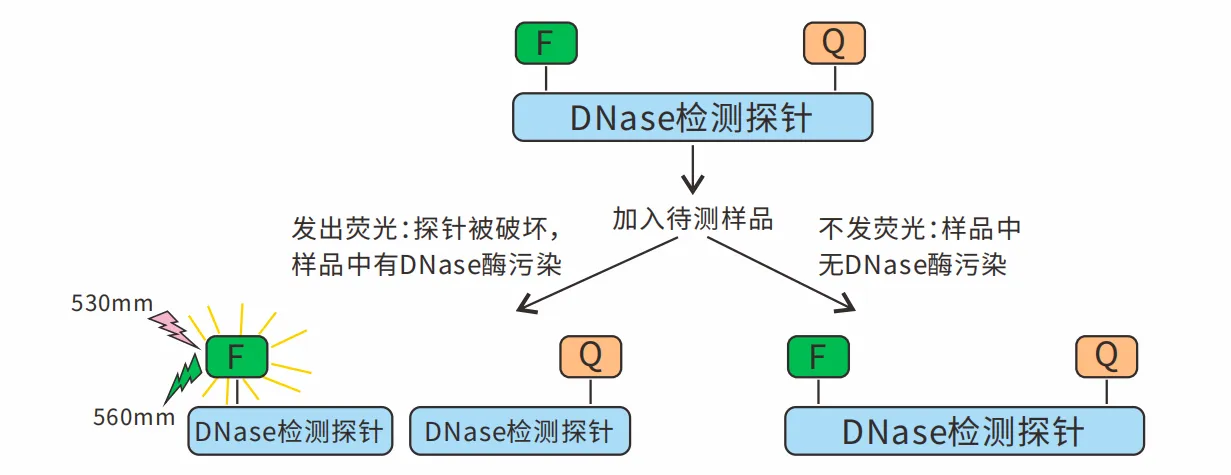
Figure 1: Schematic diagram of the Borui DNase Residue Quantitative Detection Kit
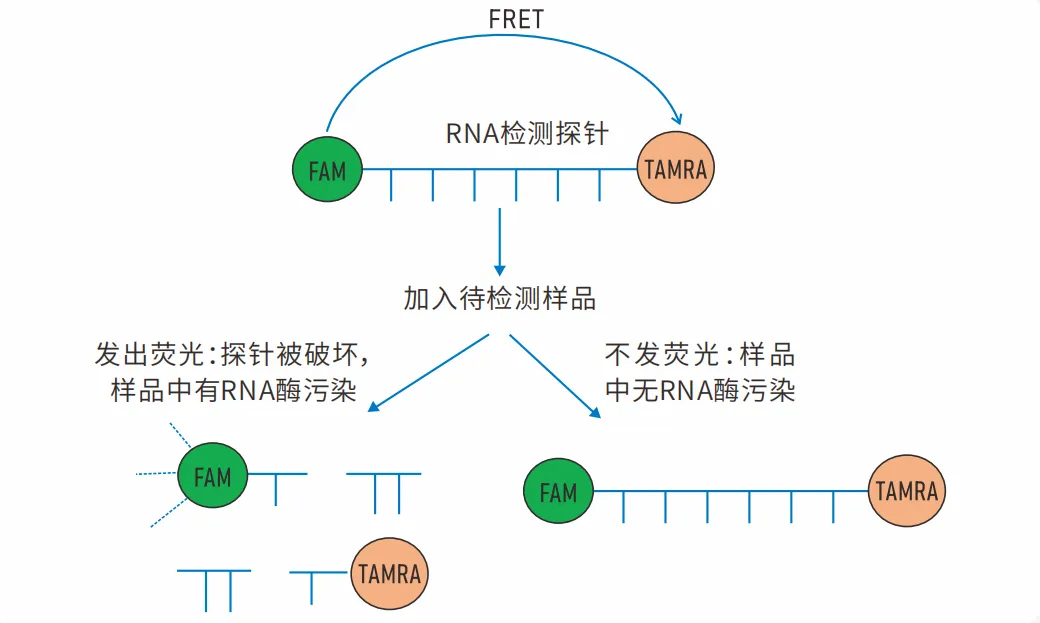
Figure 2: Schematic diagram of the Baorui RNase Residue Quantitative Detection Kit
Product advantages
01 Designed based on the principle of enzyme activity, it is suitable for the residue detection of DNase/RNase.
02It has high sensitivity, with a minimum detection limit as low as 1.25×10⁻⁶U/μL (DNase) /0.078pg (RNase).
03Strict quality control ensures sensitivity, inter-batch/intra-batch variation, accuracy and other guarantees.
DNase Residue Quantitative Detection Kit
1. SensitivityIt has been verified that the detection sensitivity of the DNase residue quantitative detection kit can reach 1.25×10- 6U/μL。
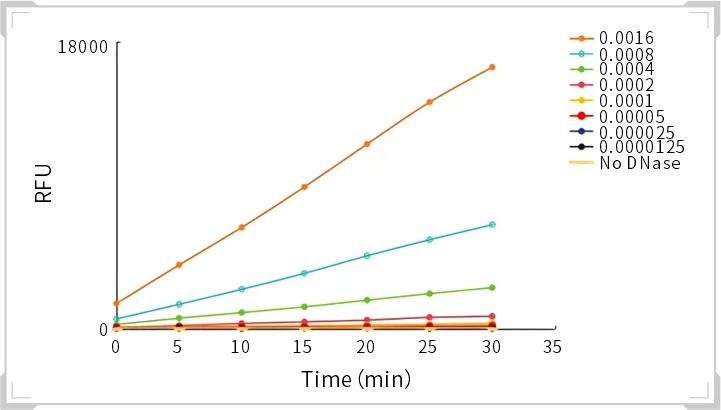
The fluorescence intensity changes of different amounts of DNaseⅠ detected by this kit within 30 minutes
2. Wide detection rangeIt has been verified that DNase I has a good linear relationship at different concentrations, with R²>0.99. The concentration of DNase in the sample can be calculated by setting the standard curve.

The detection effect of the Baorui DNase Residue Quantitative Detection Kit on DNase I standard substances
RNase Residue Quantitative Detection Kit
1. High sensitivityIt has been verified that the detection sensitivity of the RNase residue quantitative detection kit can reach 0.078pg.
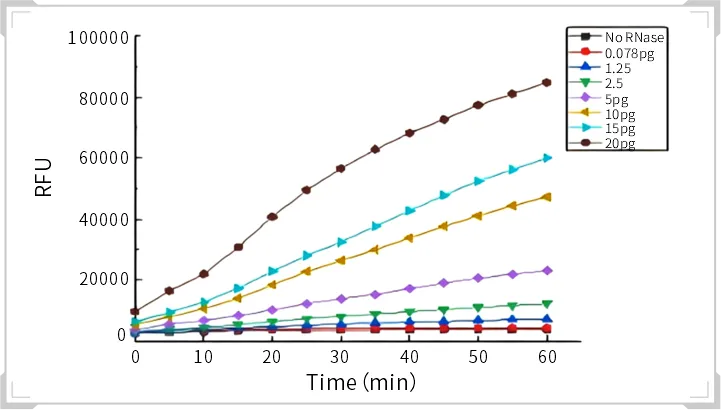
The fluorescence intensity changes of different amounts of RNase A detected by this kit within 60 minutes
2. Wide detection rangeIt has been verified that RNase A has a good linear relationship within the range of 0-10pg, with R²>0.99. The concentration of RNase in the sample can be calculated by setting a standard curve。
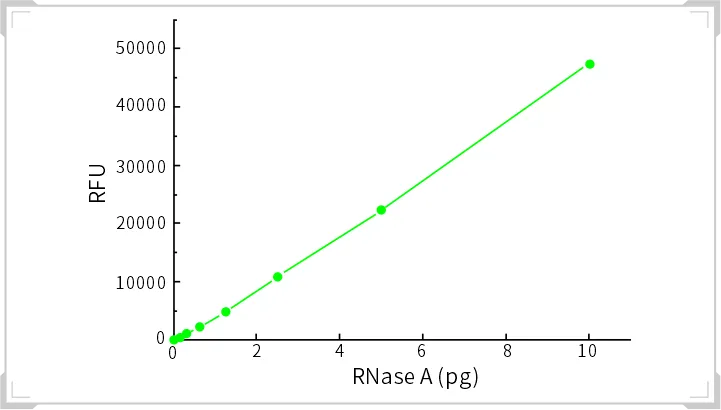
The detection effect of the Baorui RNase Residue Quantitative Detection Kit on RNase A standard
Product Information