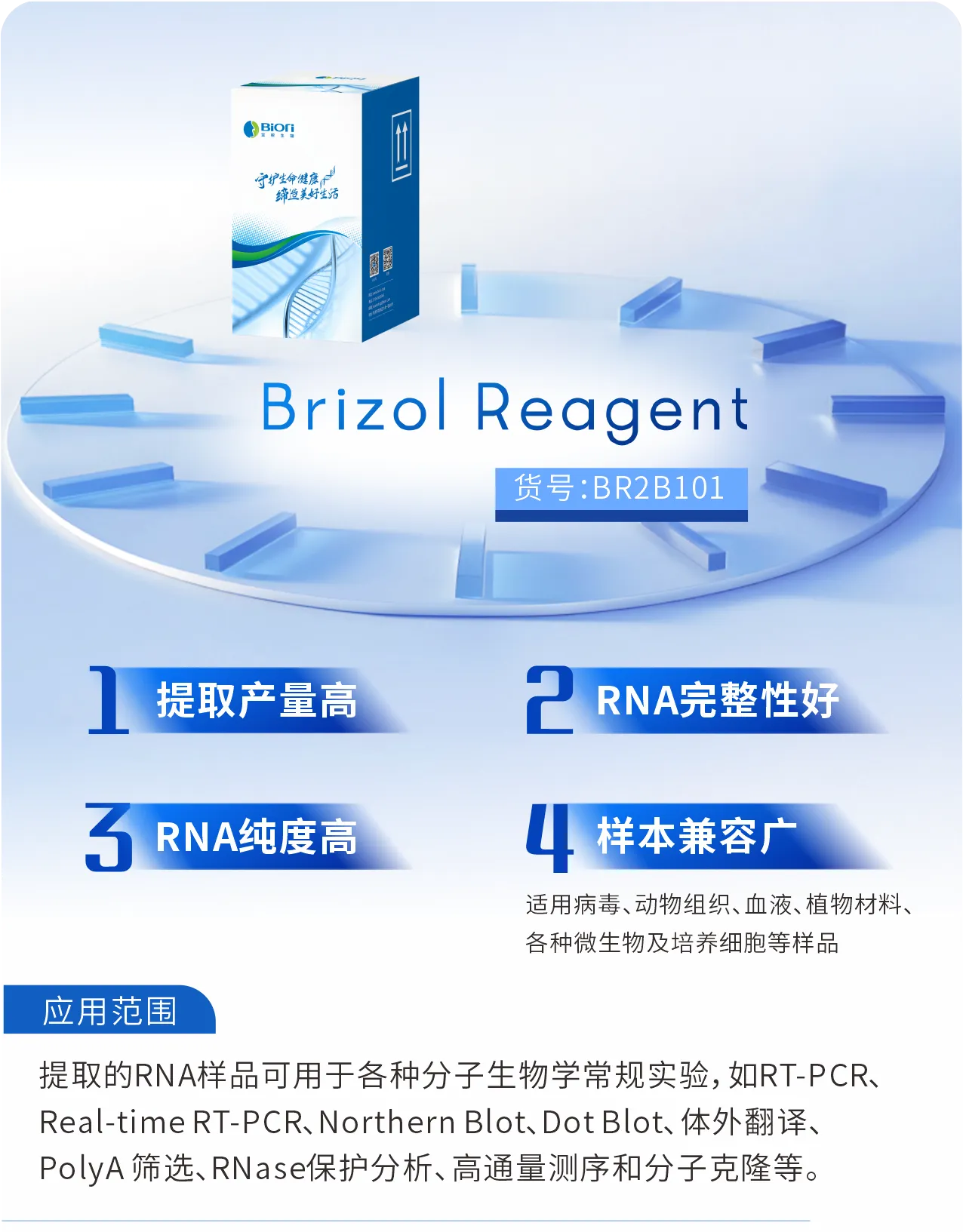
Brizol Reagent is a classic traditional "Trizol" type, broad-spectrum total RNA extraction reagent developed by Brizol Biotechnology. The product has a wide range of applications and can extract total RNA from samples such as viruses, animal tissues, blood, plant materials, various microorganisms and cultured cells.
This product can effectively inhibit the activity of RNase, effectively extract total RNA from samples, and eliminate the contamination of impurities such as DNA and proteins to the greatest extent. The integrity of RNA samples is high and it can be used in various routine molecular biology experiments Such as RT-PCR, Real-time RT-PCR, Northern Blot, Dot Blot, in vitro translation, PolyA screening, RNase protection analysis, high-throughput sequencing and molecular cloning, etc.

Brizol Reagent is a single-phase solution containing phenol, guanidine isothiocyanate and other special components, which can promote the extraction of RNA of various molecular weights.
During the process of sample homogenization with Brizol Reagent, it can destroy cells, dissolve cell components, and efficiently inhibit the activity of RNase at the same time, thereby maintaining the integrity of RNA. After homogenizing the samples with Brizol Reagent and adding chloroform, the homogenate can be divided into a transparent upper aqueous phase layer (containing RNA), a phase interface, and a purple-red lower organic layer (containing DNA and protein). Then, RNA was precipitated from the aqueous phase layer with isopropyl alcohol.

1. Sample lysis
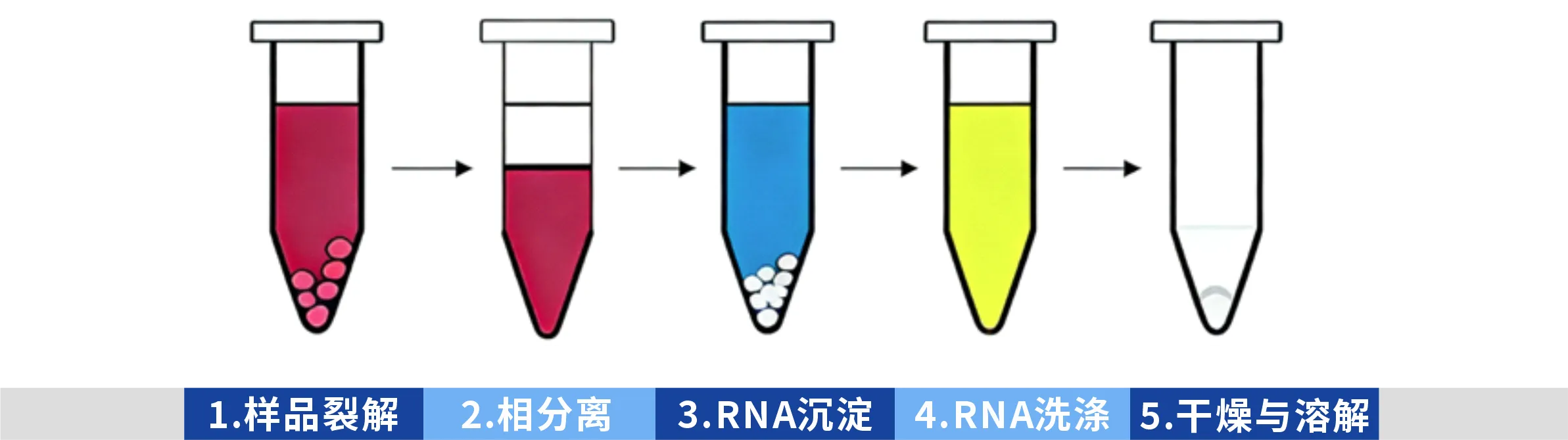
Take an appropriate amount of fresh biological samples, process them (depending on the type of sample, grinding or homogenizing is required to separate the sample as thoroughly as possible into a single-cell state), and place them in RNase-free centrifuge tubes. Add 1mL of Brizol Reagent for every 50-100 mg of sample and vortex thoroughly to ensure complete lysis of the sample. Let it stand at room temperature for 5 minutes to allow the nucleoprotein complex to fully dissociate.
2. Phase separation
Add 0.2 mL of chloroform to the lysis buffer, vigorously invert the centrifuge tube for 15 seconds, and mix thoroughly. Let it stand at room temperature for 2 to 3 minutes. Centrifuge at 4℃ and 12000 rpm for 15 minutes. After centrifugation, the solution was divided into three layers: the upper layer was a colorless aqueous phase (containing RNA), the middle layer was a white protein layer, and the lower layer was a purplish red organic phase.
Carefully draw the upper aqueous phase (about 400-500 μL, avoid touching the middle layer) into a new RNase-free centrifuge tube. Add an equal volume of isopropyl alcohol, gently invert and mix well, and let it stand at room temperature for 10 minutes. Centrifuge at 12,000 rpm for 10 minutes at 4℃, and white RNA precipitate will appear at the bottom of the tube.
4.RNA washing
Discard the supernatant, slowly add 1 mL of 75% RNase-free ethanol (prepared with DEPC water) along the tube wall, and gently invert to wash the precipitate. Centrifuge at 12,000 rpm for 5 minutes at 4 ° C and discard the supernatant.
5.RNA drying and dissolution
Carefully aspirate the remaining ethanol, and dry the RNA precipitate at room temperature for 2 to 3 minutes (avoid excessive drying, otherwise it will be difficult to dissolve). Add an appropriate amount of RNase-free water or TE buffer, and gently pipette to mix well. After dissolution, the RNA concentration and purity can be detected by spectrophotometer (an OD₂₆₀/OD₂₈₀ ratio of 1.8 to 2.0 is preferred), and the integrity can also be detected by agarose gel electrophoresis.
The extraction flowchart is as follows:

When extracting total RNA for electrophoresis, since ribosomal RNA (rRNA) accounts for 75 to 85% of the total RNA, the electrophoresis images usually show rRNA (28S, 23S, 18S, 16s, 5S), and the integrity of mRNA can be indirectly inferred from the integrity of rRNA. When the ratio of 28S to 18S of eukaryotic rRNA (23S to 16S of prokaryotic rRNA) is typically about 1:1 to 2:1, it indicates that there is no significant degradation of RNA and it can be used for downstream applications.

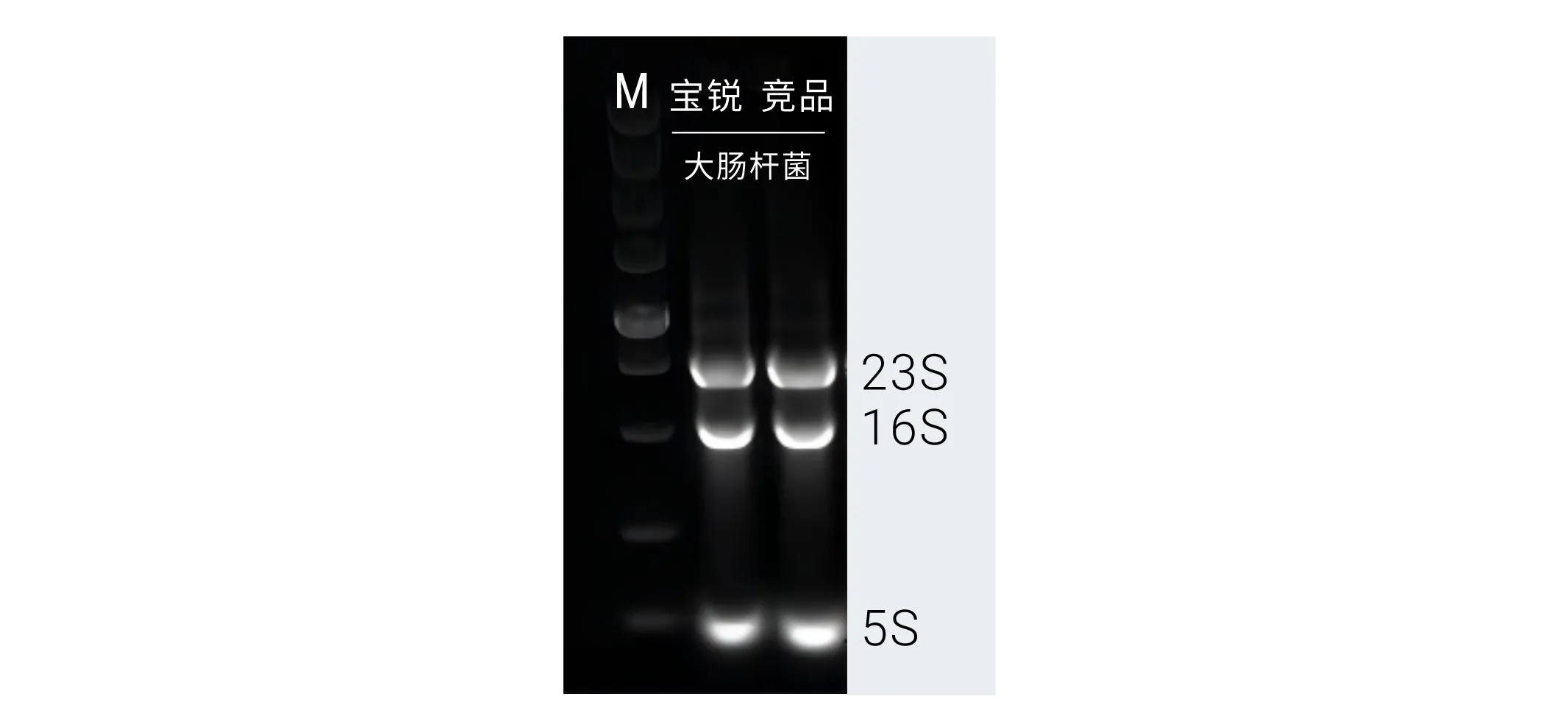
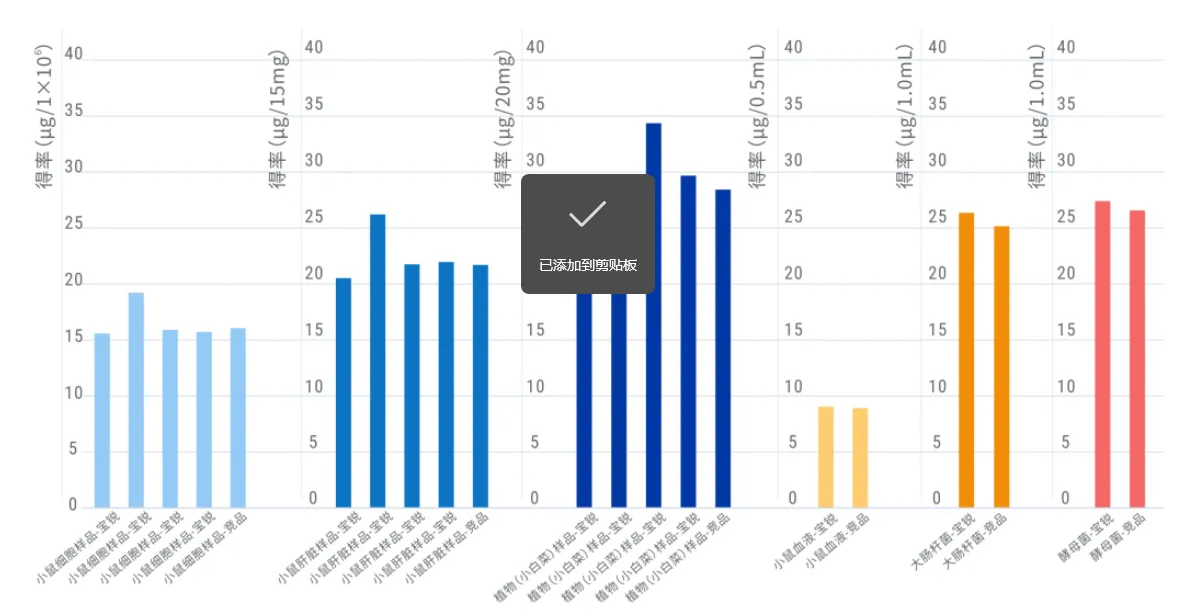
The recovery rates of RNA extracted from different samples
ConclusionCompared with competing products, Brizol Reagent has better RNA extraction integrity, higher yield and wider application range.
Recommended products