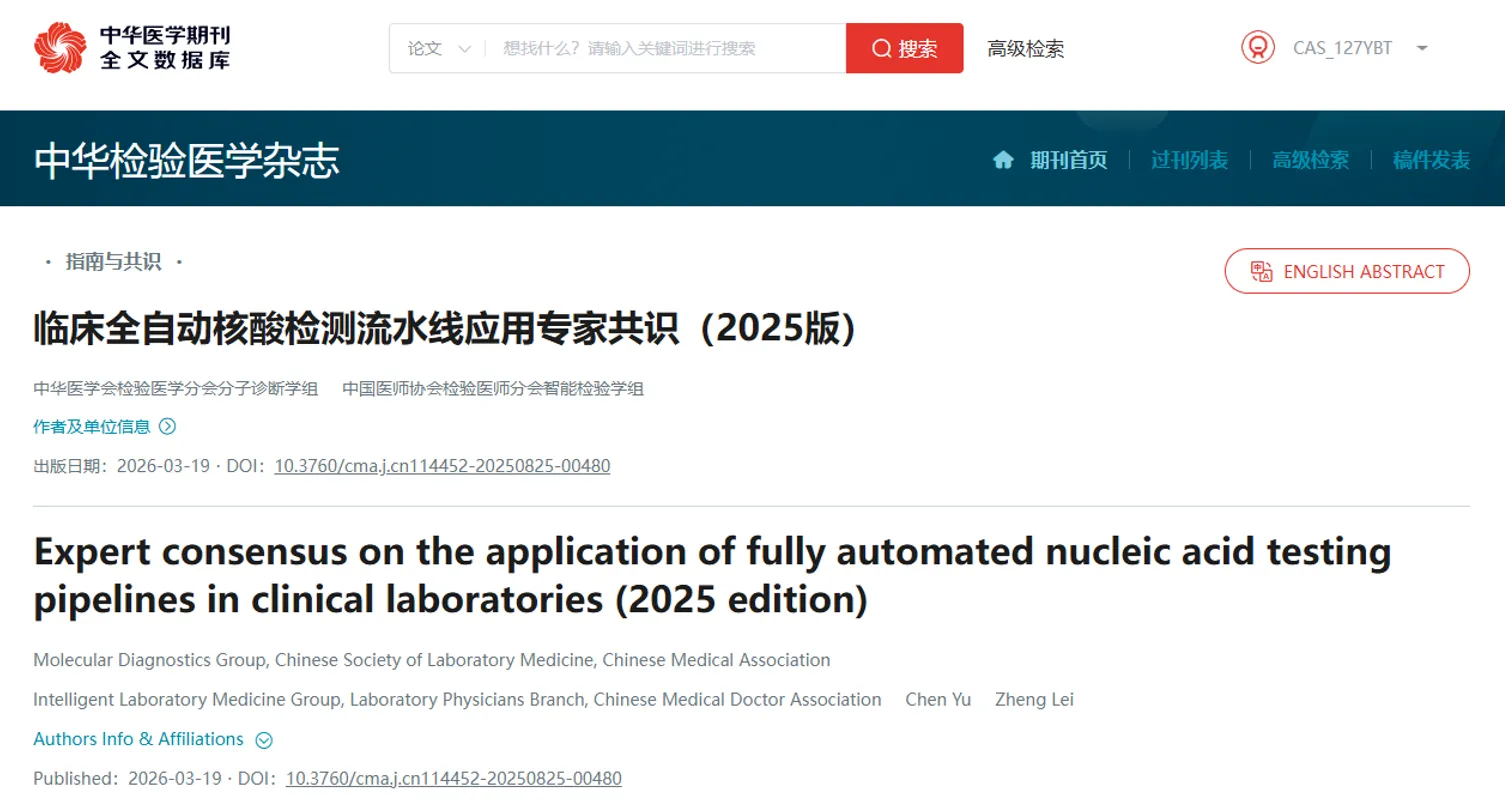
The Consensus, based on systematic literature retrieval and clinical practice experience, forms recommendation opinions around core issues such as the introduction, operation, full-process management, key points of laboratory renovation, quality assurance, biosafety protection and pollution prevention and control of nucleic acid testing assembly lines. The evidence level is evaluated in accordance with the GRADE grading system, and the recommendation strength is determined based on the expert consensus degree (≥95% is considered a strong recommendation).
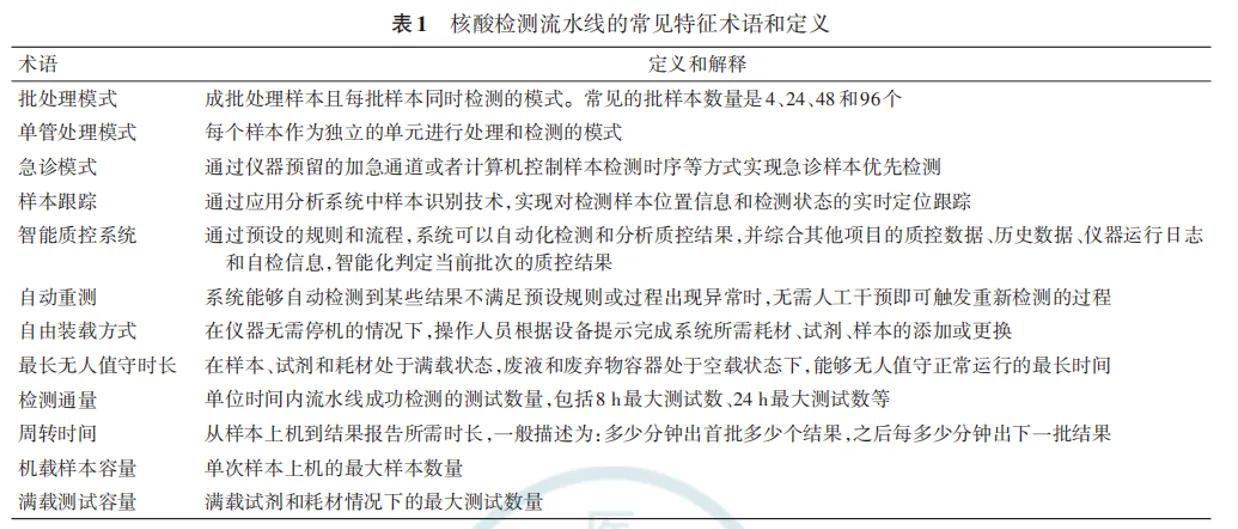
Several key points of consensus on fully automatic nucleic acid testing assembly lines
The fully automatic nucleic acid testing assembly line is not a brand-new concept, but its clinical application in China is indeed just getting started. Previously, many laboratories faced practical problems when introducing such equipment: how to renovate the site, how to carry out quality control, and how to prevent pollution. The value of this "Consensus" lies in the fact that it is not a forward-looking technical outlook, but rather provides operational guidance for addressing the current practical application puzzles. The following is an interpretation from several dimensions:
1. Venue requirements: Some conditions can be relaxed, but the bottom line is clear
The description of the laboratory site in the "Consensus" is worth noting:
Consensus 1: The nucleic acid testing assembly line should be placed in an independent area with ventilation conditions or the specimen preparation area of a gene amplification laboratory, and ensure that there is sufficient space to facilitate work. After passing the biosafety risk and nucleic acid contamination risk assessment, it can also be placed in other non-independent locations. (Evidence Level: Medium, Recommendation Strength: Strong Recommendation)
The practical significance of this statement lies in the fact that, due to its integration and closed nature, the assembly line theoretically does not have to strictly follow the four-zone separation requirements of traditional gene amplification laboratories. However, the Consensus simultaneously sets two preconditions - ventilation systems and risk assessment. This means that laboratories still need to submit substantive evidence to prove safety when choosing a location, and it is not completely liberalized.
2. Personnel qualifications: Automation has not lowered the requirements for personnel
Consensus 2: Operators of nucleic acid testing assembly lines must participate in the on-the-job training for clinical gene amplification testing laboratory technicians and pass strict instrument operation training and assessment before they can take up their posts. (Evidence level: High, Recommendation Intensity: Strong Recommendation)
Some people hold the view that the operational threshold will be lowered after automation, but the Consensus does not support this judgment. From the perspective of actual operation, the assembly line system has a higher degree of integration and more complex failure modes. Operators need to have both a foundation in molecular biology and knowledge of instrument systems. This places higher demands on the training and assessment mechanisms of employers.
3. Sample pretreatment: Non-liquid samples remain a challenge
Consensus 5: Laboratories should select sample collection containers that are compatible with the assembly line testing, and the assembly line should also have the ability to actively adapt to the laboratory's sample collection containers. It is particularly important to note that non-liquid samples need to undergo thorough homogenization treatment to meet the requirements for on-machine testing on the assembly line. (Evidence Level: Medium, Recommendation Strength: Strong Recommendation)
This point touches upon the technical bottleneck of the current assembly line. It is relatively easy to put liquid samples such as blood and urine on the machine in their original tubes, but the automation of pretreatment for samples like sputum, feces and tissues remains a direction that all manufacturers need to continuously optimize. The Consensus explicitly states that laboratories need to develop dedicated Sops for the pretreatment of such samples, essentially acknowledging that automation has not yet fully covered all sample types at present.
4. Quality Control Strategy: Intelligent quality control is the direction, but it has not yet become a standard feature
Consensus 6: The nucleic acid testing assembly line must comply with the quality control system requirements of clinical molecular diagnostic laboratories. Laboratories can establish different quality control rules based on different testing modes of the assembly line. The assembly line should be equipped with an intelligent quality control system to enhance the efficiency of quality assurance measures. (Evidence level: High, Recommendation Intensity: Strong Recommendation)
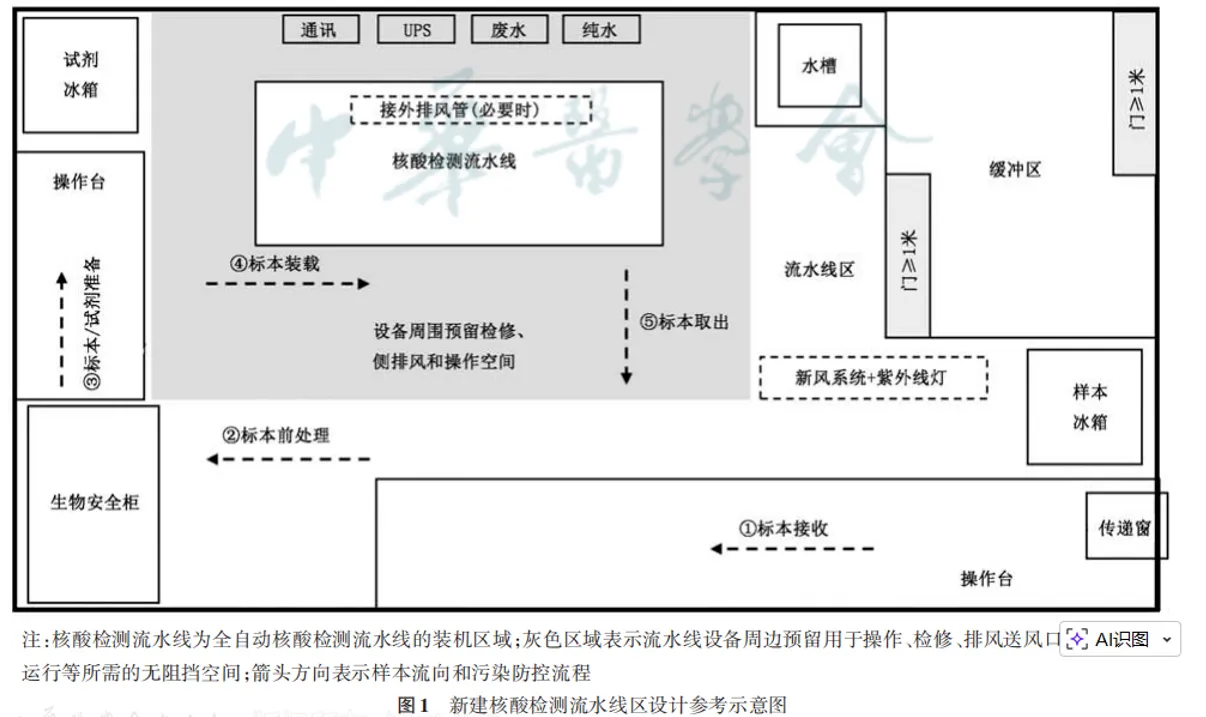
The Consensus's description of intelligent quality control is rather cautious. The use of "should be equipped" instead of "should be equipped" indicates that such systems have not yet been widely adopted and there is a lack of sufficient clinical verification data. For the assembly lines that have already been equipped with intelligent quality control systems, the Consensus suggests exploring their potential in dynamically adjusting the frequency of quality control and conducting multi-dimensional data analysis. However, it also emphasizes that manual review is still necessary in the initial stage.
5. Anti-pollution design: Equal emphasis is placed on the intrinsic safety of the equipment and laboratory management
Consensus 8: Pollution prevention is of vital importance to nucleic acid testing assembly lines. The equipment must be equipped with necessary anti-pollution devices, and laboratories should formulate Sops for pollution prevention, monitoring and treatment and continuously improve them. (Evidence level: High, Recommendation Intensity: Strong Recommendation)
The contamination risk of nucleic acid testing will not disappear due to automation; it has merely shifted from manual operation to the internal system. The Consensus puts forward requirements from two levels: First, at the equipment level, it is necessary to have designs such as airflow control within the module, anti-dripping, waste liquid sealing, and ultraviolet disinfection; Second, at the laboratory level, it is necessary to establish a monitoring system, conduct regular wiping tests, and promptly identify high-risk points.
6. Result Review: Automatic analysis still requires manual supervision
Consensus 7: Laboratories should formulate Sops for reporting results from nucleic acid testing assembly lines and Sops for re-testing uncertain results. They should use the results automatically analyzed by the system with caution. (Evidence Level: Medium, Recommendation Strength: Strong Recommendation)
This reflects the expert group's clear understanding of the current capabilities of the automation system. Although some assembly lines claim to have automatic reading capabilities, the Consensus explicitly requires manual review, especially during the early usage stage. In cases where the results are uncertain, a re-examination procedure needs to be initiated, such as repeating the test or re-sampling.
Conclusion
Overall, the "Consensus" positions the fully automatic nucleic acid testing assembly line as a tool that is expected to enhance laboratory efficiency, but it is not a universal solution. It still needs to meet the basic management requirements of clinical gene amplification testing laboratories, still requires operators to have the corresponding qualifications, and still needs to face the challenges of sample diversity and contamination risks.
For IVD enterprises, the "Consensus" has sent out several clear signals
First, technological breakthroughs in pretreatment automation remain an essential need.
Second, the clinical verification of the intelligent quality control system needs to be accelerated.
Thirdly, the design of equipment must take into account the intrinsic guarantee capacity of biosafety.
For clinical laboratories, the "Consensus" provides a reference framework for introducing and using assembly lines. The core logic can be summarized as: the higher the degree of automation, the more systematic quality management cannot be relaxed.
References: Molecular Diagnosis Group, Chinese Society of Laboratory Medicine, Chinese Medical Association; Intelligent Laboratory Group, Chinese Society of Laboratory Physicians, Chinese Medical Doctor Association. Clinical automatic nucleic acid testing line application expert consensus (2025 edition) [J]. Chinese inspection medical journal, 2026,49 (03) : 287-295. The DOI: 10.3760 / cma. J.c. n114452-20250825-00480
0756-8699969
Address: No. 88, Shuian 1st Road, Xiangzhou District, Zhuhai City, Guangdong Province
Email: marketing@biori.com
Wechat official account |
Product consultation |
Video Account |