Preface
In 1993, Frances H. Arnold, one of the Nobel Prize winners in Chemistry, first proposed the concept of directed evolution of enzyme molecules and at the same time put forward the basic method for modifying natural enzymes or constructing new natural enzymes - error-prone PCR.
The directed evolution of enzymes can generally be divided into three steps: constructing a mutant library, in vitro recombination, and efficient screening. This cycle repeats until an enzyme that meets expectations is obtained, as shown in Figure 1. Through directed evolution, the performance of enzymes can be enhanced or new performance characteristics can be acquired, meeting the demands of more research and applications.

Figure 1 shows the directed evolution process of enzymes
Common library construction methods include error-prone PCR, whole plasmid large primer PCR, saturation mutation, DNA shuffling, in vitro random recombination, and cross-extension, etc.
01
Error-prone PCR
Error-Prone PCR is the most commonly used method for creating random mutation libraries. This method takes advantage of the low fidelity feature of Taq enzyme, supplemented by high concentrations of Mg2+ and Mn2+, to increase the probability of base mismatch in the amplification system. Theoretically, it can cover all mutants. However, false positives may exist in mutant libraries and are greatly affected by template plasmids. Effectively removing template plasmids is the key to this method.
02
Whole plasmid large primer PCR
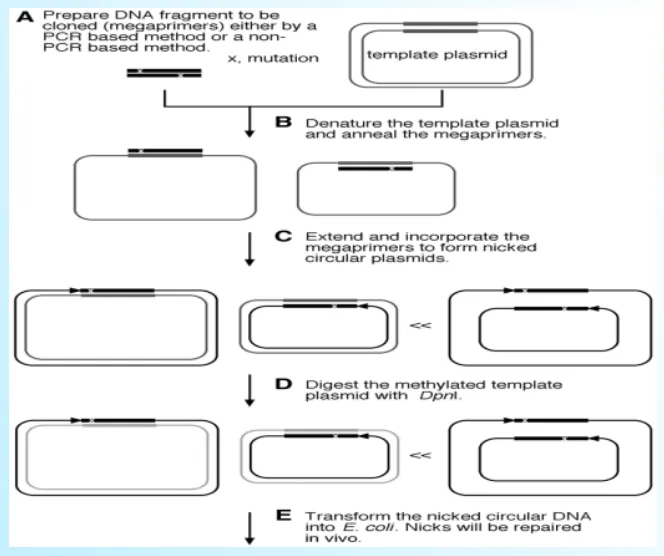
Megaprimer PCR of Whole Plasmid (MEGAWHOP) overcomes the shortcomings of error-prone PCR product digestion and ligation, namely the influence of template plasmids. The whole plasmid large primer PCR method mainly consists of four steps, namely, preparing DNA large primers, PCR amplification of whole plasmids, DpnI treatment of PCR products and transformation.
03
Saturation mutation
Saturation Mutagenesis refers to a mutation method in which the amino acid at the target site replaces 19 other amino acids. According to the basic principles, it can be classified into oligonucleotide directed mutation, box mutagenesis, overlapping extension PCR and other methods. Different methods have their own advantages and disadvantages, and the choice can be made based on the actual situation.
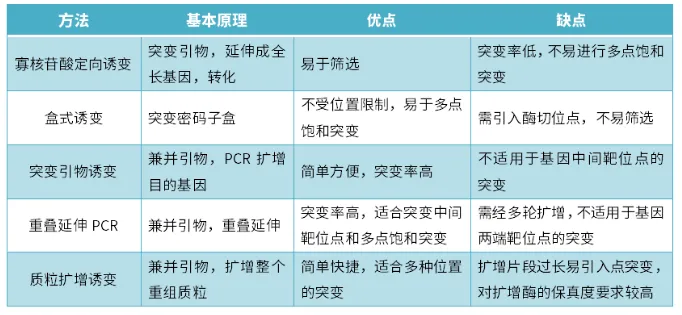
Table 1 Advantages and Disadvantages of Different Saturation Mutation Methods
04
DNA shuffling
DNA Shuffling is a process that uses DNASE I to enzymatize the mutated target gene, causing it to form many random fragments of different sizes. These fragments are then amplified without a template. The random fragments serve as primers and templates for each other and recombine during the amplification process to obtain the mutant.
The target gene can be obtained through error-prone PCR, but when shuffling, primer-free PCR assembly may all come from the same parent, reducing the mutation efficiency. Therefore, the use of DNA Family Shuffling based on ssDNA can reduce the influence from parents. The target gene of the parent was phosphorylated by 5 ', and then the double-stranded DNA was degraded by λ exonuclease to obtain ssDNA. The ssDNA was mixed in equal molar ratios and then subjected to enzymatic digestion and PCR amplification by DNASE I.
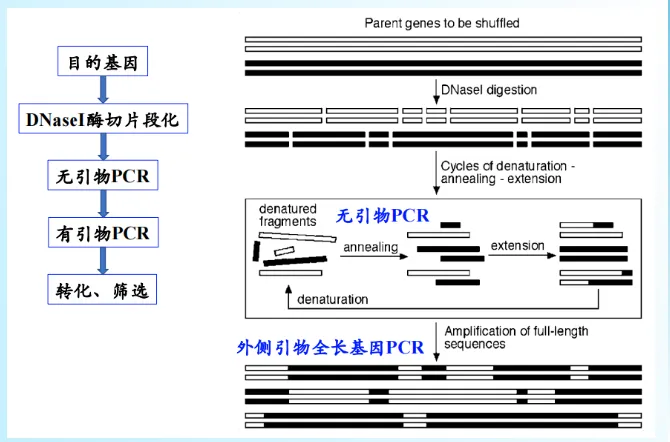
Figure 3 Schematic diagram of the principle of DNA Shuffling
05
In vitro random recombination
Random-Priming in Vitro Recombination (RPR) uses single-stranded DNA as a template, supplemented by merging primers, to generate short DNA fragments complementary to different sites of the template. There will be a small number of point mutations in the short DNA fragments, and in the subsequent PCR reaction, They recombine with each other as primers to form complete gene lengths.
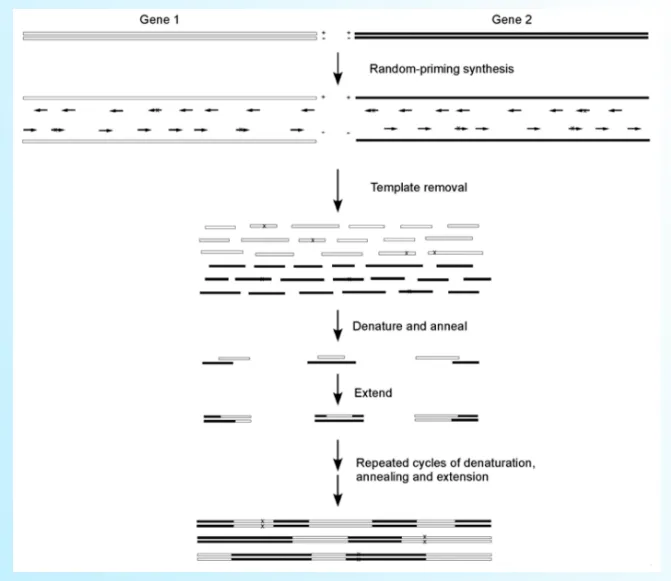
Figure 4 Schematic diagram of the principle of in vitro random recombination
06
Interlaced extension
The interleaved Extension (Staggered Extension Process, StEP) is actually two PCR processes. In the first PCR, only annealing and extension were set, with the annealing and extension times only set at 5 to 15 seconds to obtain short fragments. In the second PCR, standard PCR was set to amplify the full-length gene.
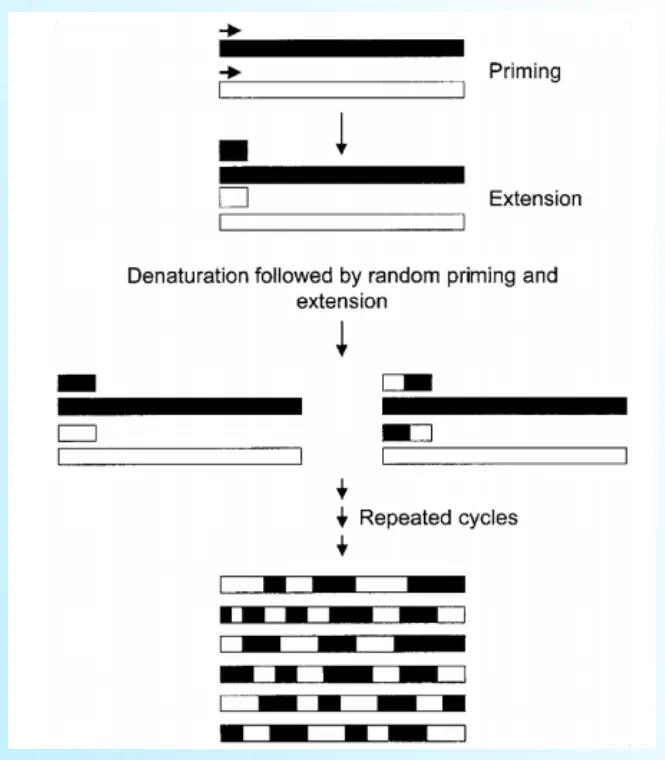
Figure 5 Schematic diagram of interlaced extension
The above is an introduction to some commonly used methods for constructing mutant libraries. Besides, there are also methods such as RACHII and ITCHY, which need to be combined with efficient screening methods to achieve the purpose of high-throughput screening.
0756-8699969
Address: No. 88, Shuian 1st Road, Nanping Science and Technology Park, Xiangzhou District, Zhuhai City, Guangdong Province
Email: marketing@biori.com
Wechat official account |
Product consultation |
Join us |
Video Account |