Source of the article: Bioanalysis Research Group
Author: Guannan Le
1. Introduction to Real-time PCR
In 1992, the Japanese Higuchi was the first to propose the "Real-time fluorescence quantitative PCR technology" (Real-time PCR). In 1996, the American Biological Company launched the world's first fluorescence quantitative PCR instrument, which was composed of a PCR amplification thermal cycling system, a fluorescence detection optical system, a computer and application software. Real-time monitoring of nucleic acid amplification products is carried out through fluorescent dyes or fluorescent probes. Through mathematical function relationships and in combination with software for result analysis, the calculation of the initial template quantity of the sample to be tested is achieved. As a result, real-time fluorescence quantitative PCR technology has been widely applied.
Real-time PCR is a method that measures the total amount of products after each cycle of polymerase chain reaction using fluorescent chemicals in DNA amplification reactions. A method for quantitative analysis of specific DNA sequences in the sample to be tested through internal or external reference methods. Real-time PCR can detect the amplification process of PCR in Real time by incorporating fluorescent dyes into the PCR amplification system and detecting the fluorescence signals generated during the amplification process. Moreover, since there is a linear relationship between the Ct value of the template and the initial copy number of the template during the exponential period of PCR amplification, it becomes the basis for quantification.
Real-time PCR mainly consists of a quantitative PCR instrument, eight tubes, reagents and a PC analysis terminal, etc.
2. Principle of Real-time PCR
The principle of Real-time PCR varies depending on the testing method. Real-time PCR mainly includes fluorescence labeling method and fluorescence probe method. The fluorescent labeling method refers to the fluorescent dye embedding method mainly based on the SYBR Green I dye method; The fluorescence probe method refers to the quenching dye primer method mainly based on the Taqman probe method.
2.1 Principle of SYBR Green I Dye Method
SYBR Green I is a highly sensitive non-specific double-stranded DNA fluorescent dye with a green excitation wavelength. When DNA amplification occurs, SYBR Green I can non-specifically bind to the small groove region of dsDNA double helix.
Free SYBR Green I emits only a very weak fluorescence signal, while SYBR Green I embedded in the small groove region of the double helix of the amplification product (dsDNA) emits strong fluorescence. The fluorescence signal is amplified a thousand times, and during the exponential period of PCR amplification, there is a linear relationship between the Ct value of the template and the initial copy number of the template. Therefore, the initial concentration of dsDNA can be detected by measuring the intensity of the fluorescence signal.
The SYBR Green I dye method is simple to operate, highly sensitive and has a low cost. It is widely used in the quantification of DNA and RNA, the study of gene expression levels, the study of transgenic and recombinant animals and plants, etc. However, because the binding of SYBR Green I to the double helix of dsDNA is non-specific. Therefore, SYBR Green I can bind to the specific amplification product (target dsDNA) while also binding to the primer dimer and the non-specific amplified dsDNA, which may affect the result judgment. So after the amplification reaction is completed, the generated dsDNA must also be analyzed: that is, by heating to untangle the double strands of dsDNA, the SYBR Green I dye falls off, and the fluorescence value gradually decreases, forming a curve of temperature and fluorescence intensity: namely, the "Melting curve". The presence of primer dimers or non-specific amplification in the amplification system can be determined based on whether the dissolution curve is unimodal (Note: As the Tm values of different amplification products vary, if there is non-specific amplification in the product, a multi-modal phenomenon will occur).
2.2 Taqman Probe Method
The Taqman probe is composed of an oligonucleotide sequence labeled with a fluorescent reporter group at the 5 'end, a quenching group at the 3' end, and a specific binding to the target gene. When the probe is intact, the fluorescence signal emitted by the reporter group is absorbed by the quencher group, and at this time, the instrument will not detect the fluorescence signal. During PCR amplification, the template DNA denatures and dechains, and the Taqman probe specifically binds to the target gene. The Taq enzyme, with its 5 '-3' exonucuclease activity, extends to the probe binding site, hydrolyzing the probe and separating the fluorescent reporter group from the quenching group, thereby detecting the fluorescence signal. The intensity of the fluorescence signal is directly proportional to the concentration of the amplified dsDNA. The fluorescence signal is detected and collected by the instrument to obtain the "amplification curve", and the concentration of dsDNA in the system is reflected by the intensity of the fluorescence signal.
The author generally uses the SYBR Green I dye method and is not particularly familiar with the Taqman probe. The principle of the Taqman probe method can be summarized as follows: The amplification reagent of the Taqman probe method contains oligonucleotide probes labeled with fluorescent reporter groups at the 5 'end and quenching groups at the 3' end (bound to single-stranded DNA), as well as oligonucleotide sequences containing Taq enzymes (with 5 '-3' exonuctase activity) that can specifically bind to the target gene. Only when specific amplification occurs will the Taq enzyme cleave the oligonucleotide probe and cut off the fluorescent reporter group. Thus, fluorescence is excited.
Reference article link
1.https://zhuanlan.zhihu.com/p/565126750
2.https://baike.baidu.com/item/%E5%AE%9E%E6%97%B6%E8%8D%A7%E5%85%89%E5%AE%9A%E9%87%8FPCR/5395897
3.Real-time PCR model
Why introduce the model of Real-time PCR? Because the exposure of Real-time PCR on the machine is different from that of WB (the exposure of WB may vary in program operation due to the type of machine, but as long as you have strips and developer, it can basically be exposed).
However, the application of Real-time PCR varies greatly depending on the model. (Don't ask me why I know. When you ride an electric bike, carry a prepared template, and visit three or four laboratories but still can't apply it, you will never forget that there are different models for Real-time PCR application in your lifetime.)
First of all, different models use different types of eight-tube pipes. As far as I know, eight-tube pipes are classified into high pipe, low pipe and 96-hole casing, etc. Forcing the use of an eight-tube that does not match the model on the machine not only fails to yield correct experimental results but also damages the instrument (Note: There is a high probability of damage because the control of PCR amplification temperature is achieved by heating the instrument base). If an eight-pipe that does not match the model is used for loading the machine; For example: The low tube eight-tube on the executive instrument does not come into contact with the instrument's thermal cover and the eight-tube, making PCR amplification impossible. On the low-tube instrument, an eight-tube tube was inserted, squeezing the hot cover of the PCR instrument and causing damage to the instrument. In short, use matching components to install the machine.
Secondly, in the reagents of Real-time PCR, there is a reagent called Rox, which serves as the correction dye for the instrument and can correct errors caused by the evaporation of Wells and reagents, etc. (It must be noted here that the types of Rox vary among different models. As far as I know, the reagents of Novizan and Takala are divided into Rox I and Rox II).
Instrument introduction link: https://www.docin.com/p-2348809832.html
4. Experimental Procedures
The experimental steps of Real-time PCR are not very complicated. They mainly include RNA extraction - reverse transcription - system preparation - machine operation and result analysis, etc. (I will introduce them to you all if there is an opportunity in the future.)
5. Primer design
Finally, let me introduce the primer introduction of Real-time PCR to you all
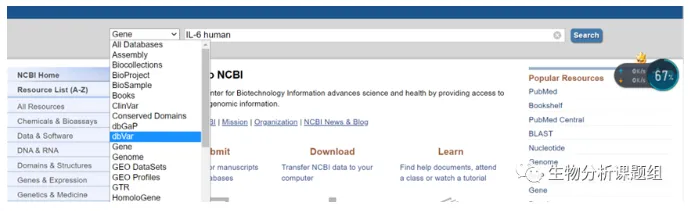
5.1 Search for NCBI
5.2 Select Gene and enter the name and species of the primer to be synthesized
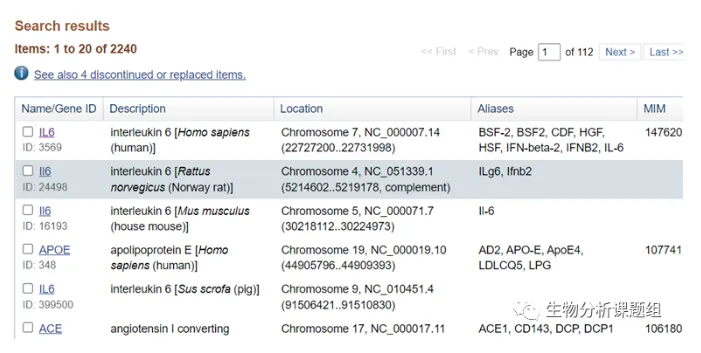
5.3 Select the genetic options corresponding to the species
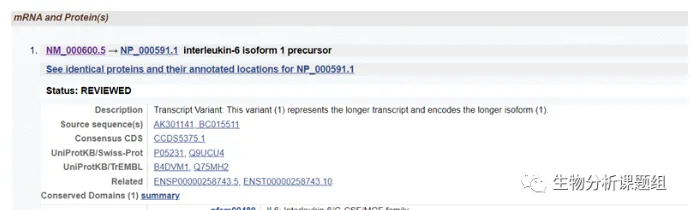
5.4 After entering, scroll down to the accession number
5.5 After entering, select Pick Primers
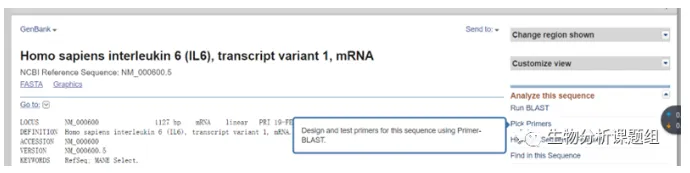
5.6 After entering, select the size of the amplification product and whether it crosses exons
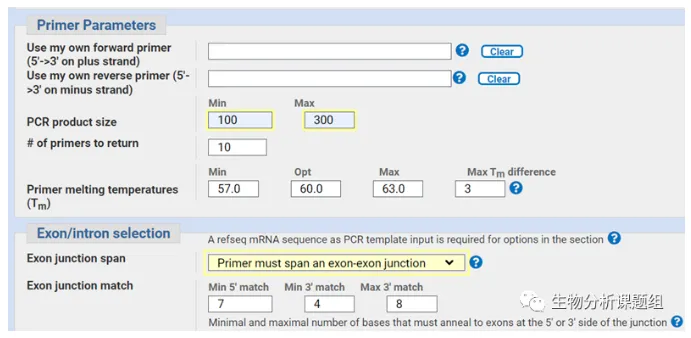
5.7 Click "Get primers" and wait for a while to obtain the corresponding primers

When choosing primers: Follow the principles below (see link)
https://www.biomart.cn/specials/4abio/article/528822
0756-8699969
Address: No. 88, Shuian 1st Road, Nanping Science and Technology Park, Xiangzhou District, Zhuhai City, Guangdong Province
Email: marketing@biori.com
Wechat official account |
Product consultation |
Join us |
Video Account |