
Common methods
Blue and white spot screening
Sanger sequencing
NGS sequencing
Polymerase chain reaction (PCR) is a molecular biology technique that amplifies and amplifies specific nucleic acid fragments in vitro and is widely used in the field of life science research. However, due to the mismatch that occurs during the in vitro synthesis of DNA polymerase and is gradually amplified as the amplification reaction takes place, it will ultimately affect the accuracy of the results. Especially in applications such as cloning, site-directed mutagenesis, sequencing template preparation, and gene variability research, maintaining the accuracy of DNA sequences during the PCR amplification process is particularly important.
The ability of DNA polymerase to precisely replicate DNA templates is called "fidelity". During the PCR amplification process, some polymerases can precisely read and replicate template sequences and preferentially bind to the correct nucleotides, thereby achieving precise amplification. This is because such DNA polymerases have 3 '→5' exonucidase activity. When incorrect bases are incorporated, the polymerase will recognize the wrong nucleotide and remove it, and re-polymerize the correct nucleotide。
The 5 '→3' polymerization active site of DNA polymerase is separated from the 3 '→5' exonuclease activity. During amplification, when incorrect nucleotides are incorporated, DNA synthesis will be suspended due to the base pairing kinetics. At this time, the 3 '→5' exonuclease will remove the mismatched bases and replace them with the correct nucleotides.

Figure 1 DNA polymerase and its 5 '→3' polymerase domain and 3 '→5' exonuclease domain (Source: Internet)
The mismatch rate is often used as an indicator to compare the fidelity of different DNA polymerases. The lower the mismatch rate, the better the fidelity. The mismatch rate refers to the ratio of the number of mismatched nucleotides in the PCR product to the total number of polymerized nucleotides. Therefore, the fidelity of DNA polymerase is closely related to the length of PCR amplifiers and the number of amplification cycles. Thus, when comparing the fidelity of different types of DNA polymerase, the same method and parameters must be used for amplification。
There are many methods for detecting the fidelity of DNA polymerase, including constant denatured capillary electrophoresis (CDCE), denatured gradient gel electrophoresis (DGGE), PCR/RFLP, blue-white screening, Sanger sequencing and NGS sequencing, etc. However, the common determination methods mainly include blue-white screening, Sanger sequencing and NGS sequencing. The determination principles and operation steps are as follows:
Blue and white spot screening is used to determine the fidelity:
Blue-white spot screening is to determine the fidelity of DNA polymerase by complementing the α -peptide chain encoded by the lacZ gene (the N-terminal of the enzyme) with the C-terminal of β -galactosidase expressed by β -galactosidase-deficient strains, forming an active β -galactosidase that has the ability to decompose X-gal to generate blue substances.
Operation steps
1
The LacZα gene was amplified using the DNA polymerase to be tested;
2
The obtained LacZα gene was ligated onto a linear vector to form a recombinant plasmid;
3
The recombinant plasmid was transformed into host bacteria and coated with plates for culture;
2
Calculate the mismatch rate by counting the number of blue spots and white spots.
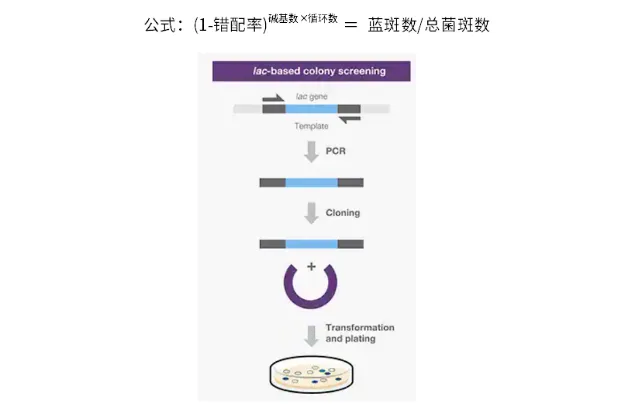
Figure 2 Steps for screening and detecting the fidelity of blue and white spots(From the Internet
Common β -galactosidase-deficient strains include DH5α, TOP10, etc. Vectors suitable for blue and white spot screening include pUC series (pUC18, pUC19), M13mp series, etc.
Sanger sequencing is a method that sequences a single colony and then statistically analyzes the number of mismatched nucleotides to verify the fidelity of DNA polymerase。
Operation steps
1
PCR amplification of the DNA template was performed using the polymerase to be tested;
2
Clone the PCR products onto vectors and transform them into host bacteria for plate culture;
3
Single colonies were picked from the plate for large-scale sequencing;
2
Count the number of mismatched nucleotides and calculate the mismatch rate.
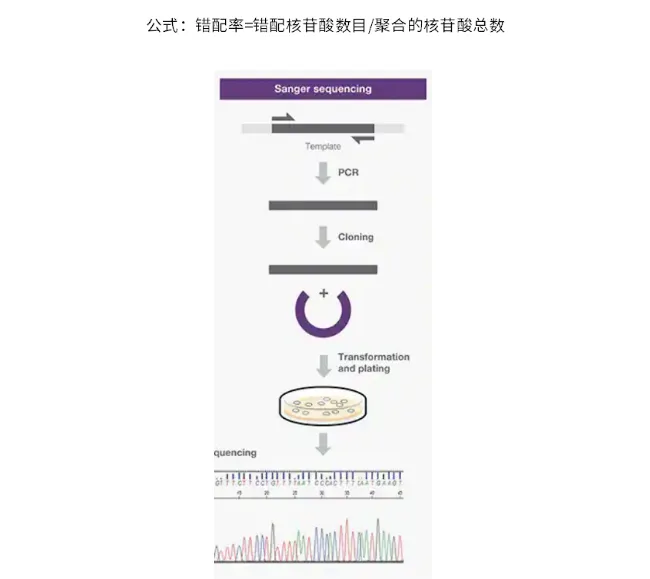
Figure 3 Steps for Sanger sequencing to detect fidelity (Source: Internet)
NGSSequencing determination of fidelity: NGS sequencing for fidelity determination is a method that uses the NGS platform to sequence and analyze the PCR products amplified by the DNA polymerase to be tested, and calculates the fidelity of the DNA polymerase by counting the number of mismatched nucleotides. Operation steps: 1. Design PCR amplification primers based on the template; 2. Perform PCR amplification using the DNA polymerase to be tested; 3. Use the kit to break the library construction of PCR products and then perform bidirectional sequencing on the machine. 4. Screen the sites with the same mutation in both positive and negative directions for statistics and calculate the mismatch rate。

Figure 4 Steps for NGS sequencing to detect fidelity (Wang Jin, 2017))
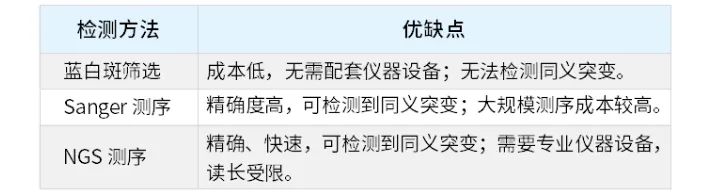
Advantages and disadvantages of the three methods:
References
Geng Liang. A Detection Method for DNA Polymerase Mismatch Rate, CN104894221A. 2015
2. Qi Hongyan. Denatancy Gradient Gel electrophoresis for testing the mismatch Rate of DNA Polymerase in PCR, CN1438483A.2003.
3. Wang Jin. A Method for Detecting the Fidelity of DNA Polymerase: CN106701896A[P]. 2017
4.Keith BJ, Jozwiakowski SK, Connolly BA. A plasmid-based lacZα gene assay for DNA polymerase fidelity measurement. Anal Biochem. 2013 Feb 15;433(2):153-61.
5.Cline J, Braman JC, Hogrefe HH. PCR fidelity of pfu DNA polymerase and other thermostable DNA polymerases. Nucleic Acids Res. 1996 Sep 15;24(18):3546-51.
6.Lundberg KS, Shoemaker DD, Adams MW, Short JM, Sorge JA, Mathur EJ. High-fidelity amplification using a thermostable DNA polymerase isolated from Pyrococcus furiosus. Gene. 1991 Dec 1;108(1):1-6.
0756-8699969
Address: No. 88, Shuian 1st Road, Nanping Science and Technology Park, Xiangzhou District, Zhuhai City, Guangdong Province
Email: marketing@biori.com
Wechat official account |
Product consultation |
Join us |
Video Account |