Article Source: Carefully Selected IVD Raw Materials
According toGlobal Market InsiteAnalysis of the market size of respiratory pathogen diagnosis: The global market size of respiratory pathogen diagnosis was approximately 10.13 billion US dollars in 2019 and is expected to increase to 18.23 billion US dollars by 2026, with an average annual compound growth rate of 8.76%.
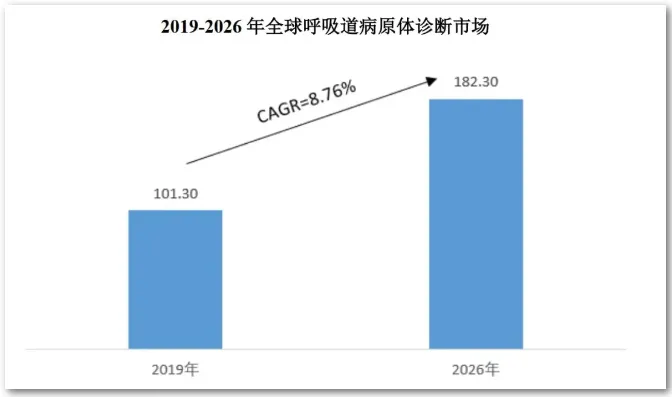
The global respiratory pathogen diagnostics market from 2019 to 2026
(Data source: Global Market Insite)
In recent years, driven by the continuous advancement of the hierarchical medical system, the outbreak of Mycoplasma pneumoniae in the fourth quarter of 2023, the expansion of the testing scope, and the prominent trend of early diagnosis and treatment, the market size of respiratory pathogen detection in China has grown from 178 million yuan in 2013 to 1.297 billion yuan in 2019, with a compound annual growth rate of 39.24%. At this growth rate, we estimate that the entire domestic respiratory pathogen detection market size will reach 4.875 billion yuan in 2023. Among them, the market size of atypical respiratory pathogens reached 865 million yuan. Atypical pathogens mainly refer to Mycoplasma pneumoniae, Chlamydia pneumoniae and Legionella pneumophila. Other rare pathogens include Chlamydia psittaci and rickettsia. Most of these pathogens are intracellular colonized and have no cell walls, and thus are also called intracellular infectious pathogens.
Respiratory infectious diseases andCommunity-acquired pneumonia
Respiratory infectious diseases are common clinical disease types. The main pathogenic microorganisms include viruses, bacteria, fungi and atypical pathogens. According to the 2019 Global Health Estimates Report released by the WHO, lower respiratory tract infections ranked fourth among the top 10 causes of death worldwide in 2019, causing 2.6 million deaths throughout the year. Moreover, in low -, middle -, upper-middle - and high-income countries, lower respiratory tract infections are the only category of infectious diseases that rank among the top 10 causes of death ¹.
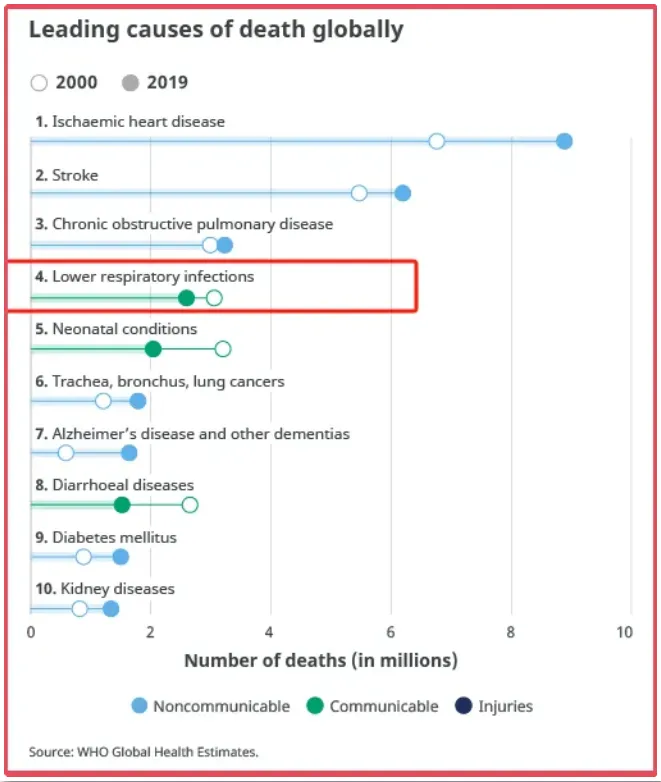
The top 10 causes of death worldwide in 2019
Community-acquired pneumonia (CAP) is an infectious inflammation of the lung parenchyma that occurs outside hospitals, including pneumonia caused by pathogens with a clear incubation period that develops during the incubation period after admission, posing a serious threat to people's health. In China, the incidence rate of CAP is estimated to be as high as 7.13 cases per 1,000 person-years, and the number of CAP cases in 2016 was estimated to exceed 9.5 million. With the aging of the population, the number of cases and deaths of CAP will increase rapidly, exacerbating the disease burden ².
Community-acquired pneumonia CAP can be classified into bacterial, viral, fungal and atypical pathogen-induced CAP according to the cause. Relevant reports indicate that among CAP patients in China, the detection rate of pathogenic bacteria is approximately 50%, with a relatively high proportion of pathogenic bacteria remaining undetected. Among CAP children with positive pathogen detection, atypical pathogens are one of the most common CAP pathogens, and with the development of testing techniques, their proportion in CAP has been increasing year by year.
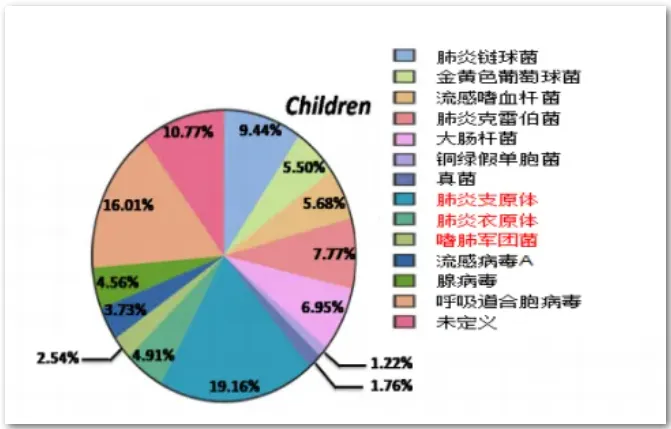
Atypical pathogen
Atypical pathogens mainly refer to Mycoplasma pneumoniae, Chlamydia pneumoniae and Legionella pneumophila. Other rare pathogens include Chlamydia psittaci and rickettsia. Most of these pathogens are intracellular colonized and have no cell walls, and thus are also called intracellular infectious pathogens. Atypical pathogenic bacteria can cause pneumonia. The prevalence rate reported abroad is 22%, while in China it is approximately 30%.
Mycoplasma pneumoniae, an atypical pathogen
Studies show that the infection rate of Mycoplasma pneumoniae has surpassed that of Streptococcus pneumoniae, making it the leading pathogen of CAP in both adults and children in China. During an epidemic, it can cause 20% to 40% of CAP cases in the population4 to 5. Another epidemiological study on a large sample of Mycoplasma pneumoniae infection in Hunan region from 2013 to 2021 showed that the infection rate of Mp in hospitalized children gradually increased with age. MP was the most commonly detected pathogen in hospitalized children over 5 years old with CAP, accounting for more than 60%6。
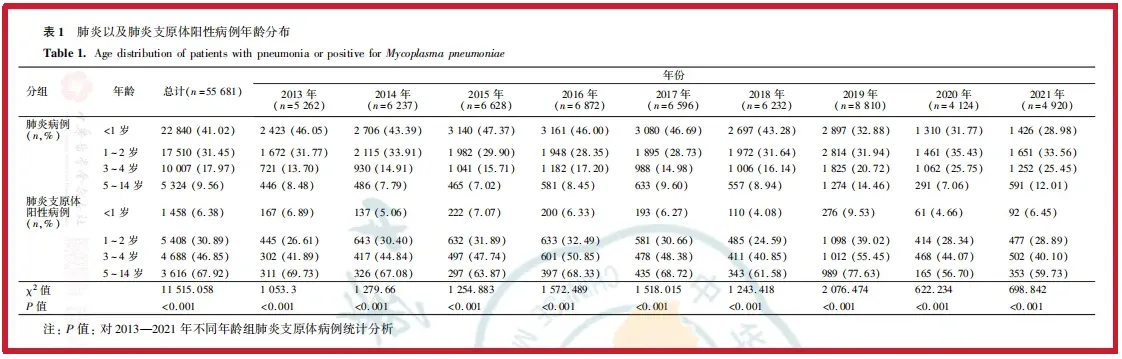
The age distribution of pneumonia and mycoplasma pneumoniae cases
2. Chlamydia pneumoniae, an atypical pathogen
Chlamydia pneumoniae is also a major pathogen causing acute respiratory tract infections in children. Although the overall symptoms of infected patients are relatively mild, the infection rate among hospitalized cases is gradually increasing.
Atypical pathogens and severe pneumonia
Severe pneumonia is formed when inflammation of the lung tissue (bronchioles, alveoli, interstitium) progresses to a certain stage of the disease, deteriorates and worsens, causing organ dysfunction and even threatening life. The fatality rate of severe pneumonia can be as high as 30% to 50%, which can lead to serious complications and increase the economic burden on medical care. A meta-study in 2023 included 75 studies and 18,379 patients with severe pneumonia. The study indicated that the overall detection rate of atypical pathogens in severe pneumonia was 8.1% (95% CI: 6.3%-10.1%), among which Legionella, mycoplasma and chlamydia were the main atypical pathogens in severe pneumonia8。
Mixed infections of multiple pathogens require vigilance
Mixed infection refers to an infected person being infected with two or more pathogens. If a mixed infection occurs, the condition may be more severe than that of a single infection. According to data from the National Center for Disease Control and Prevention, 23.3% of patients with acute respiratory diseases are co-infected with more than two pathogens, and mixed respiratory disease infections are gradually becoming the mainstream9. The latest study, based on the laboratory test results of 160,436 multiple respiratory pathogens at Peking Union Medical College Hospital from February 2020 to 22nd 2023, shows that among children with co-infections, 36.12% were also infected with MP, with fever and cough as the main symptoms10。
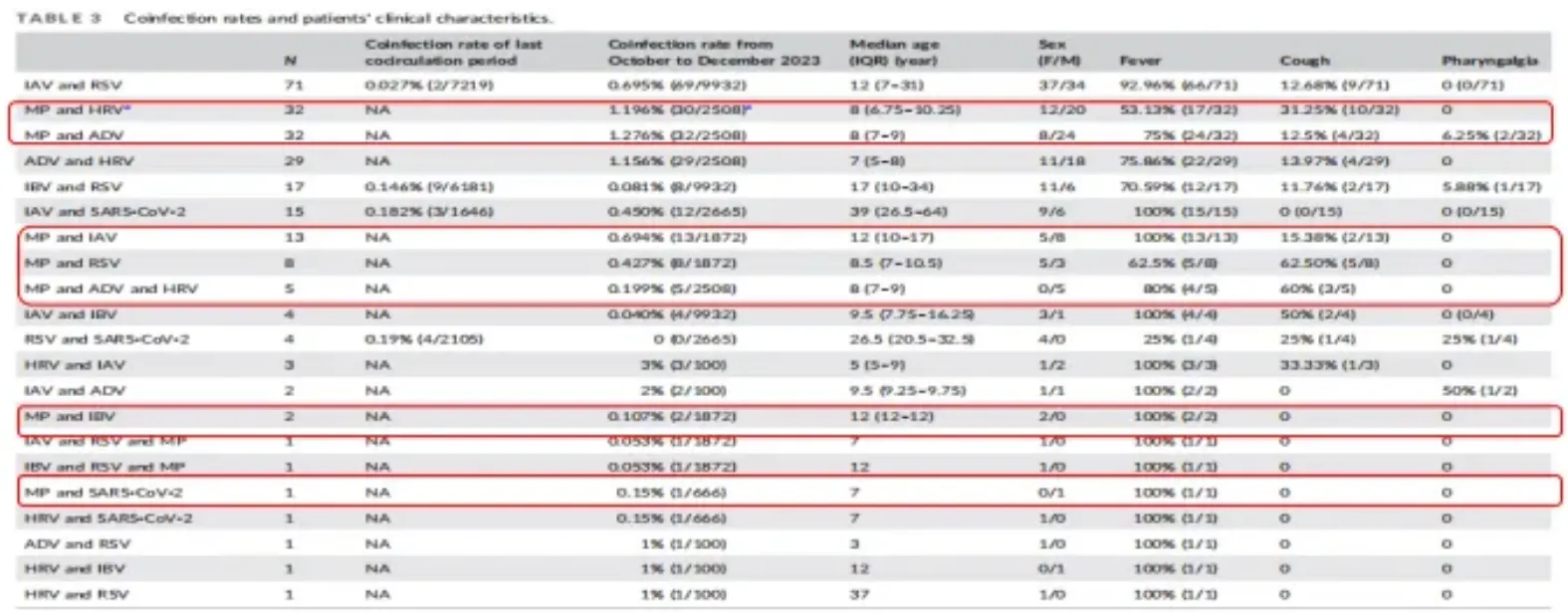
The co-infection rate and the clinical characteristics of the patients
ADV, adenovirus; HRV, human rhinovirus IAV, Influenza A virus, IBV, Influenza A virus, MP, Mycoplasma pneumoniae; RSV, respiratory syncytial virus SARS-CoV-2, Severe Acute Respiratory Syndrome Coronavirus 2 NA is not applicable.
References
1. https://www.who.int/news-room/fact-sheets/detail/the-top-10-causes-of-death
2. Fan G, Zhou Y, Zhou F, et al. The mortality and years of life lost for community-acquired pneumonia before and during COVID-19 pandemic in China. Lancet Reg Health West Pac. 2023 Nov 20;42:100968.
3. Zhu YG, Tang XD, Lu YT, et al. Contemporary Situation of Community-acquired Pneumonia in China: A Systematic Review. J Transl Int Med. 2018 Mar 28;6(1):26-31.
4. Jiang Ning, Long Qiuyue, Zheng Yali, et al. Epidemiology, Etiology and Treatment Progress of community-acquired pneumonia [J]. Chinese Journal of Preventive Medicine,2023,57(1):91-99
5. Gong C, Huang F, Suo L, et al. Increase of respiratory illnesses among children in Beijing, China, during the autumn and winter of 2023. Euro Surveill. 2024 Jan;29(2):2300704
Liu Shuqiong, Xie Leyun, Zeng Saizhen, et al. Epidemiological analysis of Mycoplasma pneumoniae infection in hospitalized children with community-acquired pneumonia in Hunan Province from 2013 to 2021 [J]. Chinese Journal of Microbiology and Immunology,2023,43(6):432-441.
7. Zhang Zhou, Lai Laiqing, Guo Huixian, et al. Analysis of Chlamydia pneumoniae in 21,242 hospitalized Children with Acute Respiratory Tract Infection [J]. Chinese Health Standards Management,2021,12(13):79-82.
8. Wang S, Tang J, Tan Y,et al. Prevalence of atypical pathogens in patients with severe pneumonia: a systematic review and meta-analysis. BMJ Open. 2023 Apr 11;13(4):e066721.
9. Huang X, Yuan L, Ye C, et al. Epidemiological characteristics of respiratory viruses in patients with acute respiratory infections during 2009–2018 in southern China[J]. International Journal of Infectious Diseases, 2020, 98: 21-32.
10. Li Y, Yu J, Wang Y, Yi J, et al. Cocirculation and coinfection of multiple respiratory viruses during autumn and winter seasons of 2023 in Beijing, China: A retrospective study. J Med Virol. 2024 Apr;96(4):e29602.
0756-8699969
Address: No. 88, Shuian 1st Road, Nanping Science and Technology Park, Xiangzhou District, Zhuhai City, Guangdong Province
Email: marketing@biori.com
Wechat official account |
Product consultation |
Join us |
Video Account |