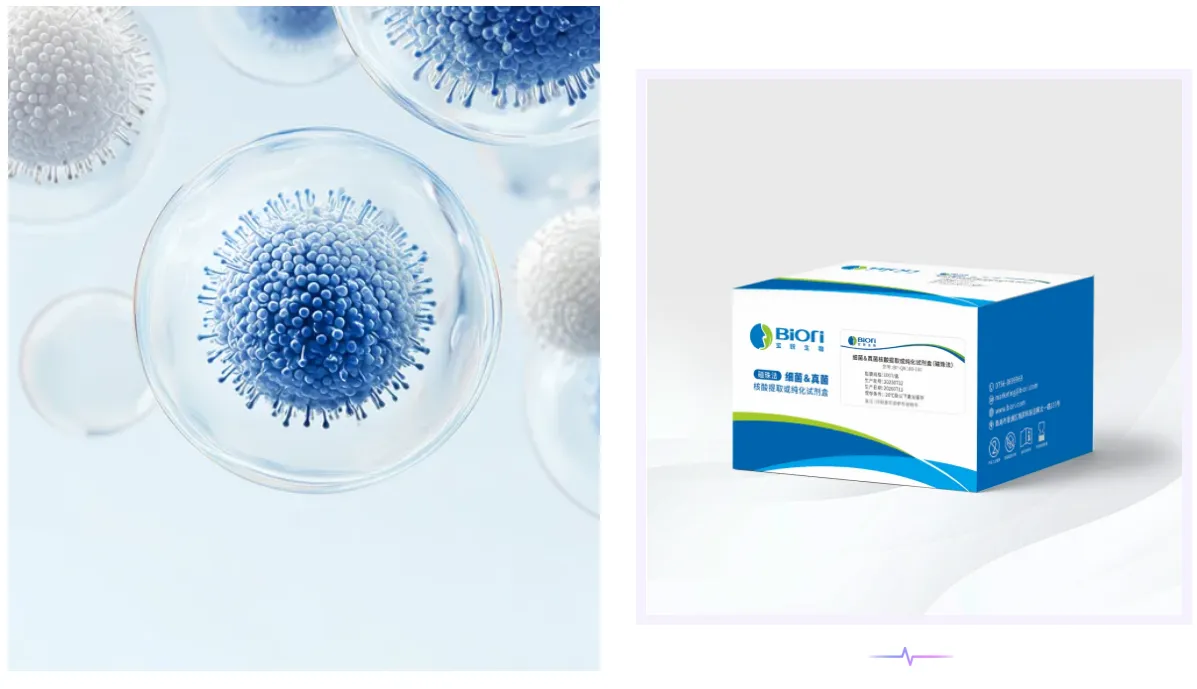
The result will be available in 1.5 hours! New sterile rapid test kit (PCR-fluorescence probe method) express delivery
2026-02-27
time
Aseptic testing, as an important control link for the safety of biopharmaceuticals, has long been valued by global drug regulatory authorities such as the US FDA, the EU EMA, and China NMPA. The pharmacopoeias of various countries have also made clear regulations on aseptic testing.
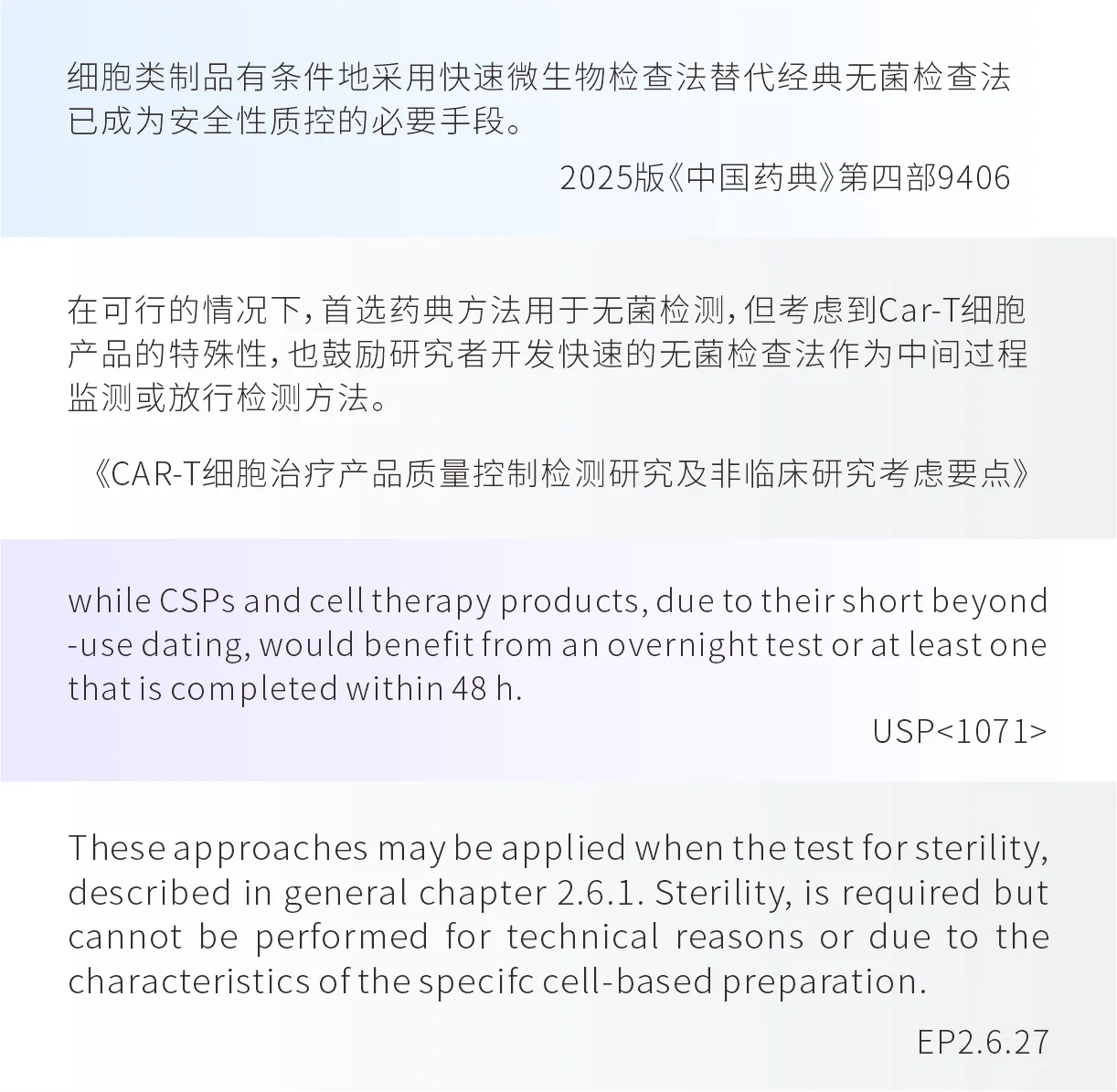
With the rapid development of biopharmaceuticals, especially the extensive development of ATMP (Advanced Therapeutic Drugs), the traditional aseptic culture and detection methods can no longer meet the time limit requirements of products. Therefore, regulatory authorities encourage developers to conduct research on aseptic rapid testing methods as alternatives to traditional culture methods.
Regulatory requirements
Product advantages The qPCR method has advantages such as high sensitivity, strong specificity, simple and convenient operation, and short detection time. It has been widely and maturely applied in the field of biopharmaceutical quality control. The sterile testing reagents of Baorui Biology use qPCR to detect the DNA of bacteria and fungi, which can effectively reduce the testing time for process control and final product control in biopharmaceuticals, and assist in the quality control of biopharmaceuticals.
01 Wide coverage
Bacteria: It can cover approximately 92% of known bacterial species and match the DNA sequences of nearly 60,000 (or subspecies) bacteria
Fungi: It can cover approximately 92% of known fungal species and match the DNA sequences of nearly 5,000 species (or subspecies) of fungi
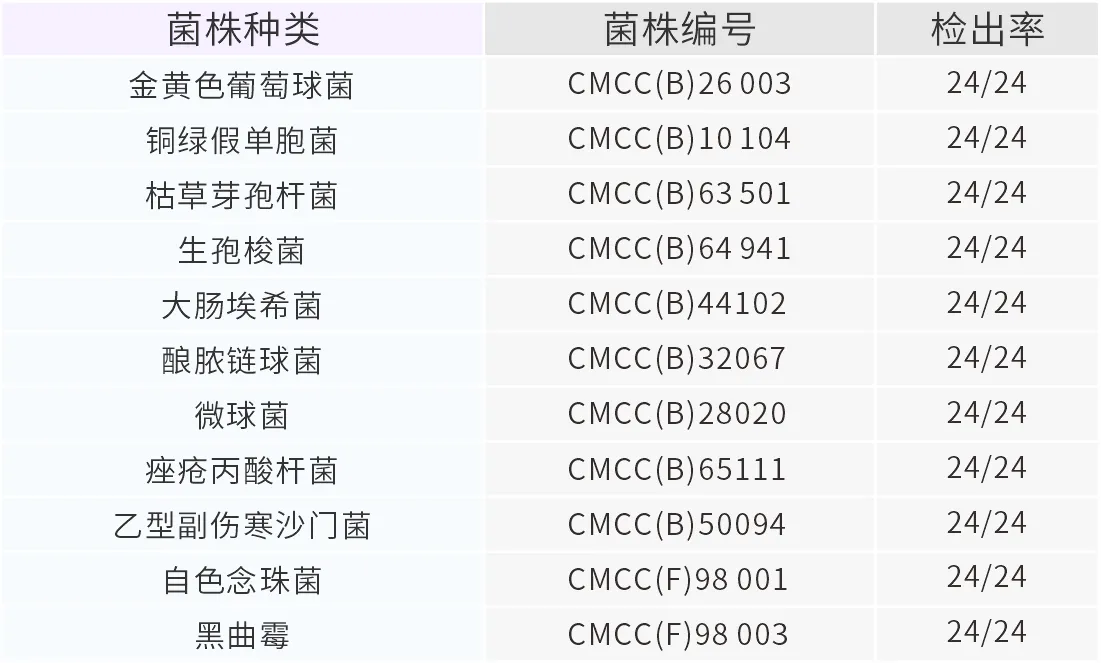
02 High sensitivity The detection limit reached 10 CFU/ reaction. Nine standard bacterial strains and two standard fungal strains recommended by the pharmacopoeia were verified. Each strain was tested 24 times, and the detection ratio could all reach 24/24. The results are shown in Table 1
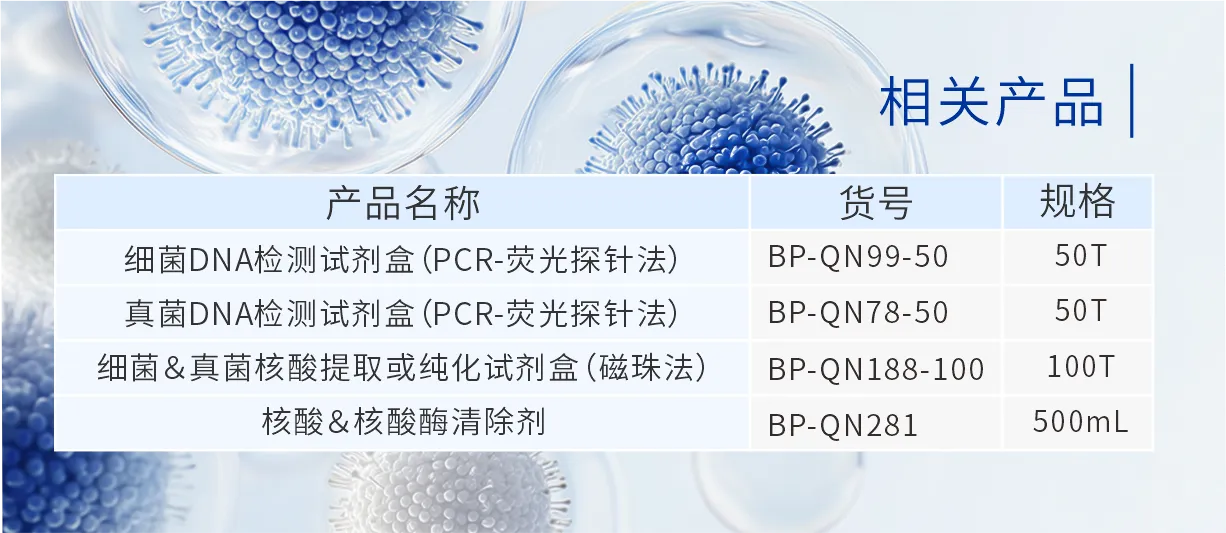
03fuckConvenient and fast 1.When paired with the Baorui Biological Bacterial & Fungal Nucleic Acid Extraction or Purification Kit (magnetic bead method), the nucleic acid extraction and purification of samples can be completed within 20 minutes without the need for additional equipment. 2.The extraction or purification kits should be stored and transported at room temperature. A single storage condition can be used to avoid the risk of storage errors. 3. The extraction and amplification reagents are all ready to use upon opening the bottle and are non-existentIt needs to be prepared to reduce false positives introduced by manual operation. The entire process from sample processing to test results can be completed within 90 minutes.
04Strong applicability A variety of matrix samples and multiple PCR amplification systems were verified, and the performance of the kit was not affected.
05The system is reliable 1. It includes internal quality control (IC) and positive quality control (PC), effectively preventing the occurrence of false negative and false positive results. 2. The UDG enzyme anti-contamination system is adopted to avoid contamination risks.
06Exclusivity It was verified that a variety of common cell lines, mycoplasma, bacteria and fungi had no effect on the experimental results。
07 Professionalism The kit has been verified for sensitivity, repeatability, specificity and durability in accordance with the guidelines for the validation of alternative methods for microbiological testing of drugs in the Chinese Pharmacopoeia, and can meet the requirements of sterile and rapid detection of biological products.
References
1. Chinese Pharmacopoeia 2025 Edition, Part III - Sterility Testing Method
2. Chinese Pharmacopoeia 2025 Edition, Part IV -9406 Guidelines for Microbiological Examination of Cell Products
3. Guidelines for the Validation of Alternative Methods for Microbiological Testing of Drugs, Part IV, 2025 Edition of the Chinese Pharmacopoeia -9201
4. Technical Guidelines for Pharmaceutical Research and Evaluation of Human Stem Cell Products
5. Research on quality control testing of CAR-T cell therapy products and key considerations for non-clinical research