Preface
Cell-free biosynthesis systems are synthetic biology methods that do not require living cells. They can achieve and control gene transcription and protein translation in vitro, thereby artificially designing new products or systems with biological functions. In simple terms, cell-free biosynthesis systems can implement the central dogma of biology in vitro (Figure 1), enabling the transfer of genetic information from DNA to RNA and then from RNA to proteins, that is, completing the process of transcription and translation of genetic information. Genetic information can also be passed from DNA to DNA, that is, the process of DNA replication is completed.
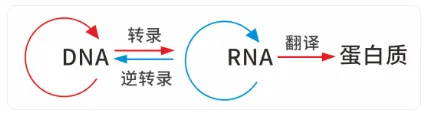
Figure 1 Central Dogma of Biology
I. Classification of Cell-free Biosynthesis Systems
Cell-free biosynthesis systems have the characteristics of simplicity, openness and easy scalability, and thus can be integrated with other disciplines and technical means to generate great value.Cell-free biosynthesis systems can be classified into cell-free protein synthesis systems and cell-free metabolic engineering in the field of cell-free synthetic biology based on product types and related disciplines (Figure 2).
Cell-free metabolic engineering mainly utilizes multi-enzyme systems for biomanufacturing. The cell-free protein synthesis (CFPS) system is a rapid and high-throughput technique for expressing target proteins (Figure 3), which uses exogenous DNA or mRNA as templates. Protein synthesis in vitro is achieved by supplementing substrates and energy substances under the action of multiple enzymes provided by cell lysates [1-2]. The system requires cell lysates, energy sources, nucleotides, amino acids, salts, cofactors, linear or plasmid DNA, and buffers to maintain the reaction. The synthesized proteins can be used in structural biology research, high-throughput screening, recombinant drugs, etc. At present, the CFPS system mainly includes four types of systems: Escherichia coli lysate, rabbit reticulocyte lysate, wheat germ extract, and yeast extract.
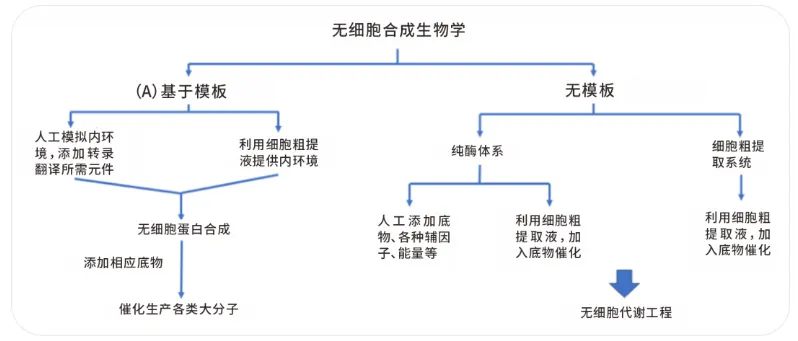
Figure 2 Classification of cell-free synthetic biology
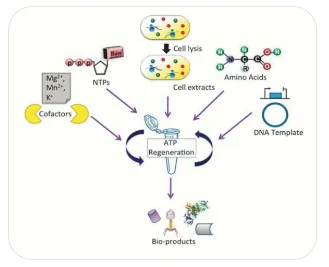
Figure 3 Schematic diagram of the CFPS system operating in a single tube [3]
Ii. Advantages and Disadvantages of cell-free biosynthesis
Compared with the intracellular expression system (Figure 4), the cell-free biosynthesis system is not blocked by the cell membrane and can directly regulate the transcription, translation, metabolism and other biological activities of different genes within the system. It contains no genome, has no growth requirements and no cytotoxic effects. As an open system, it has no mass transfer limitations, is easy to add substrates and remove products, and can be rapidly monitored and analyzed.
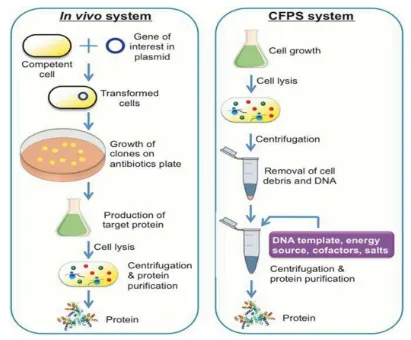
Figure 4 Comparison between the intracellular expression system and the CFPS system [3
However, cell-free biosynthesis has a higher cost due to the large number of components in the reaction system, and the reaction volume is also smaller. The current construction of the CFPS expression system is mainly based on the prokaryotic microbial Escherichia coli. However, due to codon preference and the lack of post-translational modification mechanisms and other issues, it has many deficiencies in expressing high GC content gene-encoded proteins and eukaryotic proteins that require post-translational modification [4].
Iii. Applications of Cell-free Biosynthesis
Cell-free biosynthesis is not restricted by cells, and thus is particularly suitable for the synthesis of toxic target products. Cell-free protein expression can solve the problems of unexpressed proteins, inactivity of expressed proteins, and inclusion bodies in prokaryotic protein expression products.
In addition, cell-free protein expression can be applied to the expression of soluble and membrane proteins, protein function identification, high-throughput screening, and intermolecular interaction analysis. It is also applicable in Escherichia coli and has application value for difficult-to-express proteins, directed evolution of protein molecules, phage production, protein-protein interactions, protein-nucleic acid interactions, protein-small molecule interactions, enzyme activity detection, etc.
0756-8699969
Address: No. 88, Shuian 1st Road, Nanping Science and Technology Park, Xiangzhou District, Zhuhai City, Guangdong Province
Email: marketing@biori.com
Wechat official account |
Product consultation |
Join us |
Video Account |