1
What is a bacterial restriction modification system?
The bacterial restriction-modification system (R-M) serves as the exogenous DNA that the prokaryotic immune system attacks into cells. The restriction-modification system contains enzymes that perform two functions: Restriction endonucleases (Reases). It is responsible for binding to specific DNA sequences (recognition sites). If the sequence is not methylated, the DNA sequence of its recognition site will be cut. DNA methyltransferase (MTase) : It is responsible for recognizing the same DNA sequence and catalyzing the transfer of methyl groups to specific bases in the recognized sequence, thereby protecting it from being cleaved by REase.
The bacterial genes encoding specific restriction endonucleases and their homologous methylases are adjacent to each other on the bacterial chromosome, but not necessarily in the same direction. The tight physical connection reduces the chance of two genes separating due to recombination during the bacterial binding process.
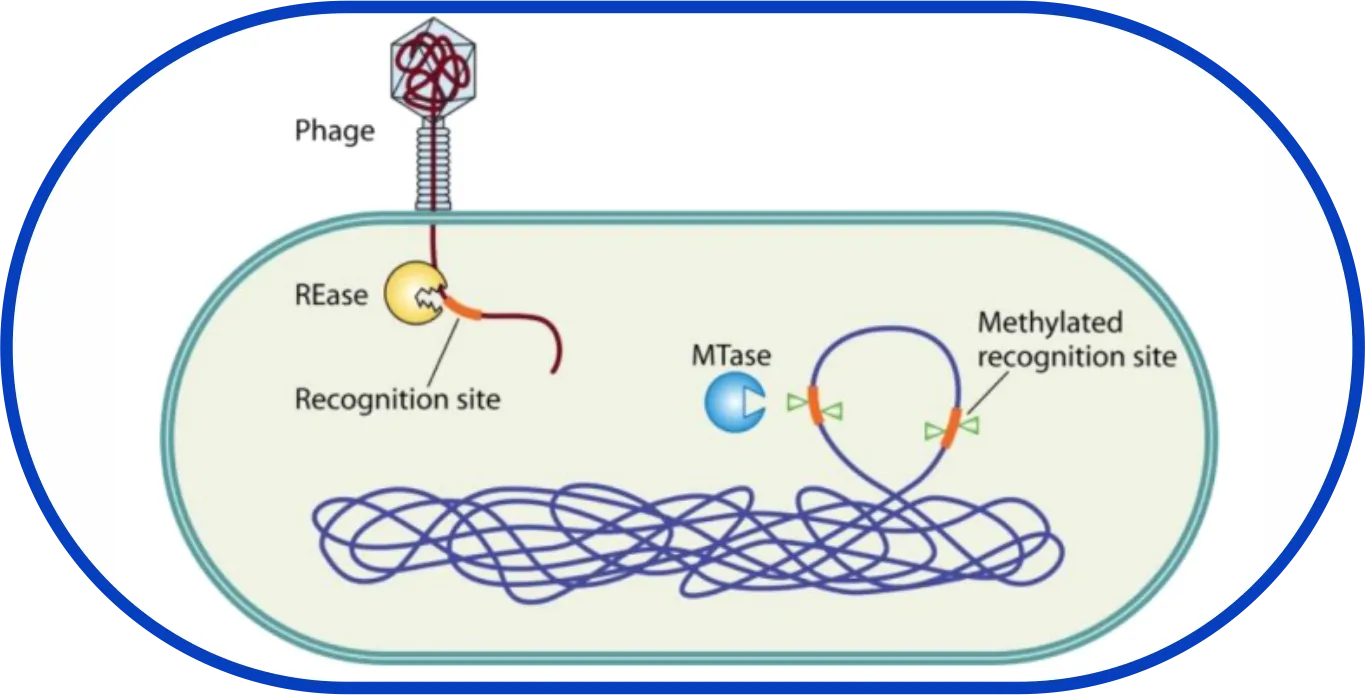
Figure 1 Defense function of the bacterial restriction modification system
2
What is a restriction endonuclease?
Restriction endonucleases are the main content of molecular biology, serving as models for site-specific DNA recognition, cleavage mechanisms, in vivo functions, and evolutionary origins.
3
Classification of restriction endonucleases
Restriction endonucleases are classified into type I, type II, type III and type IV based on their domains, cofactors, the length and symmetry of the recognition sequence, and the restriction sites. From the perspective of cloning, the most important restriction endonucleases belong to type II, and hundreds of commercial type II restriction endonucleases are used for molecular cloning.
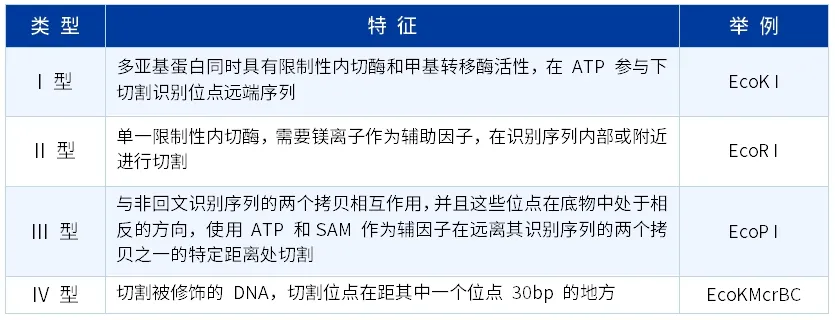
Table 1 Classification of restriction endonucleases
4
Classification criteria for type II restriction endonucleases
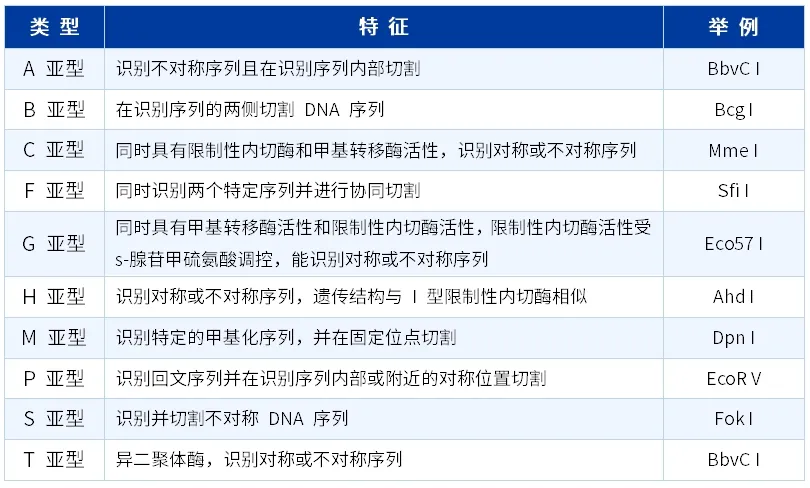
The main criterion for classifying restriction endonucleases as type II restriction endonucleases is that they can specifically cut two DNA strands at a fixed position inside or outside the recognition site (usually within 20bp), and do not require ATP hydrolysis to provide energy. Type II restriction endonucleases are classified according to the characteristics of their respective subtypes. The classification criteria are as follows:
01Identify the symmetry of the sequence, such as type IIA and type IP.
The location of DNA cleavage is either on the recognition site or far from it, such as type IP and type IS. If the cleavage is far from the recognition site, whether it is on one side or both sides of the site, such as type IS and type IB.
03Whether type II restriction endonucleases and their homologous methyltransferases exist in an independent form, such as type IC having two activities simultaneously in a polypeptide.
04Whether cofactors magnesium ions and S-adenosylmethionine are needed.
05The mode of action: Whether it is necessary to interact with two recognition sites and then cut DNA at one or both of them, such as type II-E and type II-F.
5
Classification of type II restriction endonucleases
Since these classification criteria are not mutually exclusive, A type II restriction endonuclease can belong to multiple subtypes simultaneously. For instance, Bcg I belongs to both type IIA and type IIB
6
The catalytic mechanism of type II restriction endonucleases
The active sites of type II restriction endonucleases have been observed in the crystallography of many different metal-bound states.
The catalytic domain of type II restriction endonucleases has a common structural core, which is composed of α -helicles on both sides and a central four-strand mixed β -fold forming an αβββαβ topological structure.
The core serves as a scaffold for the conserved active site and is typically composed of two or three acidic residues (aspartic acid or glutamic acid) and one lysine residue, collectively forming the PD-(D/E) XK motif (where X is any amino acid, see Figure 2). The active site is located in the Y-shaped bend of the β folding of the second and third cores, which will catalyze the residues (aspartic acid). Glutamic acid and lysine are exposed from the relatively conserved PD-(D/E) XK motif, which play a catalytic role and include the coordination of up to three divalent metal ion cofactors. The fourth core β -fold is often highly hydrophobic and is deeply buried within the hydrophobic core of the structure. This α/β/α sandwich fold can accommodate many modifications.
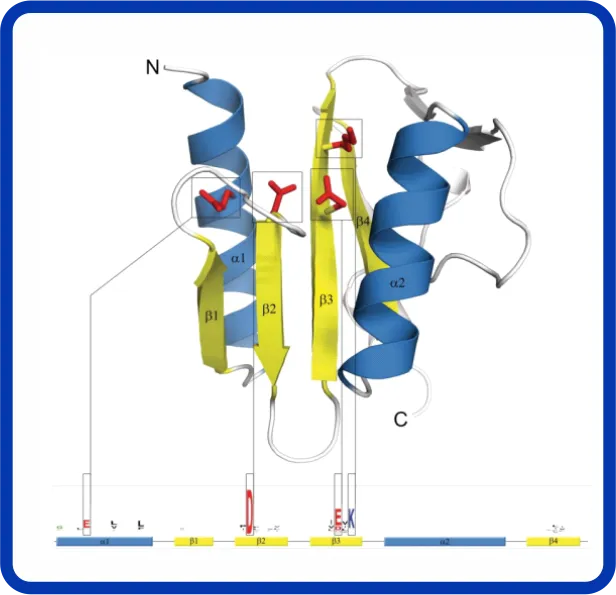
Figure 2 PD-(D/E) XK motif
II Application of type restriction endonuclease
1.
The establishment of the physical map of the DNA genome
2.
Gene localization and gene isolation
3.
Analysis of base sequences in DNA molecules
4.
Related DNA molecules and genetic engineering
5.
Genetic engineering editing
6.
Preparation of mRNA transcription templates
7.
Methylation-specific PCR(MSP
8.
Whole-genome methylation sequencing (WGBS
9.
Methylation-sensitive restriction endonuclease linked PCR(MSRE-PCR)
10.
Methylation-specific polymerase chain reaction
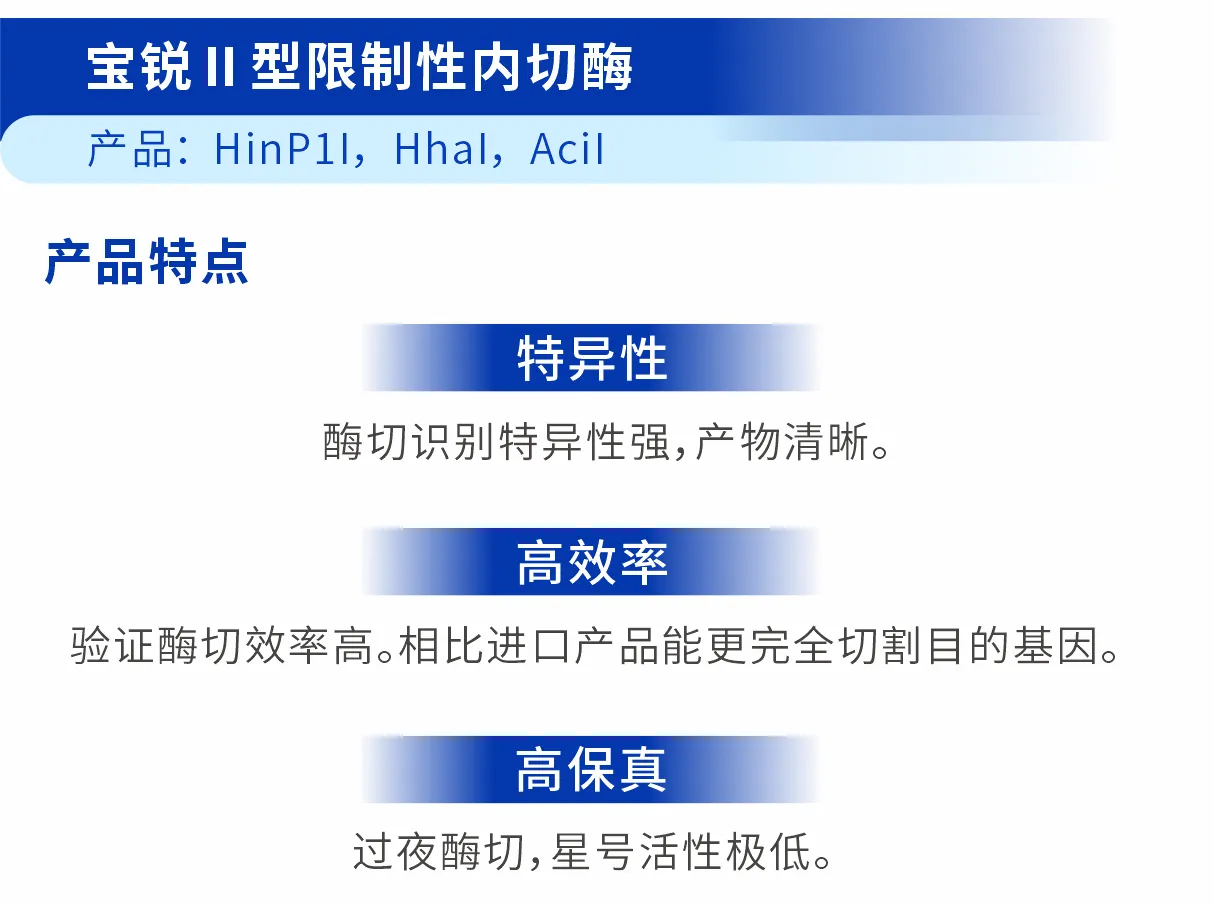
Experimental data
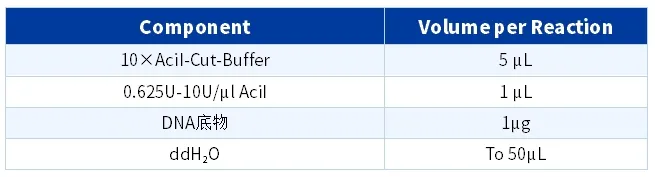
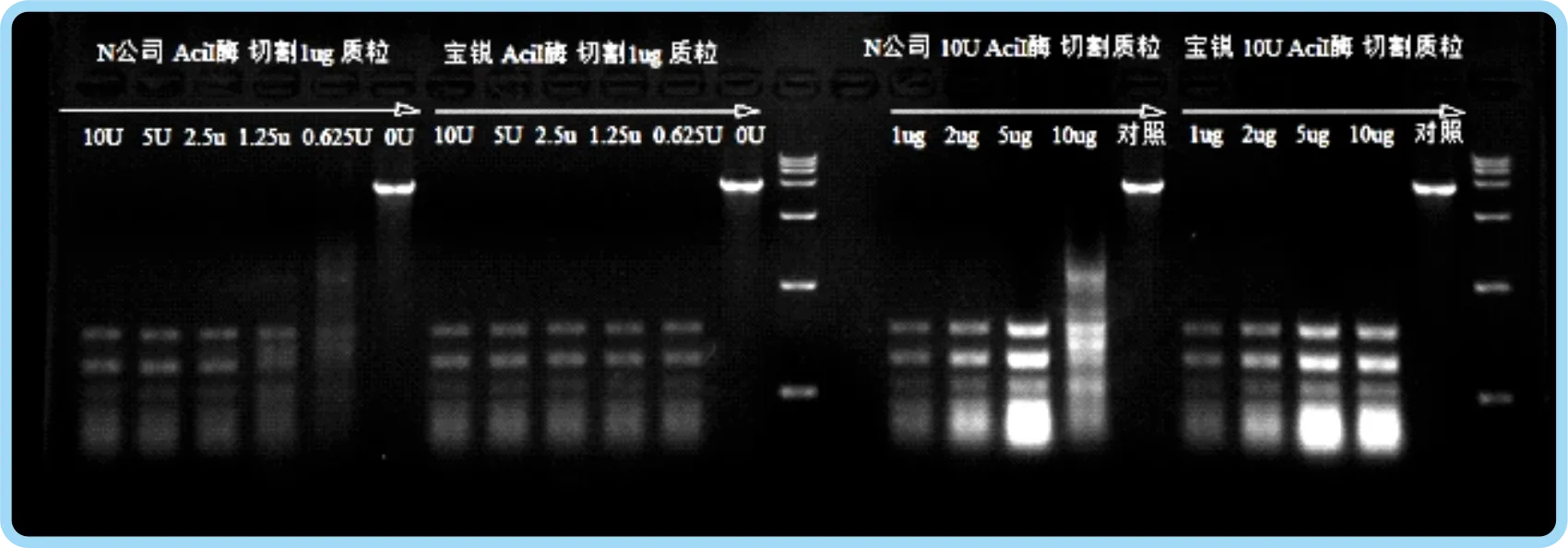
Efficiency verification of cutting 1µg of plasmid at different enzyme amounts: Take the competing product and Baoruei 10U/µl AciI endonuctase for gradient dilution: dilute to 10U/µl, 5U/µl, 2.5U/µl, 1.25U/µl, 0.625U/µl respectively, react at 37 ° C for 1 hour, and then perform electrophoresis verification. The reaction system is as follows:
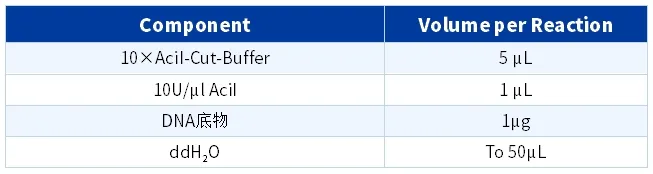
Under a fixed 10U AciI enzyme volume, plasmid cleavage efficiency verification: Take 1µl of the competing product and Baoruei 10U/µl AciI endonucase, and enzymatize 1µg, 2µg, 5µg, and 10µg of plasmids. React at 37 ° C for 1 hour and then perform electrophoresis verification.
The reaction system is as follows:
Conclusion
The 10U Borui AciI enzyme can completely cleft 10ug of plasmids. Even when the enzyme amount is diluted to 0.625U, it can still completely cut 1ug of plasmid, and the enzyme digestion efficiency is superior to that of a well-known foreign competing product. The enzymatic digestion products are clear, and the bands of the enzymatic digestion products are consistent with those of imported brands. There is no non-specific cutting, that is, no star activity phenomenon.
Conclusion
The universality and diversity of type II restriction endonucleases among different bacterial species are believed to be due to the common need for a powerful defense mechanism against phage genomes and other invasive DNA in evolution. As they can cut DNA molecules at precise positions, type II restriction endonucleases are widely used as tools in recombinant DNA technology.
In the future, with the continuous development of new technologies such as recombinant DNA technology, DNA diagnostics, and DNA forensics, restriction endonucleases will be applied more widely.
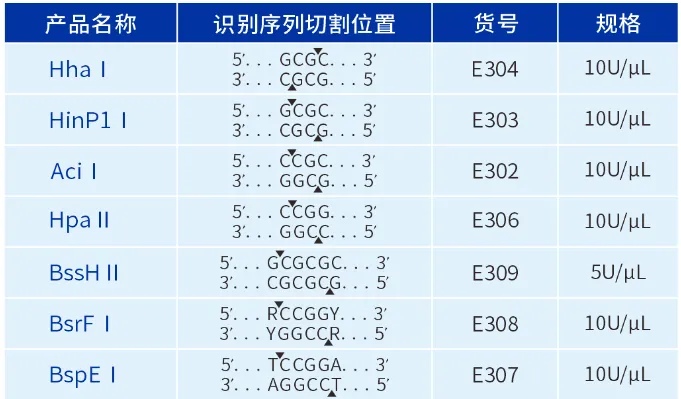
Product Recommendation
References
Pingoud A, Wilson G G, Wende W. 2014. Type II restriction endonucleases--a historical perspective and more. Nucleic Acids Res, 42(12):7489-7527
Ershova A S, Rusinov I S, Spirin S A, Karyagina A S, Alexeevski A V. 2015. Role of Restriction Modification Systems in Prokaryotic Evolution and Ecology. Biochemistry (Mosc), 80(10):1373-1386
Vasu K, Nagaraja V. 2013. Diverse functions of restriction-modification systems in addition to cellular defense. Microbiol Mol Biol Rev, 77(1):53-72
Nikolajewa S, Beyer A, Friedel M, Hollunder J, Wilhelm T. 2005. Common patterns in type II restriction enzyme binding sites. Nucleic Acids Res, 33(8):2726-2733
Loenen W A, Dryden D T, Raleigh E A, Wilson G G, Murray N E. 2014. Highlights of the DNA cutters: a short history of the restriction enzymes. Nucleic Acids Res, 42(1):3-19
Steczkiewicz K, Muszewska A, Knizewski L, Rychlewski L, Ginalski K. 2012. Sequence, structure and functional diversity of PD-(D/E)XK phosphodiesterase superfamily. Nucleic Acids Res, 40(15):7016-7045
0756-8699969
Address: No. 88, Shuian 1st Road, Xiangzhou District, Zhuhai City, Guangdong Province
Email: marketing@biori.com
Wechat official account |
Product consultation |
Join us |
Video Account |