Previous words
Antibodies play a significant role in biomedical research, clinical diagnosis and biopharmaceuticals. Compared with monoclonal antibodies with extremely high specificity, polyclonal antibodies can recognize multiple epitopes of the same antigen and have unique advantages in detecting low-abundance antigens, antigen mutation adaptability and Host cell protein (HCP) detection, etc. Therefore, they are more valuable in some application scenarios.
In recent years, HCP polyclonal antibodies have received increasing attention in the quality control of biopharmaceuticals. Today, let's delve deeply into polyclonal antibodies and focus on the preparation and application of HCP polyantibodies.
Antibody structure and category
Antibody structure
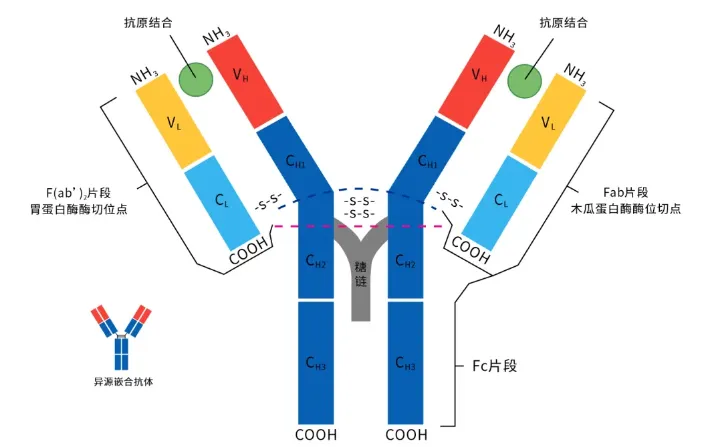
Antibodies exist as one or more monomers approximately in the shape of a "Y", each of which is composed of four polypeptide chains, including two heavy chains with larger molecular weights and two light chains with smaller molecular weights. Light chains and heavy chains are formed by disulfide bonds. Each heavy chain contains 3 to 4 constant regions (CH) and one variable region (VH), while each light chain contains one constant region (CL) and one variable region (VL). The Y-arm region of an antibody is called the antigen-binding region (Fab region). The function of the Y-shaped structure base is to regulate immune activity, and this area is called the crystallizable zone (Fc zone).
2. Antibody category
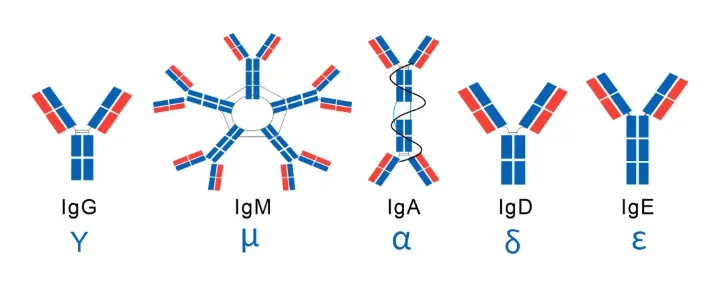
In most mammals, antibodies are classified into five types based on their heavy chains, named after the Greek letters α, δ, ε, γ and μ respectively. The corresponding antibodies are called IgA, IgD, IgE, IgG and IgM antibodies.
What are polyclonal antibodies?
Polyclonal Antibody (pAb) is a mixture of antibodies secreted by multiple B-cell clones, which can recognize and bind to different epitopes on the same antigen. Compared with monoclonal antibodies (Mabs) that target only a single epitope, the advantages of polyclonal antibodies lie in:
1. Broad-spectrum recognition: Even if the target protein undergoes minor mutations or structural changes, polyclonal antibodies can still bind to it, ensuring the sensitivity and stability of the detection.
2. High sensitivity: Due to the simultaneous recognition of multiple epitopes, polyclonal antibodies have stronger signals in immunoassay.
3. Rapid preparation: The production cycle is short and it is easier to obtain compared with monoclonal antibodies.
4. Strong adaptability: It is suitable for highly heterogeneous antigens, especially in the fields of antibody detection, immunoassay and quality control.
The preparation process of polyclonal antibodies
The preparation process of polyclonal antibodies usually includes the following steps:
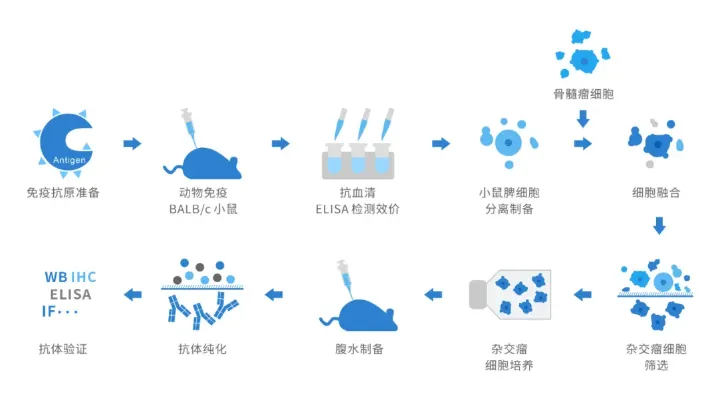
1. Antigen preparation: Select appropriate antigens (purified proteins, peptides, etc.) and optimize their quality.
2. Immunizing animals: Mix the antigen with an adjuvant (such as Freund's adjuvant) and inject it into experimental animals (such as rabbits, mice, goats, etc.).
3. Serum collection: After multiple rounds of immunization, the antibody titer is detected. When the titer reaches its peak, a blood sample is collected and the serum is separated.
4. Antibody purification: Non-specific proteins are removed by methods such as protein A/G affinity chromatography and ammonium sulfate precipitation to enhance the purity of antibodies.
5. Quality Inspection: Verify the antibody titer and specificity through methods such as ELISA and Western Blot to ensure their suitability for subsequent experiments or production.
HCP polyclonal antibodies: A key tool for quality control in Biopharmaceuticals
1. What is HCP polyclonal antibody
In the process of biopharmaceutical production, Host cells (such as CHO cells, Escherichia coli, Sf9 cells, etc.) are used to express recombinant Proteins. However, during the purification process, Host Cell Proteins (HCPs) may remain in the final product in the form of impurities. These residual HCPS may affect the safety, immunogenicity and stability of the drug, and therefore need to be strictly controlled. HCP detection is a core link in the quality control of biopharmaceuticals, and HCP polyclonal antibodies play a significant role in this process.
2. The role of HCP polyclonal antibodies
The primary objective of HCP polyclonal antibodies is to cover and detect host cell residual proteins to the greatest extent possible during the production process of biopharmaceuticals and in the final products, providing crucial support for the quality control and regulatory compliance of biopharmaceuticals. The main functions of HCP polyclonal antibodies include the following points
2.1 High coverage recognition of host cell proteins: HCP polyantibodies can recognize multiple different epitopes of HCP, thereby achieving more comprehensive HCP detection and avoiding the problem of missed detection caused by the loss of a single antigenic epitope. For different host cells (such as CHO, Escherichia coli, Sf9 cells, etc.), the recognition coverage of specific host HCPS can be improved by optimizing the immune strategy, making the detection more reliable. The composition of HCP may vary with changes in cell culture conditions and expression systems. Polyclonal antibodies can tolerate a certain degree of protein changes and improve the stability of detection.
2.2 Key quality control tools to support the declaration of biological products: Major global drug regulatory authorities (such as FDA, EMA, NMPA) all require strict testing of HCP to ensure that its residue levels meet safety standards; The application of HCP polyclonal antibodies can help pharmaceutical companies meet regulatory requirements during the drug development, clinical trial and marketing application stages. HCP polyclonal antibodies can be used for detection at different production stages (cell culture medium, purification intermediate, final product), helping to optimize the purification process and improve product quality. In the large-scale production process of biopharmaceuticals, HCP polyclonal antibodies can be used to monitor the HCP levels between different production batches, ensuring production consistency and reducing quality risks.
2.3 Promote process optimization and enhance drug safety: HCP polyclonal antibodies can be used to screen and optimize purification processes, improve the removal efficiency of host proteins, and ensure that the final product meets quality standards; By long-term monitoring of HCP levels, the potential risks of protein degradation or immunogenicity brought by HCP can be evaluated to enhance the long-term stability of the drug. Some HCPS may induce immune responses and affect the efficacy of drugs. HCP polyclonal antibodies can assist in the analysis of high-risk HCP and enhance product safety.
3. Research and preparation of HCP polyclonal antibodies
3.1 HCP antigen Preparation: Extract whole proteins from target host cells (CHO, Escherichia coli, Sf9, etc.) as immune antigens. Separate different proteins through ultracentrifugation, chromatography separation and other methods to retain more HCP components and ensure that the polyclonal antibody can cover as many host proteins as possible.
3.2 Animal Immunization: Select experimental animals such as rabbits and sheep, and through multiple immunizations, generate broad-spectrum polyclonal antibodies against HCP in the animals' bodies.
3.3 Serum collection and antibody Purification: The polyclonal antibody serum was purified using affinity chromatography (such as protein A/G) or immunoaffinity chromatography to obtain HCP polyclonal antibodies.
3.4 Antibody Detection: Antibody affinity is evaluated by methods such as ELISA and Western Blot, and antibody coverage is detected by methods such as 2D-DIGE or mass spectrometry analysis.
Polyclonal antibodies play an indispensable role in scientific research and clinical diagnosis, especially HCP polyantibodies, which have become an important tool for the quality control of biopharmaceuticals. In the future, with the development of biotechnology, the preparation and application of HCP polyclonal antibodies will be continuously optimized, providing a stronger guarantee for the safety and efficacy of biopharmaceuticals.
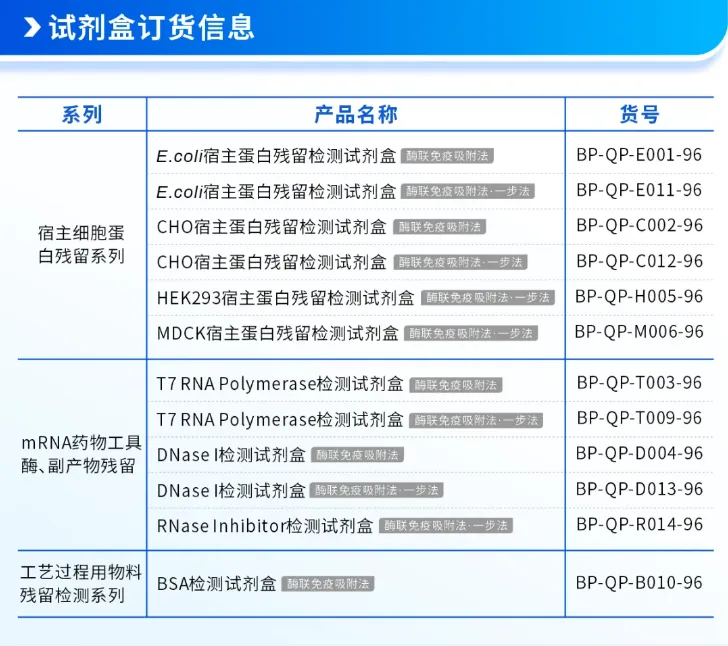
At present, Baorui Biotechnology has developed a variety of polyclonal antibody related products such as E.coli HCP residue detection kit, CHO HCP residue detection kit and HEK 293 HCP residue detection Kit. If you are interested in HCP polyclonal antibodies or other antibody products, please feel free to contact us for more technical support!

0756-8699969
Address: No. 88, Shuian 1st Road, Xiangzhou District, Zhuhai City, Guangdong Province
Email: marketing@biori.com
Wechat official account |
Product consultation |
Join us |
Video Account |