In the wave of the development of next-generation sequencing (NGS) technology, the database construction stage has always been a crucial link in determining data quality. The emergence of enzyme digestion library construction technology has completely overturned the traditional physical mode of ultrasonic disruption and has become an important engine promoting the popularization of high-throughput sequencing. Today, let's lift the veil of mystery surrounding this "gene scissors hand" technology together.
The Pain of traditional database Construction: Starting from Ultrasonic Disruption
Before the advent of enzymatic digestion, NGS library construction mainly relied on physical disruption (such as ultrasound) to fragment DNA. Although this method is highly random, it has obvious pain points:
The equipment is expensiveA Covaris ultrasound instrument can cost hundreds of thousands of yuan.
Large sample lossPrecious clinical samples cannot stand the test of time.
Difficult to automateUltrasonic equipment is difficult to integrate into liquid handling workstations.
What is even more troublesome is that no matter what library construction method is adopted, the formation of linker dimers has always been a chronic problem in the industry - these non-specific linker products will seize sequencing channels, leading to a decrease in the amount of effective data and an increase in sequencing costs.
Enzymatic digestion emergedShiThe "molecular scissors" that can move a thousand pounds with four ounces”
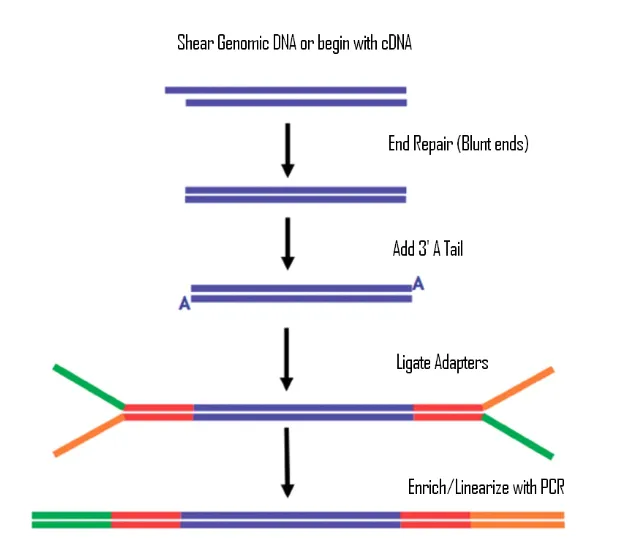
The core breakthrough of enzyme digestion for library construction lies in using biological enzymes to replace physical energy to achieve DNA fragmentation. Compared with traditional methods, the revolutionary aspect of enzymatic digestion lies in:
Fragmentation and terminal repair are combined into one: The two steps that originally needed to be carried out separately are integrated into a single-tube reaction;
Break away from ultrasound dependence: Fragmentation can be accomplished with just a regular PCR instrument.
Miniaturization operation: The reaction system can be reduced to 1/20 of that of traditional methods.
The Evolutionary Path: Three Leaps in Enzymatic Digestion Technology
01
The first generation: transposase technologyLay the foundation
(Early 2010s
Around 2010, the innovative application of Tn5 transposase initiated the precedent of enzyme digestion library construction. This transposon from Escherichia coli can simultaneously perform DNA cleavage and adaptor "pasting" in the presence of Mg²⁺ :
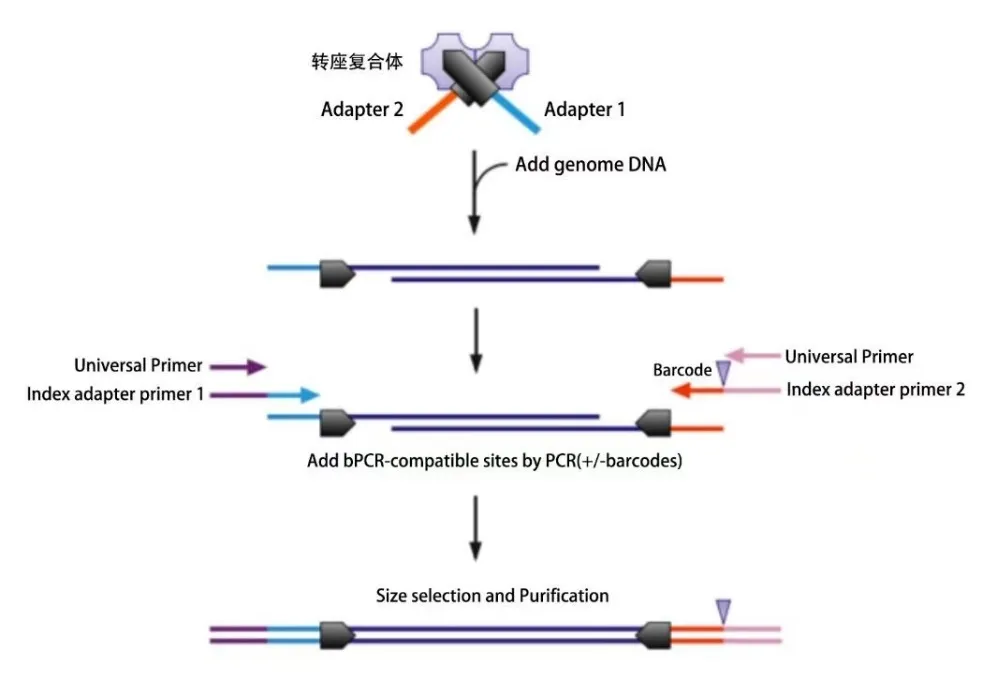
This technology has shortened the database construction time from 6 to 8 hours to 1.5 hours, giving rise to star technologies such as ATAC-seq. However, the early versions had obvious sequence bias and false positive chimeras problems.
02
The second generation: Breakthrough in stability
(Early 2020s
In the 2020s, Roche Diagnostics' KAPA EvoPlus series addressed industry pain points through three major innovations:
EDTA toleranceIt still works stably in the presence of 2mM EDTA.
False positive controlReduce the chimeric error rate to the level of the physical disruption method;
Room temperature stabilityThe reagent remains active at room temperature for more than 5 weeks.
These improvements make the enzymatic digestion method truly applicable to clinical sample testing, especially for blood samples sensitive to EDTA anticoagulants.
03
The second generation: Automated integration
(Latest Developments in 2024
In 2024, the enzyme digestion method will enter a new stage of deep integration with automated workstations
Plate-type pre-packaged reagentsDomestic companies have launched 96-well plate pre-packed reagent kits, which are ready to use upon opening the cap.
Acoustic pipetting technologyThe Biomek+Echo system enables precise pipetting with nano upgrades.
Unattended database constructionIt only takes 4 hours to process 384 samples at a time.
Peak Showdown: Enzymatic Digestion vs. Traditional Methods
According to the latest test data from Roche Diagnostics (July 2024), the third-generation enzyme digestion technology has reached or even surpassed traditional methods in key indicators. In trace samples (such as liquid biopsies) and difficult samples (such as FFPE tissues), enzymatic digestion has demonstrated significant advantages. Roche data shows that when using 1ng of cfDNA for library construction, the enzymatic digestion method can increase the sensitivity of low-abundance mutation detection by more than three times.
The future is here: A new era of seamless database construction
With the popularization of plate-type pre-packaged reagent kits in 2024, laboratories are entering the "ready-to-use" era. Domestic companies pre-dispensed the reagents required for the entire library construction process into 96-well plates and, in conjunction with automated workstations, achieved:
Zero manual pipettingAvoid human error;
Unified quality control standardsThe CV value of inter-well difference is less than 5%.
Super-uniform coverageThe preference of GC is close to that of the mechanical interruption method.
From the first application of transposase in 2010 to the fully automatic plate solution in 2024, the enzyme digestion method for library construction has undergone an evolutionary path from "usable" to "user-friendly". With the continuous innovation of Chinese enterprises in this field, problems that once plagued the industry, such as dimer, GC preference, and automation compatibility, are being overcome one by one.
In the future, when we can easily process tens of thousands of samples on ultra-high-throughput sequencing platforms, do not forget this group of engineers who operate the "molecular scissors" in the microscopic world - it is they who make gene decoding so efficient and precise.
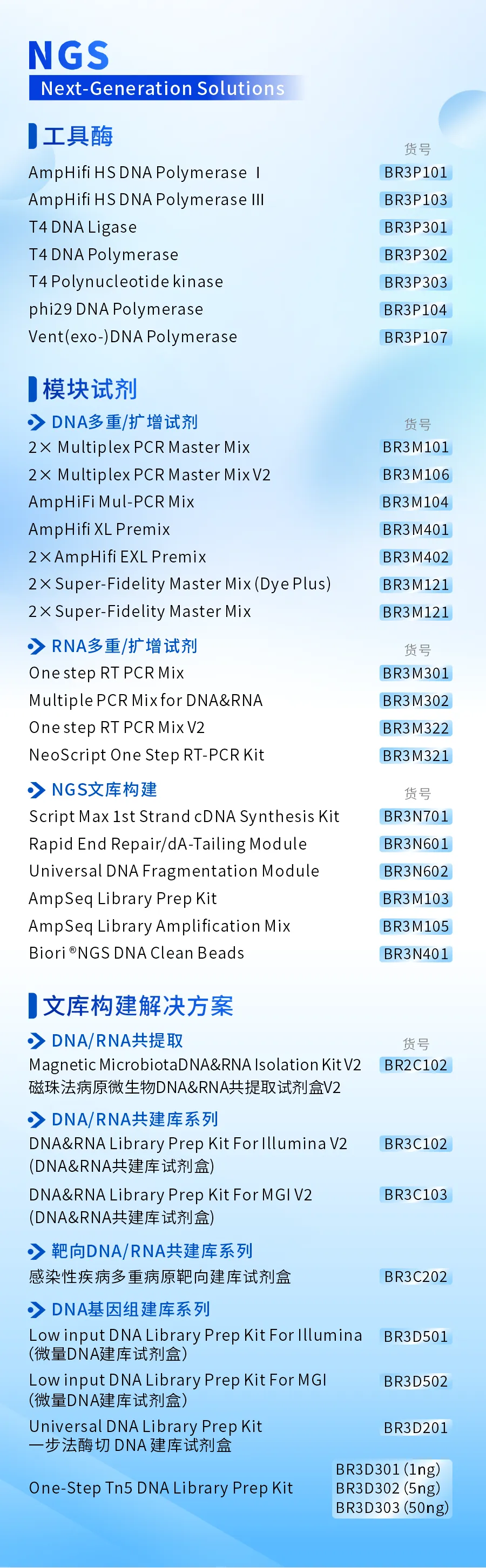
Related product recommendations
0756-8699969
Address: No. 88, Shuian 1st Road, Xiangzhou District, Zhuhai City, Guangdong Province
Email: marketing@biori.com
Wechat official account |
Product consultation |
Video Account |