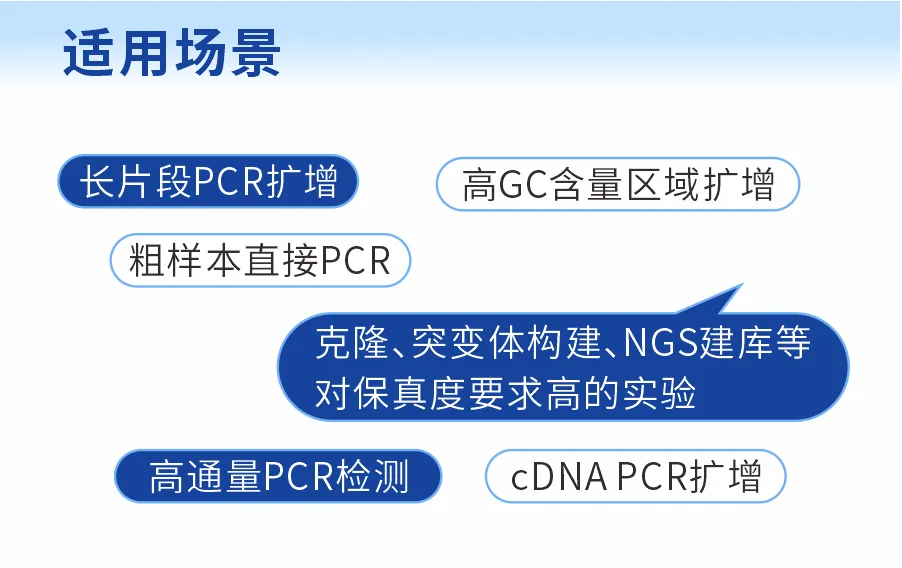
In molecular biology experiments, whether the target fragment can be amplified efficiently and precisely is often the key to research success. Whether it is complex templates, long fragment amplification, or regions with high GC content, all impose strict requirements on the performance of PCR enzymes and buffer systems.
Now, there is a better solution to all this -

High-fidelity DNA polymerase is a type of enzyme with 3'→5' exonuclease proofreading activity. When it wrongly inserts a nucleotide, this proofreading domain can identify the abnormal double-stranded structure of DNA caused by mismatch, and then cut off the wrongly inserted nucleotide in the reverse direction (3 '→5'), giving the correct nucleotide another chance to insert. The most commonly used standard Taq DNA polymerase is derived from aquatic Thermophilic bacteria. It lacks 3'→5' exonuctase correction activity, which will introduce more mutation errors during the PCR process, thereby affecting the judgment of correct results.
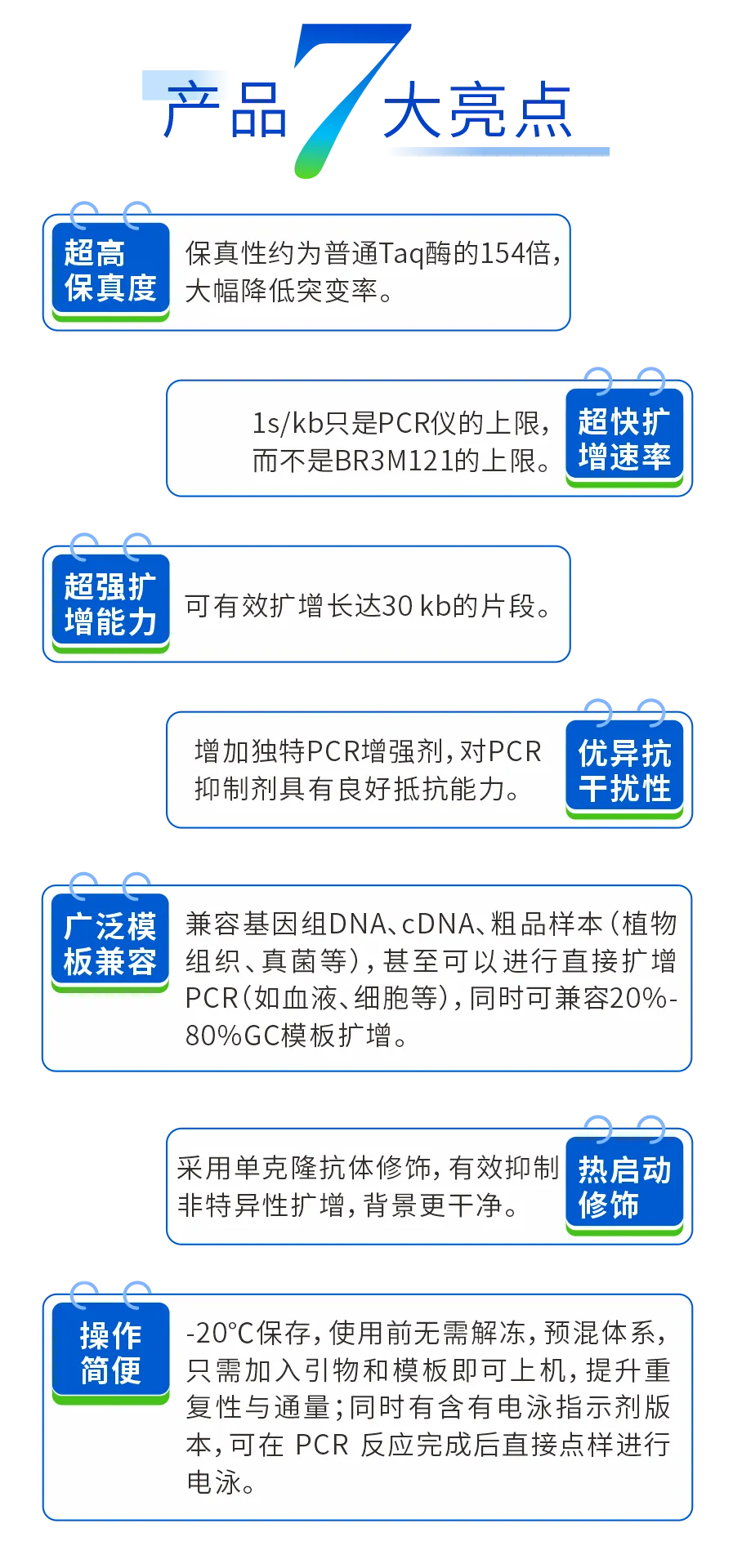
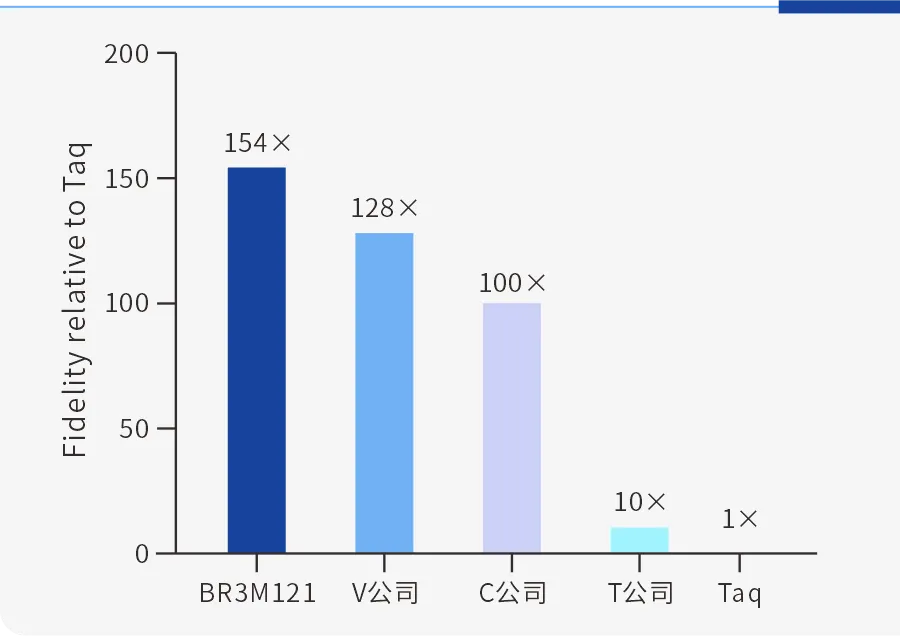
The high-fidelity enzyme in BR3M121 has a fidelity approximately 154 times that of the common Taq enzyme. The following figure shows the amplification fidelity of polymerases from different companies determined by next-generation sequencing methods. The results show that the fidelity of BR3M121 is superior to that of well-known domestic and foreign brands.
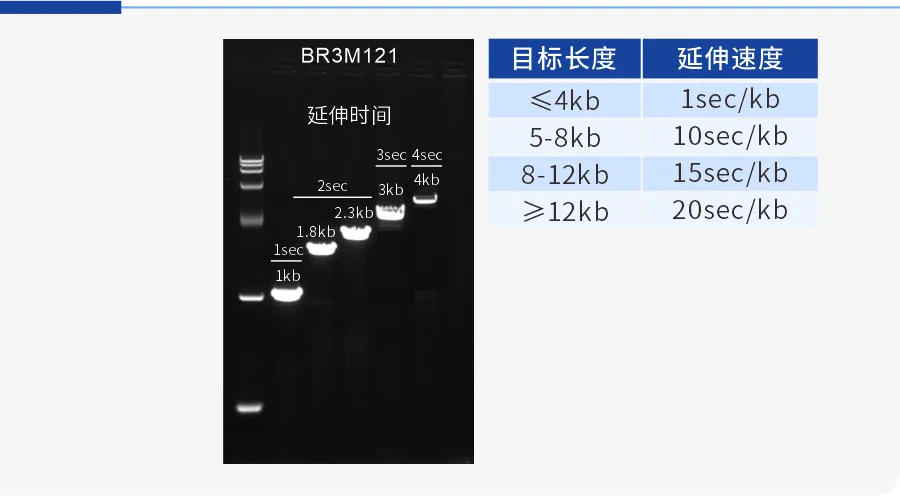
In conventional PCR experiments, an extension rate of 20-30se/kb or even longer is often adopted to amplify our target fragments. However, when it is necessary to expand the target fragment, the entire PCR time will be significantly increased. It may take 4 to 5 hours to complete the amplification or even longer, which seriously affects the experimental efficiency. If BR3M121 is used to amplify target fragments of 4KB or less, an extension rate of 1sec/KB can save more experimental time.
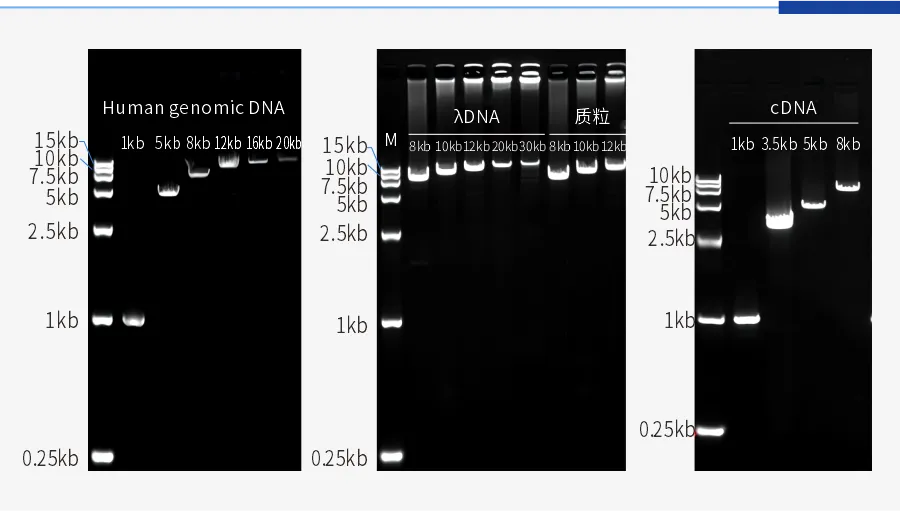
In long-fragment amplification, when amplifying target fragments larger than 10kb, the most distressing issue is the low amplification efficiency, significant amplification differences for different samples, and poor specificity.
With BR3M121, you can easily handle the challenges of various sample types, fearlessly amplifying long fragments and multiple samples. Whether it's genomic DNA, λDNA, plasmids, or cDNA, BR3M121 demonstrates outstanding amplification performance.
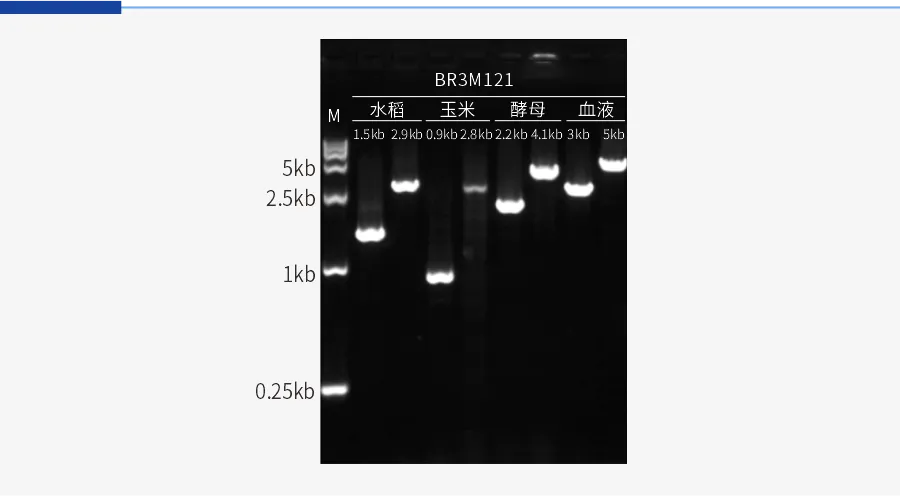
In the actual operation of PCR, samples are often mixed with various "troublemakers" - which we call PCR inhibitors. They can seriously interfere with PCR reactions, causing signals that should be clear to vanish without a trace.
Such as hemoglobin in the blood, heparin anticoagulants, immunoglobulins, etc. Caffeine, polyphenols, fats, salt ions, etc. in food samples; Humic acid, heavy metal ions, etc. in environmental samples; Residual detergents such as alcohol and SDS from the sample processing process.
The BR3M121 optimized buffer reagent is no longer a simple salt solution, but has added proprietary enhancers and stabilizers. These components can act like a "shield", preferentially binding to inhibitors, thereby protecting DNA polymerase and template nucleic acids from attack.
The electrophoretic gel picture shows nucleic acids of rice, corn and yeast roughly extracted with rapid extraction solution for PCR, while blood is directly amplified, demonstrating extremely strong anti-interference ability.
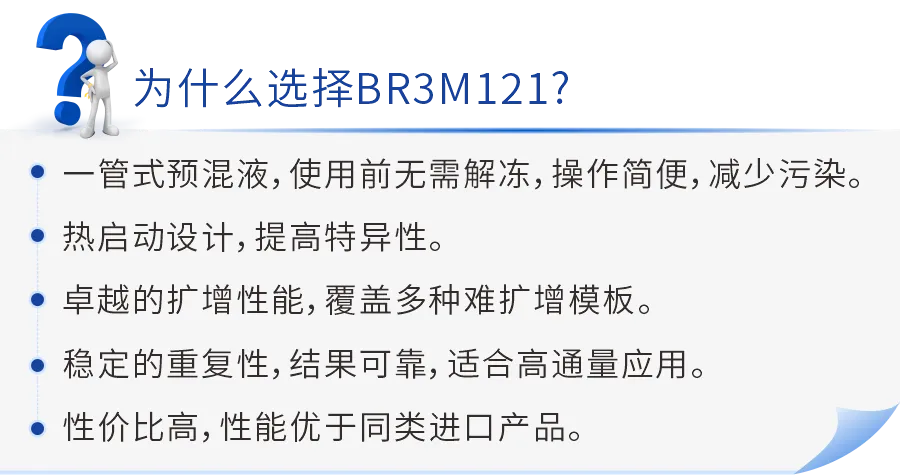
Whether in the field of scientific research applications or industrial applications,
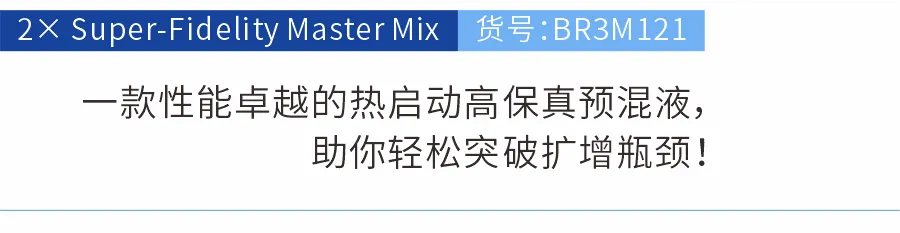
2xSuper-Fidelity Master MixWe can provide you with reliable, efficient and convenient PCR solutions!
For more product details or technical support, please feel free to contact us!