Today, with the rapid development of molecular diagnostics, although polymerase chain reaction (PCR) technology remains the gold standard, its reliance on precision instruments, long time consumption and professional operators limits its application in bedside, grassroots and on-site rapid detection. The rise of Loop-mediated Isothermal Amplification (LAMP) technology, with its unique technical charm, is breaking through these barriers and opening a new era of molecular diagnosis. Compared with the traditional PCR technology, LAMP technology has many unique advantages.
Easy to operate
There is no need for a complex thermal cycling process, which greatly simplifies the experimental steps and lowers the technical threshold for operators.
Rapid expansion
It can achieve efficient amplification in a short period of time, quickly obtain test results, and save precious time for clinical diagnosis and other purposes.
The equipment requirements are low.
Only simple constant-temperature equipment, such as a constant-temperature water bath or a common PCR instrument, is required, without the need for an expensive thermal cycling instrument. This enables the detection work to be carried out smoothly even in resource-limited environments, making it particularly suitable for on-site detection and immediate diagnosis.

Baorui Biotechnology adopts new enzyme engineering modification technology to continuously improve and iterate the performance of Lamp isothermal amplification enzymes. The new generation Bst 3.0 has outstanding performance advantages.
The Lamp reagent of Baorui Biology adopts the new generation Bst 3.0HS (including the freeze-drying version) blocked by aptamers, combined with a finely optimized buffer system, to achieve efficient, rapid and highly specific amplification. Experimental verification shows that under multiple LAMP and RT-LAMP systems and different template concentrations, the product of Baorui has a shorter initiation time and better specificity. Within 60 minutes, the NTC does not have a specific initiation or emergence time later than that of competing products.
Bst 3.0 can utilize dUTP. On the one hand, it can enhance the specificity of detection; on the other hand, it can establish a Lamp anti-pollution system, solving the unfavorable factor that has long hindered the further application and expansion of this technology - the continuous false positives caused by aerosol pollution.
Aptamer modification effectively enhanced the sensitivity and stability of the reagent. The detection of African swine fever nucleic acid extracted from real samples has a sensitivity of up to 15cps per reaction. The detection of quality control products for influenza B virus has a sensitivity of up to 10cps per reaction. Meanwhile, the product remains unaffected by repeated freezing and thawing for 20 times, and its performance remains stable after being thermally accelerated at 37℃ for 7 days. Moreover, it supports the preparation of reaction systems at room temperature, which greatly facilitates actual operation, storage and transportation.
The Bst 3.0, which has been engineered and optimized, can effectively overcome the interference of complex source samples such as whole blood, oral swabs, and feces, break the application limitations of traditional detection, lower the operational threshold, and provide a stable and convenient solution for on-site immediate detection and diverse sample screening. It effectively expands the application scenarios and ensures the reliability of the results.
It provides a variety of methods for determining amplification detection results, including endpoint methods (such as agarose gel electrophoresis, turbidimetry, visual inspection, etc.) and real-time fluorescence methods (dye method, probe method, etc.). Among them, the fluorescent dye method RT-LAMP uses fluorescent dyes (such as SYBR Green, Syto, etc.) as fluorescent markers. After binding to double-stranded DNA in the amplification reaction, the fluorescence signal will be enhanced by 800-1000 times.
The test is conducted using a fluorescence quantitative PCR instrument at a constant temperature of 60-65℃. After about 30 minutes, the presence of pathogens can be determined based on the amplification results. It can also be combined with a microfluidic chip or a portable detector to achieve rapid on-site detection.

01
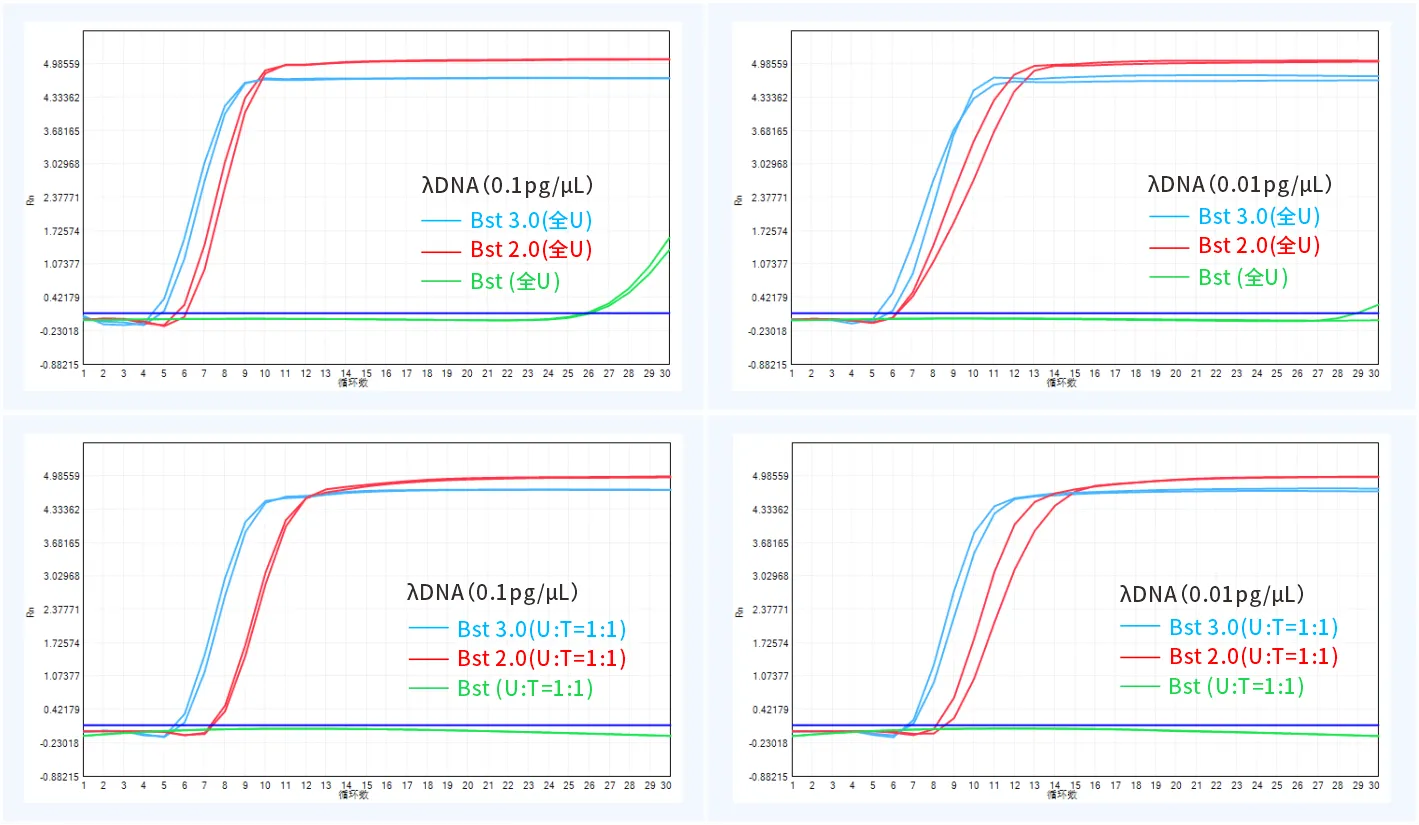
Test on the utilization rate of dUTP by different Bst enzymes
Experimental conditions

Experimental results
Experimental conclusion
Both Bst 2.0 and Bst3.0 have a relatively high utilization rate of dUTP. Among them, Bst3.0 has the best utilization efficiency of dUTP, while BST basically cannot utilize dUTP.
02
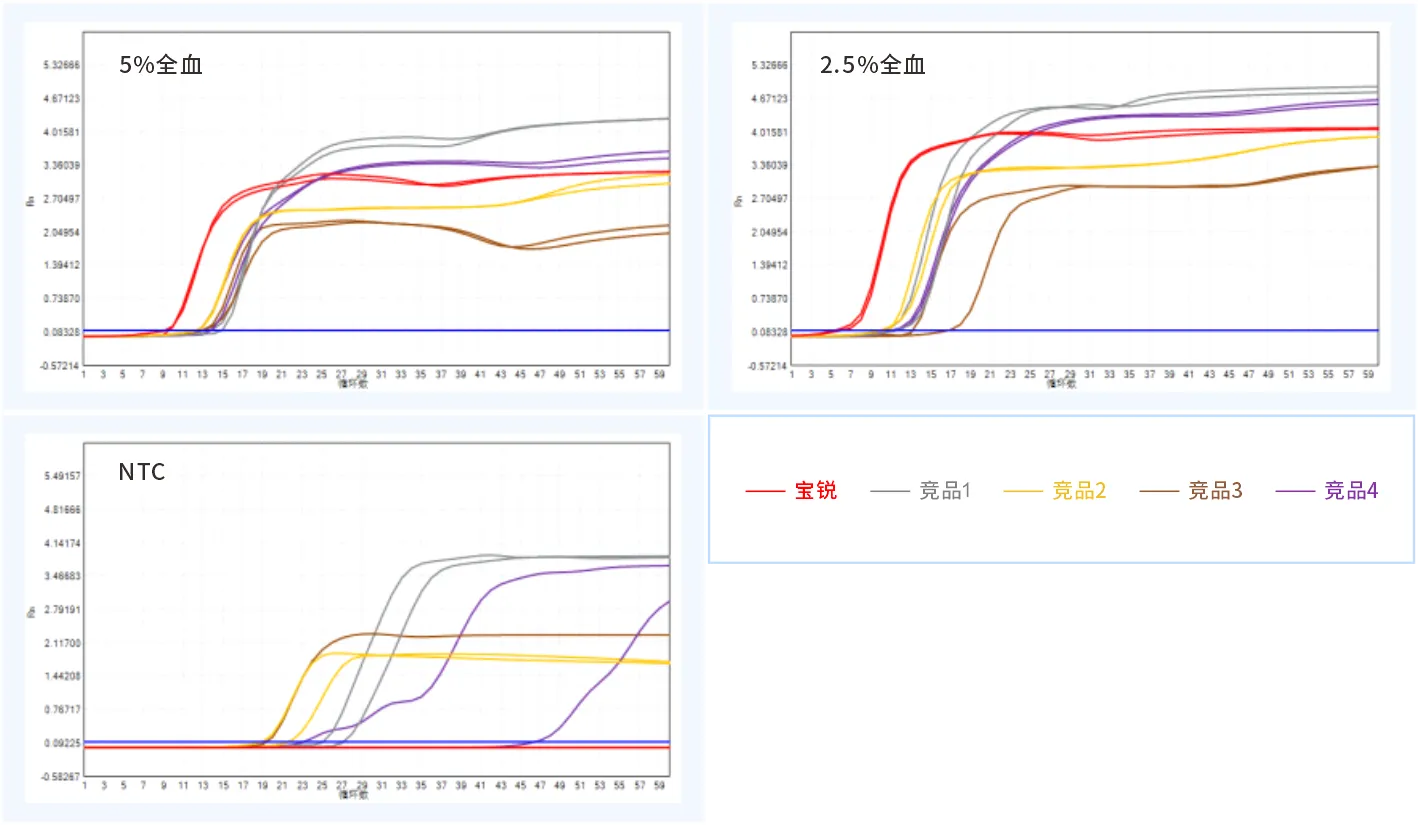
Whole blood direct expansion test
Experimental conditions

Experimental results
Experimental conclusion
The HW1007-R02 dye method system can tolerate 5% whole blood, and its sensitivity is superior to that of competing products. Moreover, it does not produce a line after 60 minutes of NTC detection.
03
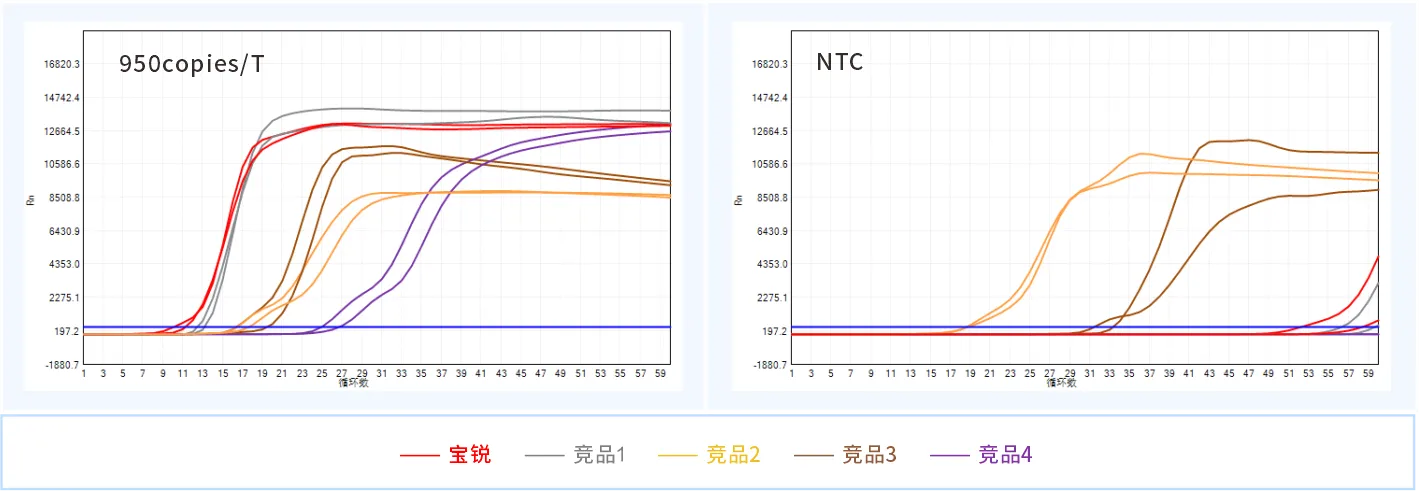
Oral swab direct expansion test
Experimental conditions

Experimental results
Experimental conclusion
HW1007-R02 is superior to its competitors in terms of sample detection time and NTC starting line for saliva direct expansion.
04
Clinical application test
Experimental conditions

Experimental results
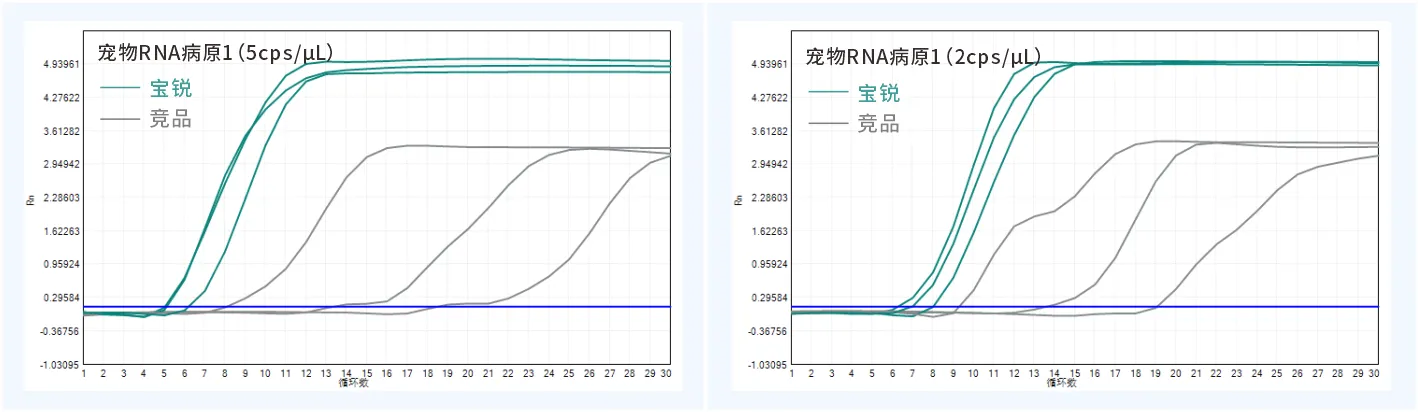
Experimental conclusion
The detection sensitivity and uniformity of Baorui reagents are both superior to those of its competitors。
05
Thermal stability test of pre-freeze-dried reagents by visual method at 37℃ for 7 days
Experimental conditions

Experimental results
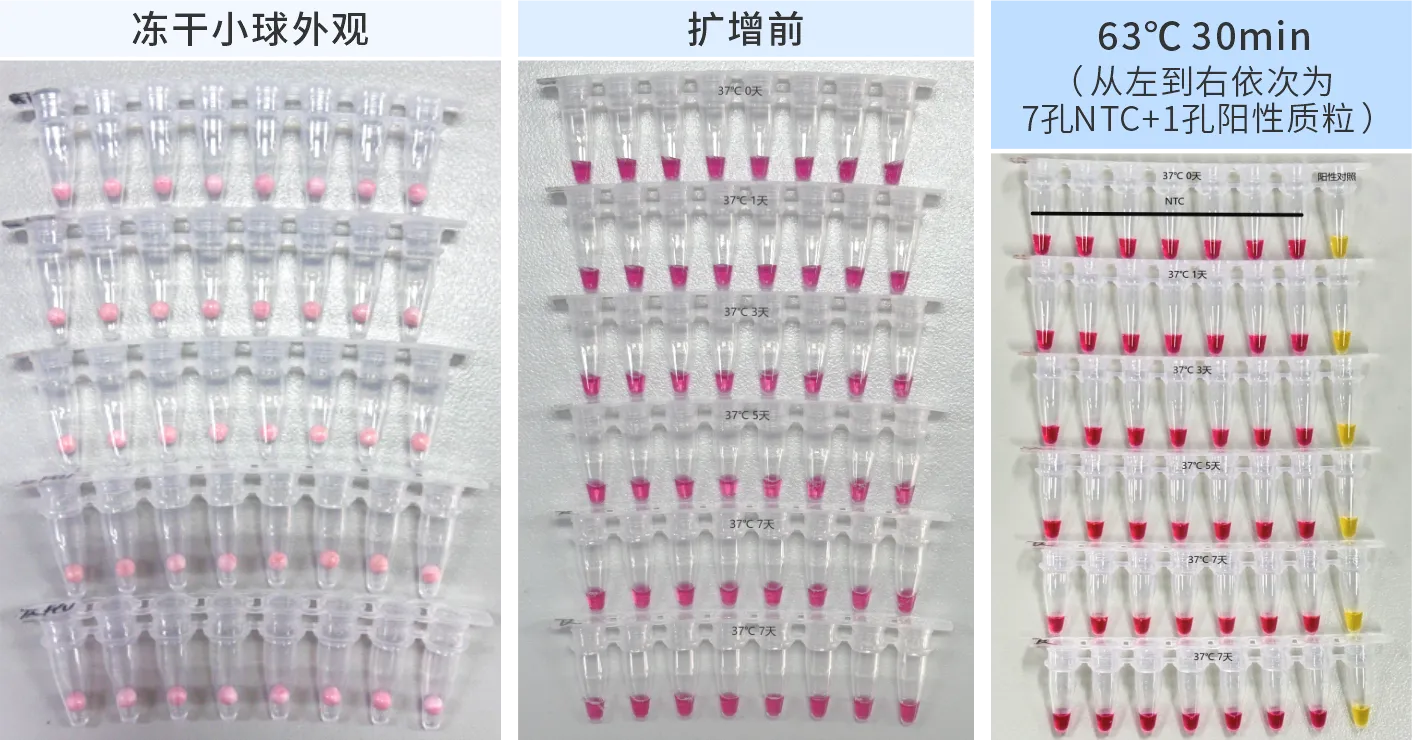
Experimental conclusion
The thermal stability performance test of freeze-dried microspheres containing pet RNA pathogen 1 primers at 37℃ for 7 days was passed.
06
Fluorescent dye method
Thermal stability test of pre-freeze-dried reagents at 45℃ for 7 days
Experimental conditions

Experimental results
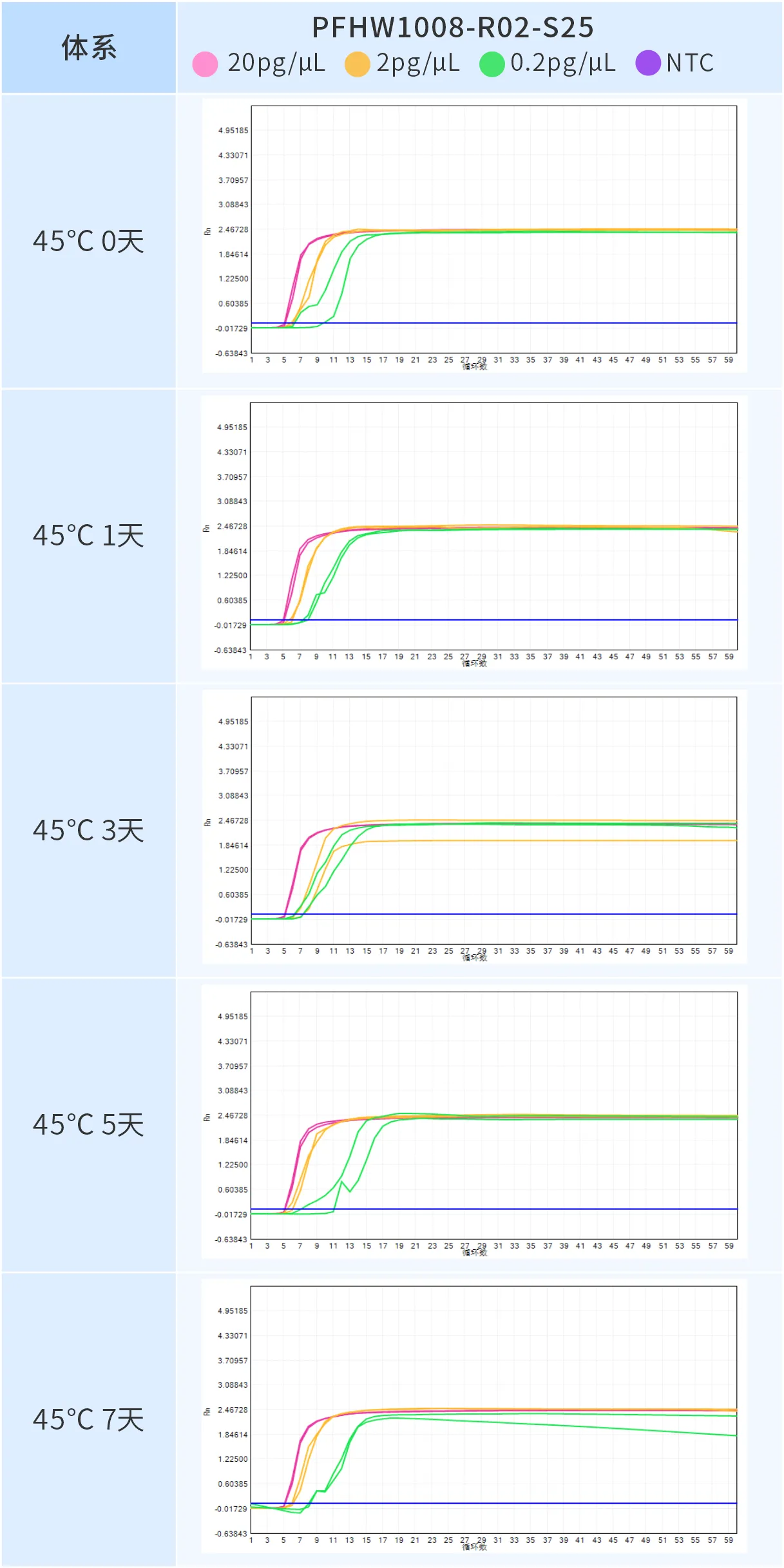
Experimental conclusion
After being treated at 45℃ for 7 days, the appearance and morphology of the PFHW1008-R02-S25 freeze-dried microspheres remained unchanged. The detection time change was less than 2 minutes, and the thermal stability performance test was passed.

Clinical infectious disease detection
It can quickly and accurately detect various pathogens, facilitating the early diagnosis and treatment of diseases, such as playing a significant role in the detection of infectious diseases like influenza and COVID-19.
epidemic prevention and control
It provides strong support for the rapid screening and prevention and control of the epidemic, enabling convenient testing in primary medical institutions, isolation sites, etc., and timely detection of potential infected individuals.
Customs quarantine
Effectively detect pathogens in imported and exported animals, plants and products, prevent the introduction of foreign diseases, and ensure the biosecurity of the national border.
Food and drug safety testing
Detect pathogenic microorganisms in food, impurities and genes in medicine, etc., to safeguard people's dietary and medication safety.
Environmental monitoring
Monitor harmful microorganisms, genetic pollutants and other substances in the environment to provide a scientific basis for environmental protection.


Scan the product code for consultation
0756-8699969
Address: No. 88, Shuian 1st Road, Xiangzhou District, Zhuhai City, Guangdong Province
Email: marketing@biori.com
Wechat official account |
Product consultation |
Video Account |