Article Source: DeepStorage
Author: toadzhou
Introduction: Once you understand "water", you'll know half of freeze-drying
Are you curious: How do vaccines remain active even after traveling thousands of miles? Why can protein drugs be preserved for a long time? The answer often points to a "somewhat aloof" technology - vacuum Freeze-Drying, abbreviated as "freeze-drying".
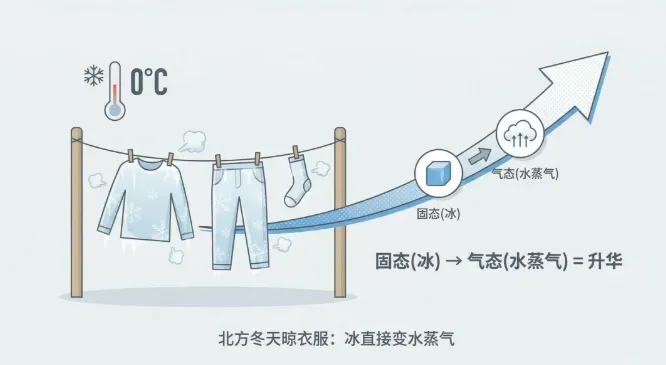
Unlike drying clothes which relies on the sun to heat up and evaporate water, it allows ice to directly turn into water vapor in a low-temperature vacuum and "escape". This process of "skipping the liquid state" is called "sublimation".
In summary, the essence of freeze-drying is to use "sublimation" to remove water and protect the active ingredients at low temperatures.
First, understand the three phases: The Three Forms of Water and "sublimation"
☆ Liquid (water)
☆ Solid state (ice
☆ Gaseous state (water vapor
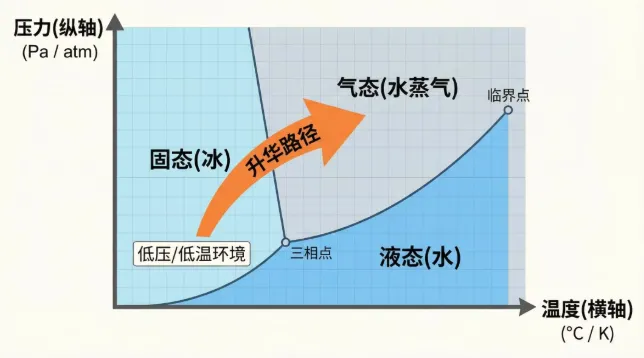
Traditional drying usually relies on heating to change water from liquid to gas. Freeze-drying first freezes water into ice and then allows the ice to directly "sublimate" from solid to gas in a vacuum environment. This avoids the risk of thermal denaturation caused by high temperatures and is particularly suitable for heat-sensitive active substances (such as proteins and microbial preparations).
A life-like metaphor: drying clothes in the north during winter. Even if there is no sun and it is always below zero, the clothes will still dry out after a few days - because the ice inside the clothes directly "sublimates" into water vapor. This is a real-life demonstration of freeze-drying.
Why "do it"? Water is not just one kind of "existence"
In the product, not all water is "surface water droplets". It has different "binding methods", and the difficulty of drying also varies:
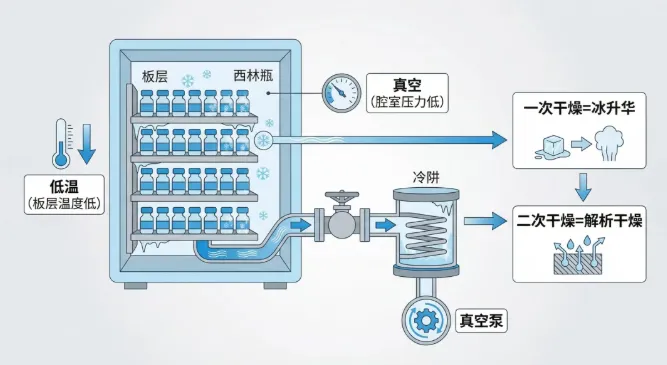
☆ Free Water: The easiest to remove, similar to water in surfaces or pores. When freeze-drying, it first freezes and sublimates.
☆ Adsorbed Water (Absorbed Water) : adsorbed on the surface of materials or molecules, it requires a longer time and higher temperature for "desorption drying" to be detached.
☆ Bound Water: It becomes a part of the material structure (such as crystalline water), and is usually difficult to remove completely. Forced removal may also damage the structure and stability of the product.
The core objective is to remove free water and adsorbed water to the greatest extent possible while retaining a small amount of bound water necessary for maintaining the structure.
The advantages of freeze-drying: Safeguarding "activity and stability"
☆ Low-temperature friendly, protective activity: Avoids "thermal denaturation" caused by high temperatures, especially suitable for proteins and biological products.
☆ Loose and porous, with rapid resolubility: After ice sublimates, it leaves a micro-porous structure, and water penetrates instantly upon addition.
☆ Long-term stability and easy transportation: Low moisture content (common target 1-3%), microorganisms are difficult to grow, chemical reactions are "paused", and it can be more stable at normal temperatures.
☆ Controllable moisture content and consistent batches: Compared with natural air-drying, freeze-drying is easier to precisely control the final moisture content, enhancing consistency and quality predictability.
Of course, there are also costs: high energy consumption, long production cycles, and usually non-continuous production. But in the medical field, these are often worth it.
Quality by Design (QbD) : Define standards first, then work backward to determine the process
Modern pharmaceuticals emphasize Quality by Design (QbD, quality by design), with the concept that quality is not "detected" but "designed".
You will often hear two sets of "catchphrases" :
☆ CQAs (Critical Quality Attributes, key quality attributes) : Quality indicators that the product must meet, such as moisture content, remelting time, whether the appearance has collapsed, etc.
☆ CPPs (Critical Process Parameters, key process parameters) : Process variables that can significantly affect product quality, such as layer temperature, chamber pressure, heating rate, etc.
During the R&D process, we continuously explored the causal relationship between "CPPs → CQAs" through experimental design (DOE), gradually transforming the process window from "give it a try" to "a controllable range based on evidence".