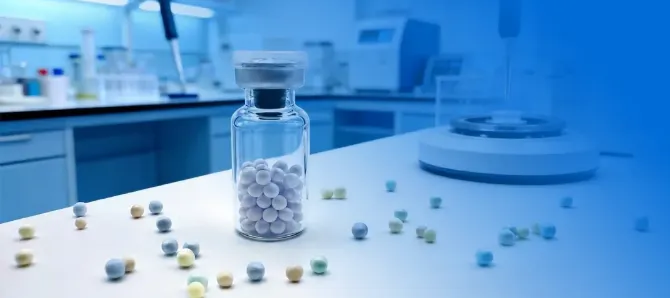
Compared with traditional liquid nucleic acid testing reagents, freeze-dried reagents have the advantages of stable storage and transportation at room temperature and simple operation. Since 2014, Baorui Biotechnology has been engaged in the research and development of dedicated raw materials for molecular diagnostic reagents through freeze-drying. It was the first in China to complete the development of dedicated enzymes for DNA/RNA detection through freeze-drying and freeze-dried premixed liquid systems.
The company has established a full range of freeze-drying dedicated raw material platforms covering DNA and RNA fluorescence quantitative detection. The products include freeze-drying dedicated enzymes, freeze-drying premix (including rapid amplification reagents, direct amplification reagents and LAMP isothermal amplification reagents, etc.), freeze-drying protectants, etc. All the above-mentioned freeze-drying dedicated raw materials have undergone systematic long-term accelerated stability verification, which can provide stable and reliable raw material support and technical guarantee for the downstream freeze-drying reagent research and development.
At present, some customers have successfully obtained NMPA registration approval relying on the freeze-dried raw material products of Baorui Biology, and have established long-term and stable strategic cooperative relationships with many molecular diagnostic enterprises in freeze-drying technology, product development and supporting services.
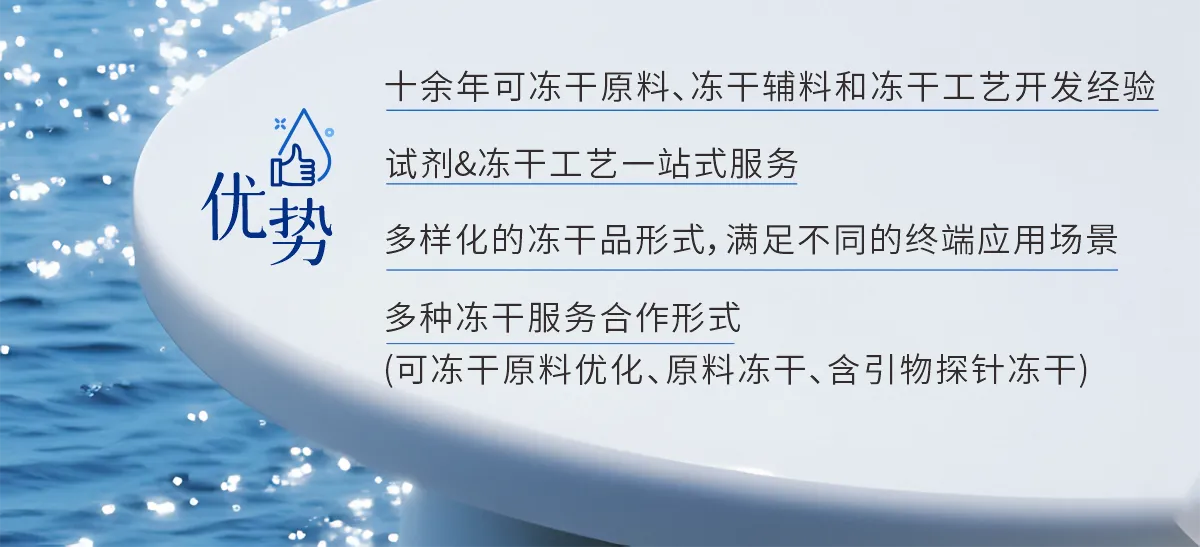

1. Requirement confirmation
Have in-depth communication with the customer's application scenarios and technical indicators, and clarify the freeze-dried dosage form, specifications and stability requirements.
2. Reagent matching and optimization
According to customer requirements, reagent matching and optimization are carried out, and suitable freeze-drying protective agent systems are screened to ensure the structural integrity of active ingredients during the dehydration process.
3. Development of freeze-drying process
Based on the formula, the freeze-drying process was developed. By regulating key parameters such as pre-freezing, sublimation drying and desorption drying, the freeze-drying curve was constructed, laying a solid foundation for subsequent performance verification.
4. Performance verification of freeze-dried samples
Conduct a comprehensive performance evaluation of freeze-dried samples, including multiple aspects such as moisture content, amplification efficiency, sensitivity, and stability.
5. Freeze-drying amplification verification
Through multiple freeze-drying scale-up verifications of simulated materials and real materials, the industrial freeze-drying production process was confirmed. The repeatability of the freeze-drying process is once again ensured through scale-up production of real materials, performance verification, and stability verification.
6. Mass production
Mass production and control of batch-to-batch stability.

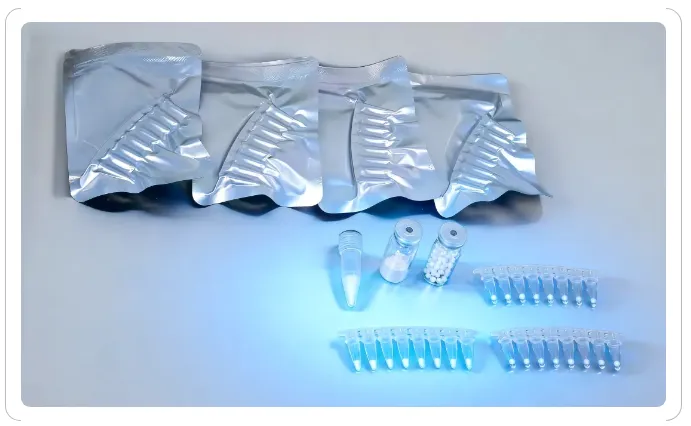
Conventional: Eight-tube in-situ freeze-drying, vials in-situ freeze-drying, freeze-drying balls freeze-drying
Special: In-situ freeze-drying of EP tubes, freeze-drying of special consumables such as card boxes

Experimental conditions

Note: The control group was immediately prepared with the same batch of liquid reagents as the freeze-dried reagents. The freeze-dried reagents were vacuum-packed in aluminum foil bags after being taken out of the box and stored at room temperature for 18 meters.

Amplification performance
-- Store at room temperature for 18 meters --
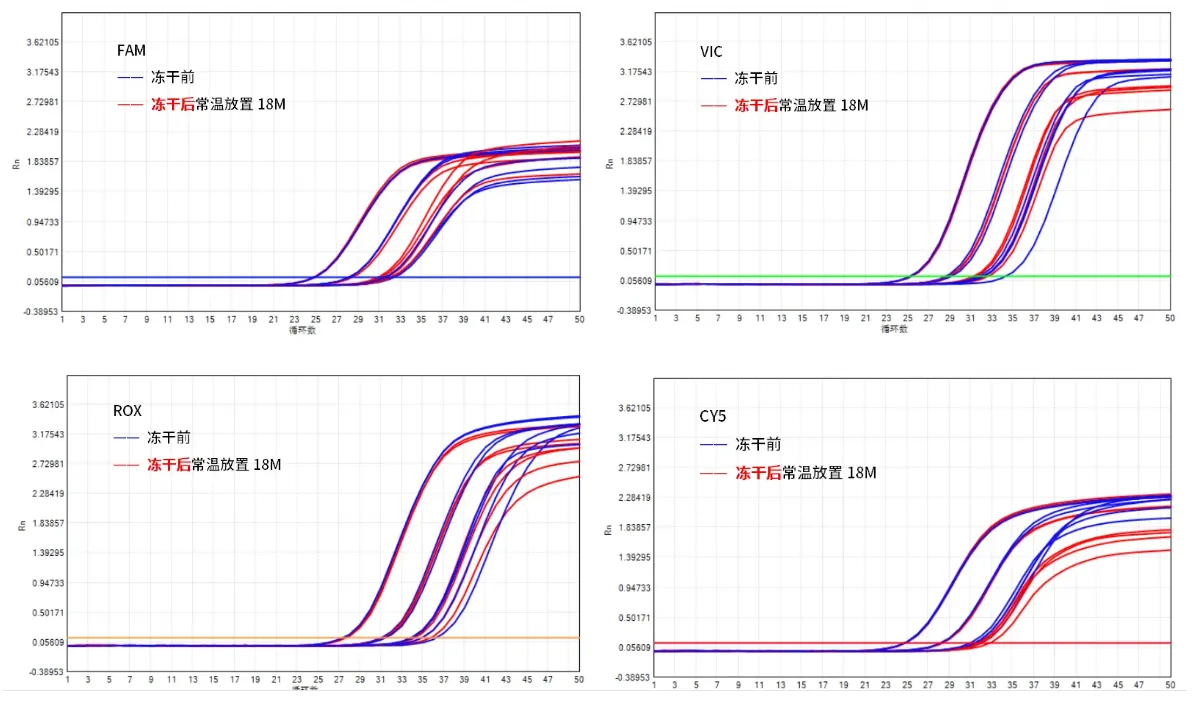
Ct value and Rn value statistics
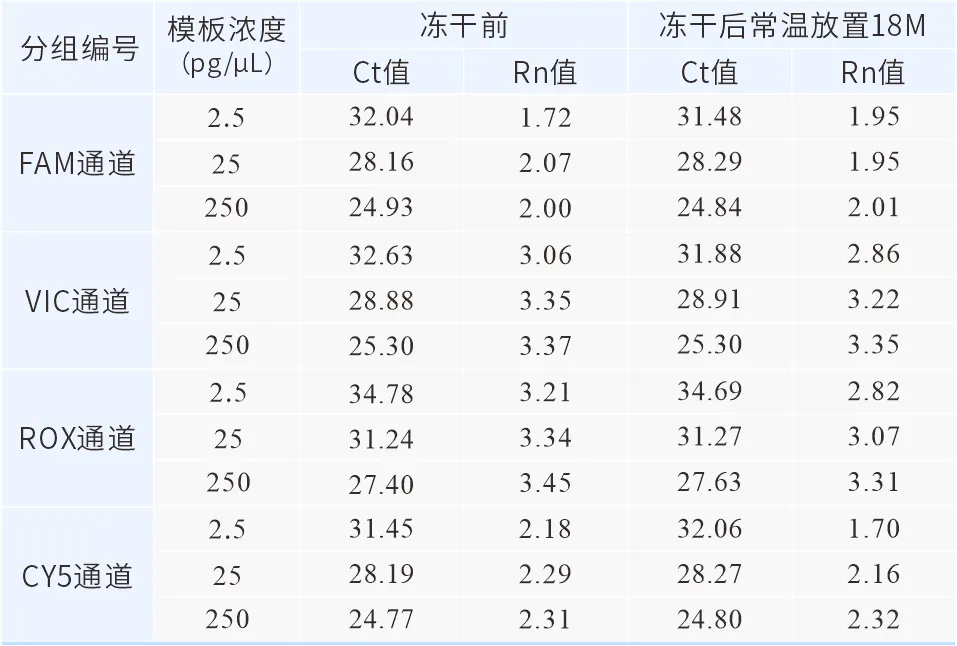
ConclusionAfter the freeze-dried samples were placed at room temperature for 18 m, their morphology was normal. Compared with the liquid control before freeze-drying, ΔCt≤1 and ΔRn≤10%, and the amplification performance remained stable.
Experimental conditions

Note: The control group was immediately prepared with the same batch of liquid reagents as the freeze-dried reagents. The freeze-dried reagents were vacuum-packed in aluminum foil bags after being taken out of the box and stored at room temperature for 18 meters.

Amplification performance
-- Store at room temperature for 18 meters --
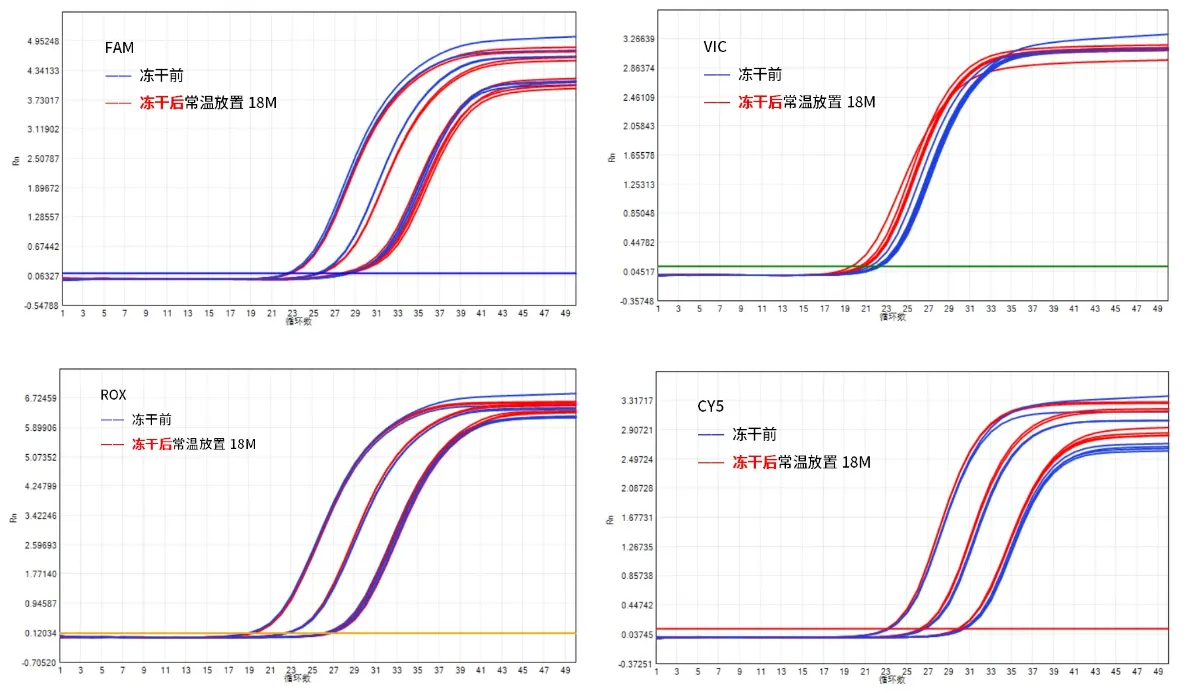
Ct value and Rn value statistics
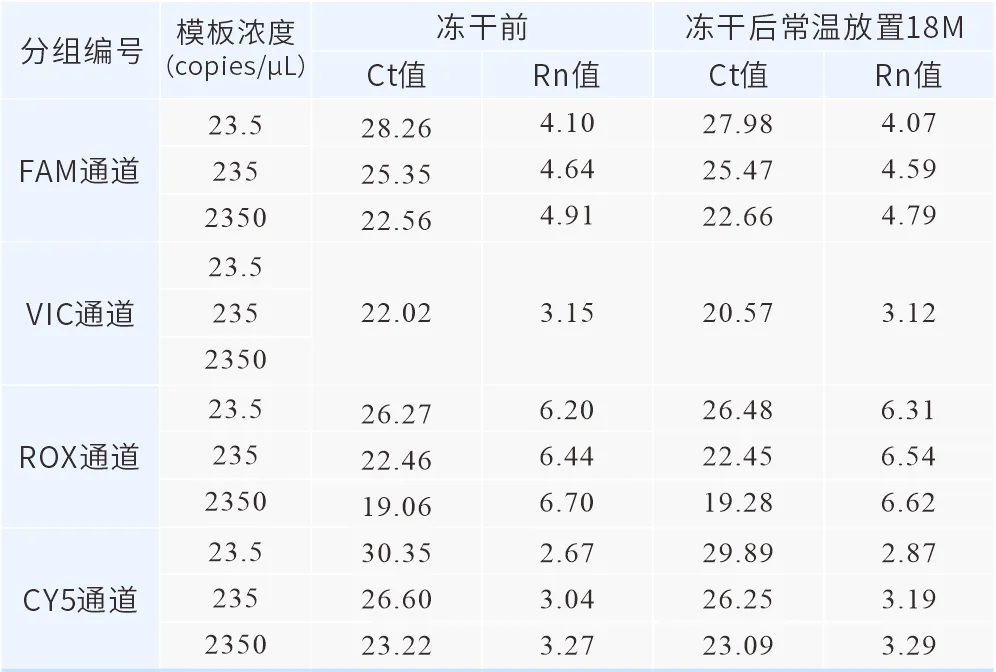
ConclusionAfter the freeze-dried samples were placed at room temperature for 18 m, their morphology was normal. Compared with the liquid control target before freeze-drying, ΔCt≤1 and ΔRn≤10%, and the amplification performance remained stable.

1. African Swine Fever freeze-drying Example - In-situ freeze-drying of 22,000 tons per batch in eight-tube
Experimental conditions

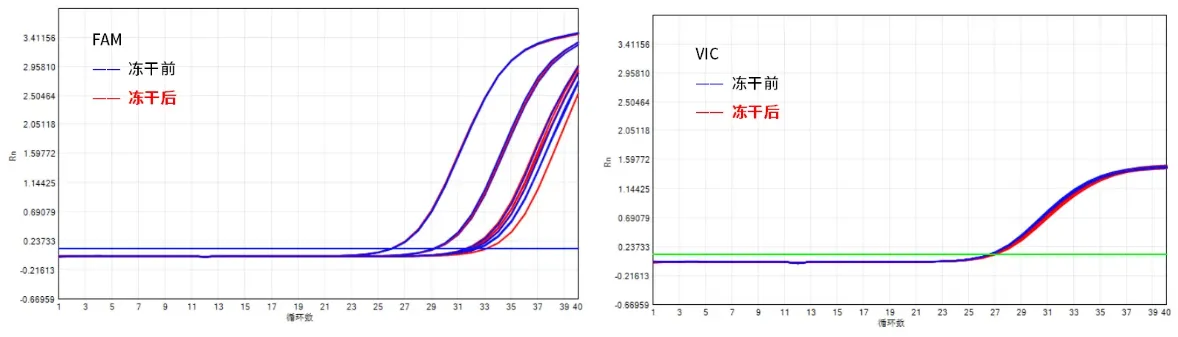
Note: The control group was prepared with the same batch of liquid reagents as the freeze-dried reagents on the spot. After the freeze-dried reagents were taken out of the box, they were vacuum-packed in aluminum foil bags and tested immediately/placed at 55℃ for 30 days.
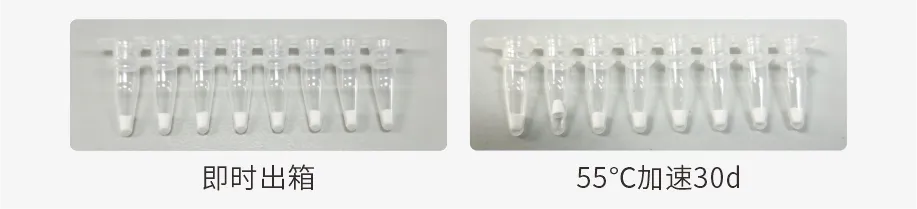
Amplification detection result
-- Instant detection --
Accelerate at 55℃ for 30 days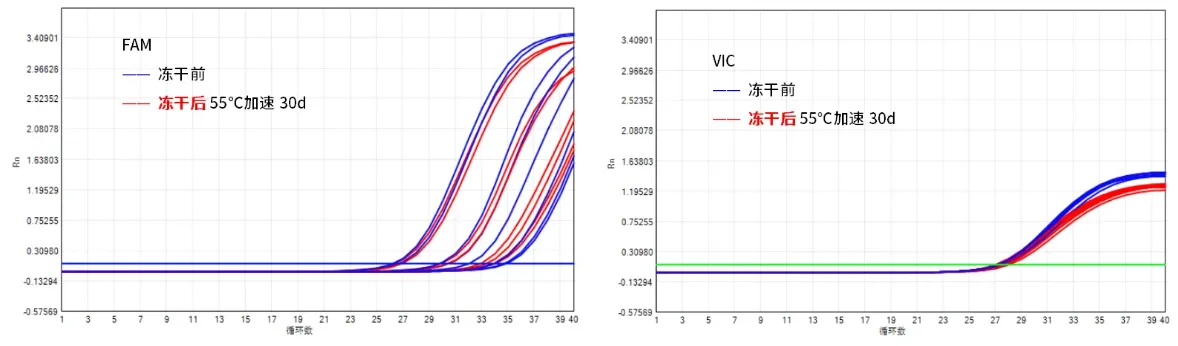
Ct value and Rn value statistics
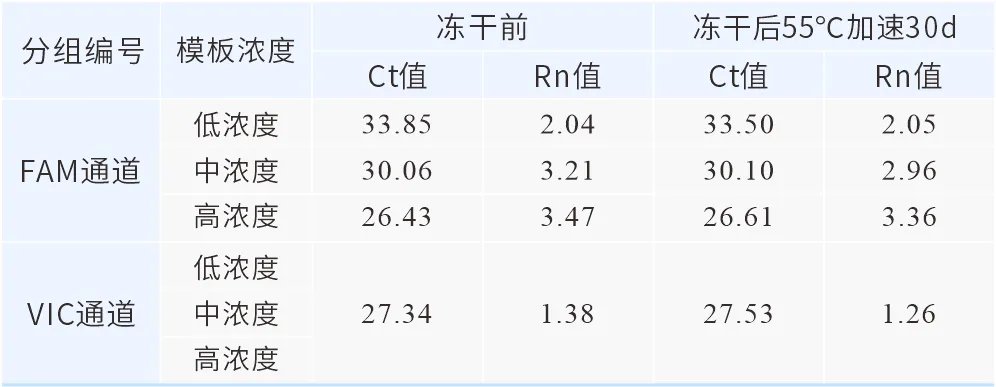
ConclusionAfter the freeze-dried samples were accelerated at 55℃ for 30 days, their morphology was normal. Compared with the liquid control before freeze-drying, ΔCt≤1 and ΔRn≤10%, and the amplification performance remained stable.
2. Lower Respiratory Tract combined Test freeze-dried Case - 200,000 tons of freeze-dried balls per batch
Experimental conditions

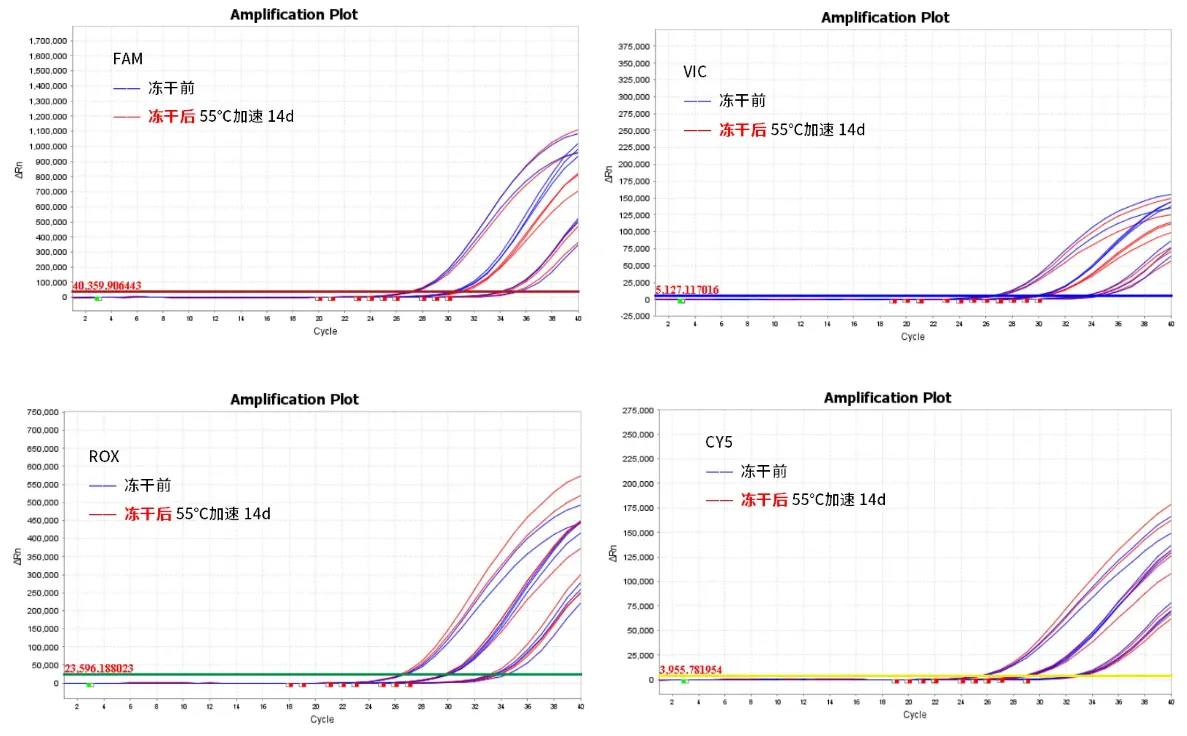
Note: The control group was prepared with the same batch of liquid reagents as the freeze-dried reagents on the spot. The freeze-dried reagents were vacuum-packed in aluminum foil bags after being taken out of the box and tested immediately/placed at 55℃ for 14 days.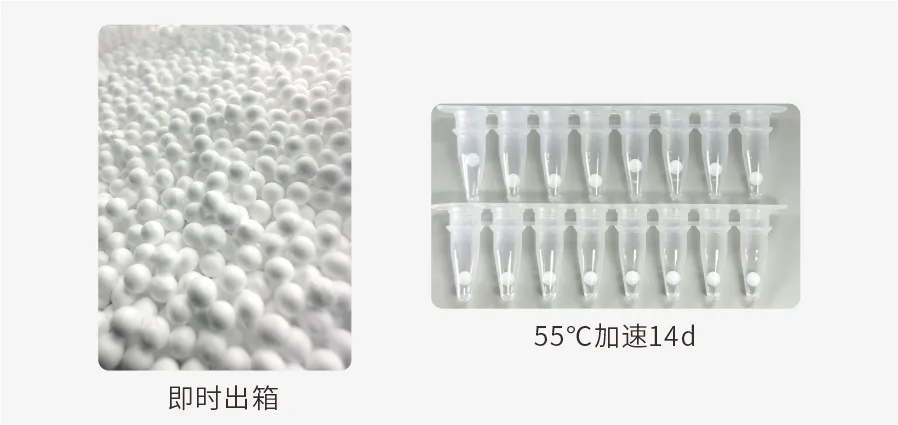
Amplification detection result
-- Instant detection --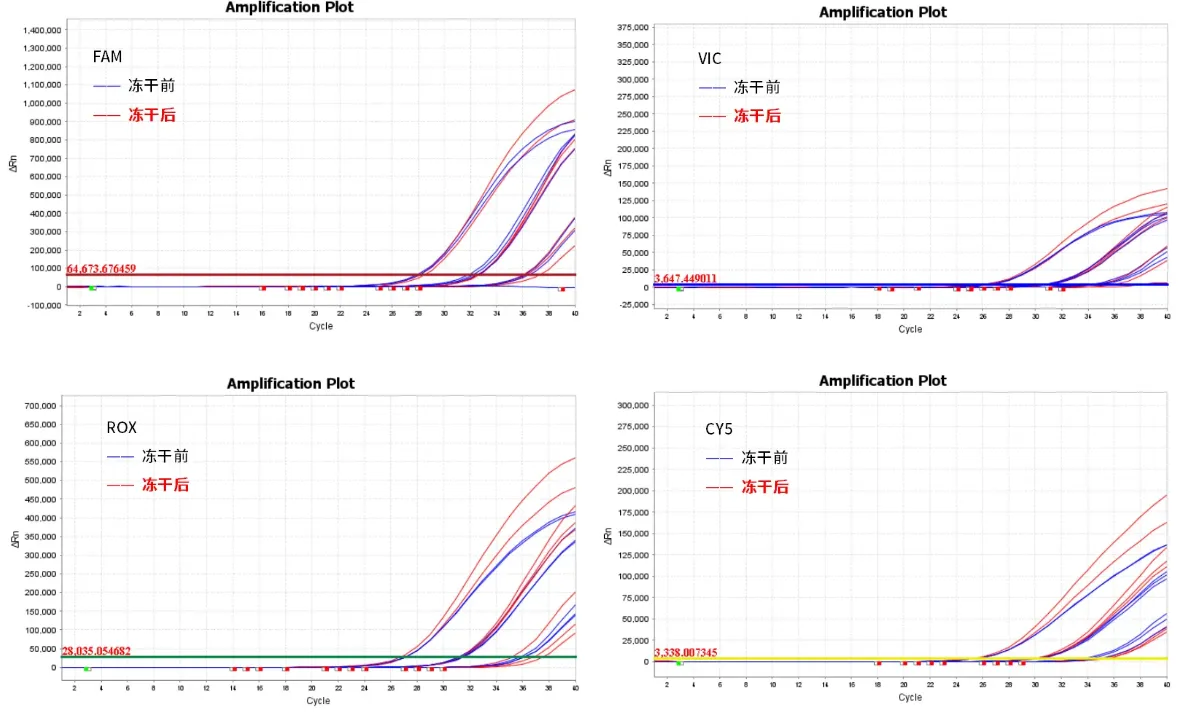
—— Accelerate at 55℃ for 14 days
Ct value and Rn value statistics
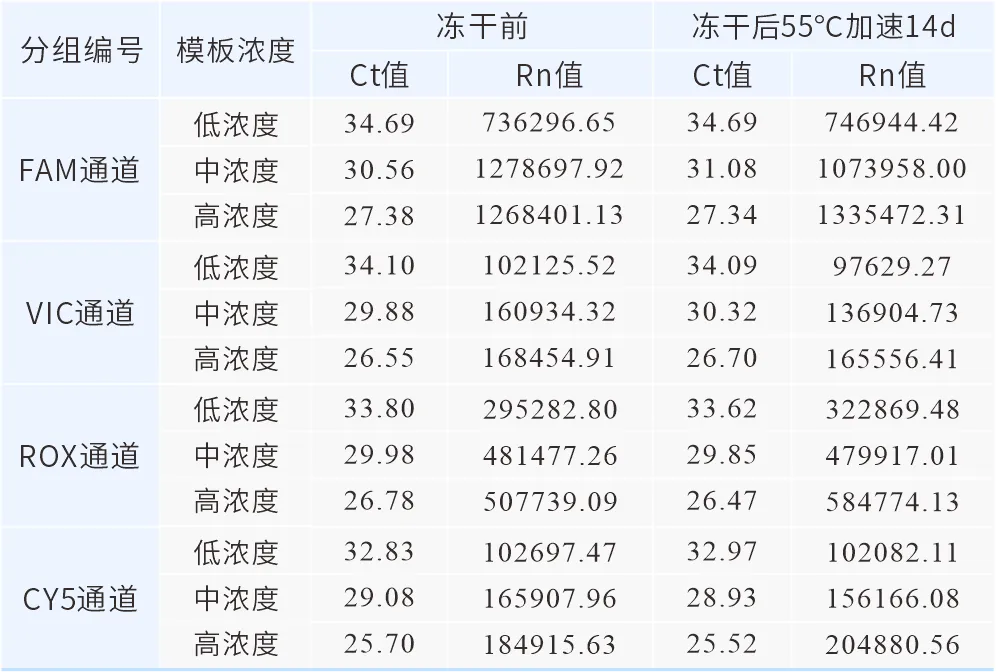
ConclusionAfter the freeze-dried samples were accelerated at 55℃ for 14 days, their morphology was normal. Compared with the liquid control before freeze-drying, ΔCt≤1 and ΔRn≤15%, and the amplification performance remained stable.
3. LAMP Probe Method - Freeze-drying Example of Animal Disease project - In-situ freeze-drying of eight connected tubes with caps - 12,000 tons per batch Experimental conditions

Note: The control group was prepared with the same batch of liquid reagents as the freeze-dried reagents on the spot. The freeze-dried reagents were vacuum-packed in aluminum foil bags after being taken out of the box and tested immediately.

Amplification detection result
-- Instant detection --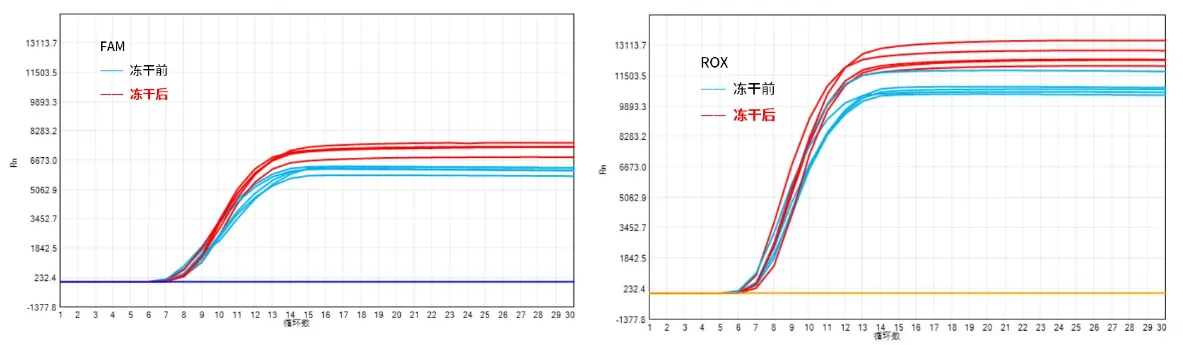
Ct value statistics
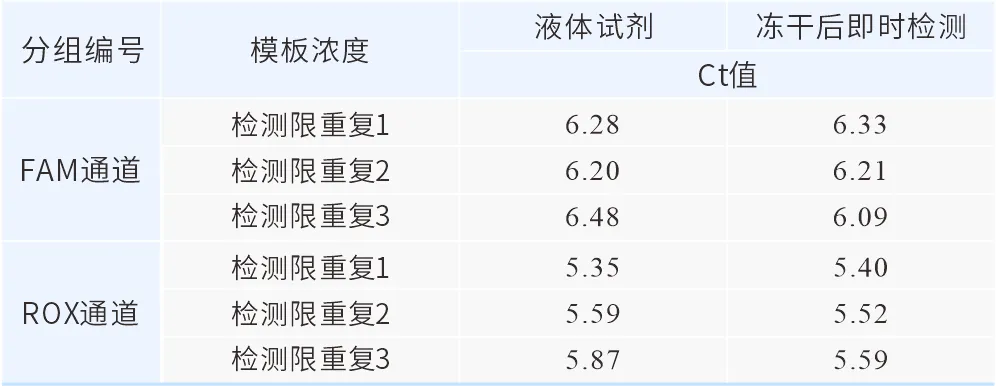
ConclusionThe morphology of the freeze-dried samples after leaving the box was normal. Compared with the liquid control before freeze-drying, ΔCt was ≤1 min, and the amplification performance was consistent with that of the liquid control.
4. LAMP probe Method - Freeze-drying example - Freeze-drying with freeze-drying balls - 15,000 tons per batch Experimental conditions Note: The control group was prepared with the same batch of liquid reagents as the freeze-dried reagents on the spot. The freeze-dried reagents were vacuum-packed in aluminum foil bags after being taken out of the box and tested immediately.

Amplification curve
-- Instant amplification results --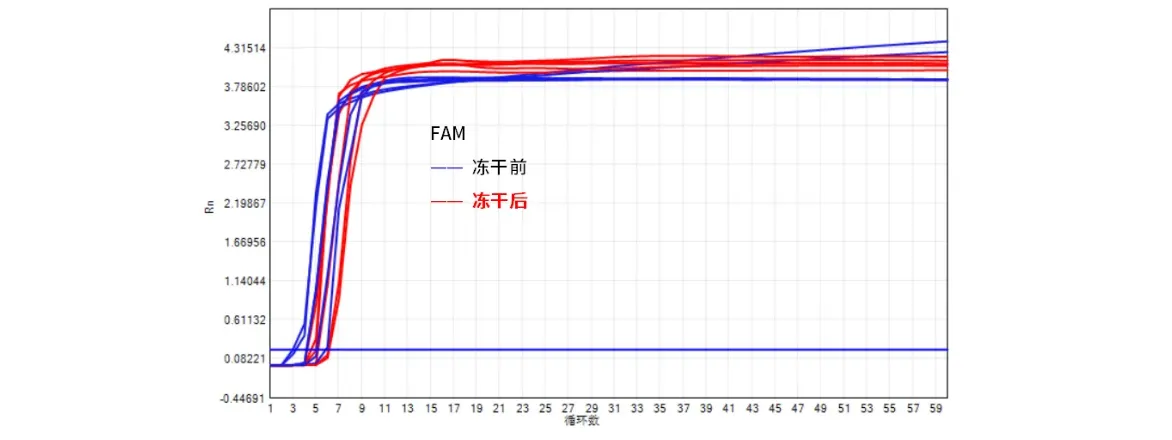
Ct value statistics
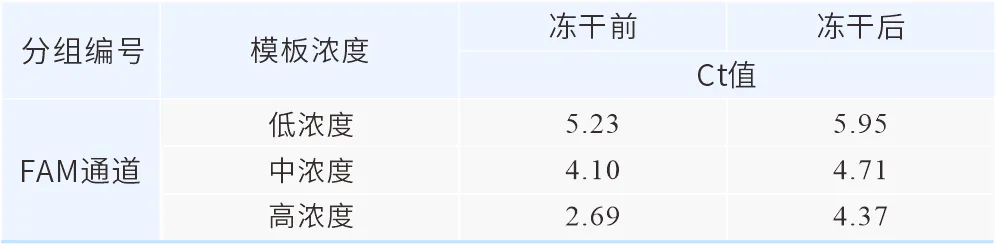
ConclusionThe sample morphology was normal after freeze-drying. The difference in CT value compared with the liquid control before freeze-drying was less than 2 minutes, and the amplification performance was qualified.
0756-8699969
Address: No. 88, Shuian 1st Road, Xiangzhou District, Zhuhai City, Guangdong Province
Email: marketing@biori.com
Wechat official account |
Product consultation |
Video Account |