Article source: Super Lab, IVD Raw Materials Network
The following principles of primer design are provided for your reference:
Primers are best designed within the conserved region of the template cDNA.
The length of primers is generally between 15 and 30 bases.
3) The GC content of the primers should be between 40% and 60%, and the Tm value is preferably close to 72℃.
4) The 3 'end of the primer should avoid the third bit of the codon.
5) The 3 'end of the primer should not be selected as A; it is best to choose T.
6) Bases should be randomly distributed.
7) There should be no complementary sequences within the primers themselves or between primers.
8) The △G values at the 5 'end and the middle of the primer should be relatively high, while the △G value at the 3' end should be relatively low.
9) The 5 'end of the primer can be modified, but the 3' end cannot.
10) The single strand of the amplification product cannot form a secondary structure.
11) Primers should be specific.
The commonly used software includes Oligo 6 and Primer Premier 5.0. Primer design software is designed in accordance with the guidelines for primer design. In fact, the key to the success or failure of PCR amplification lies in the preparation of the reaction template and the control of reaction conditions. The drawback of primer design software is that sometimes it is determined that there is no region of the gene that meets the requirements of standard primers.
Genscript offers you the following primer design-related software:
Primer calculation tool
Primer design tool
Sequencing primer design software
Real-time PCR primer design software
Generally, foreign literature is more reliable and can be used directly. However, to be on the safe side, it is best to use blast to conduct the necessary verification of the sequence of the primer probe. Or, you can further analyze the secondary structure and annealing temperature of the primer probe using primer design software. This will be more conducive to your grasp of the entire experiment.
The concept of Tm value:
The DNA melting temperature refers to the temperature at which the double helix structure of DNA is degraded by half. That is, the temperature at which the ultraviolet absorption value reaches 50% of its maximum value during the DNA denaturation process is called the DNA unwinding temperature (Tm).
Kingsley uses the following method to calculate the Tm value:
For primers with A length of 20mer or less, the formula for calculating Tm is: Tm = 4℃(G + C)+ 2℃(A + T). However, this formula is only applicable to primers with 14 to 20 bases. The TM value of the primer is also related to the primer length, base composition, and the ionic strength of the buffer solution used for the primer.
For longer oligonucleotides, the Tm calculation formula is: Tm = 0.41(% of GC) - 675/L + 81.5
Note: L: Number of primer bases; % of GC: Primer GC content; % of GC = Number of GCS/Total number of primers' bases
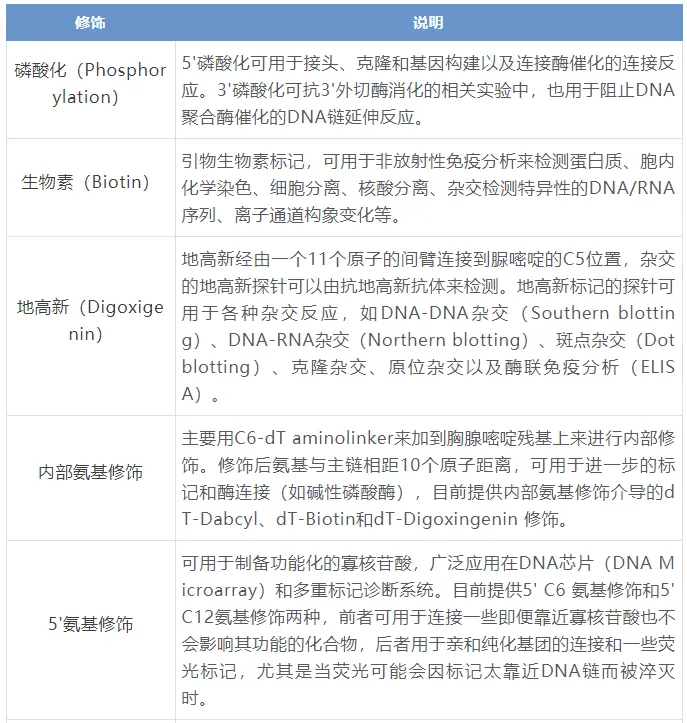
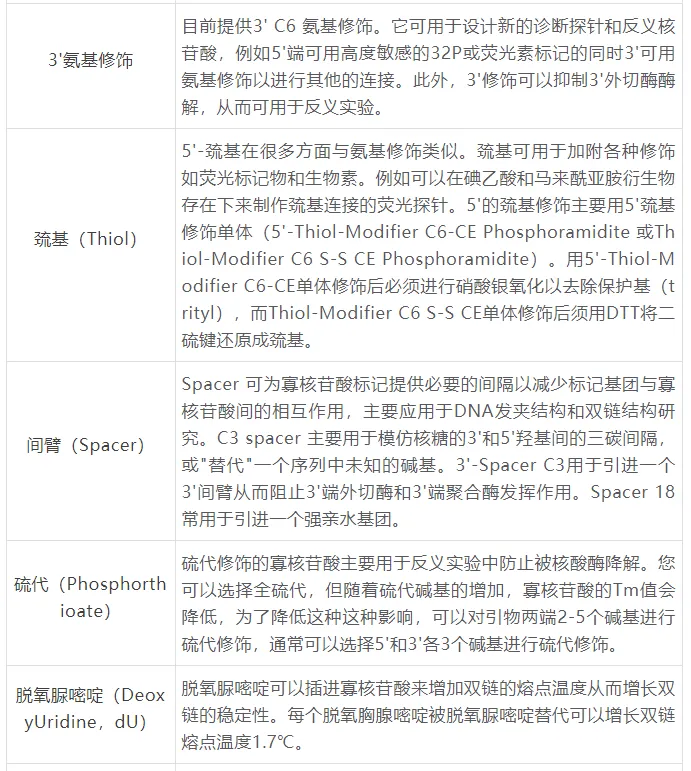
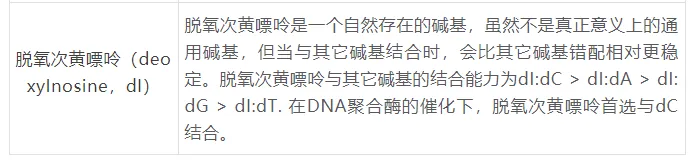
The main reason is that the stability of the modifying monomer is poor, the coupling time is long, and the efficiency is low. As a result, the final yield is naturally lower than that of general primers. Modified primers usually require PAGE or HPLC purification, and the purification process incurs significant losses. The raw materials used for modifying primers are hundreds of times those of ordinary primers, so the price of the product is naturally high.
The preservation methods for fluorescent probes are as follows:
Fluorescent probes must be stored away from light.
2) The dry product can be stored at -80℃ for more than one year. If this is not possible, please store it at -20℃.
3) It is strongly recommended to dissolve the probe in RNase-free TE (pH8.0) buffer. The probe solution obtained in this way is more stable and can be stored for a longer time. Typically, the probe is prepared as a stock solution of 100pmol/μl, aliquoted into several portions (each portion can be frozen and thawed up to five times at most), and stored at -20 ° C. Before use, dilute the prepared stock solution to the working solution (10pmol/μl or 20pmol/μl), and store the remaining part at -20℃.
Parameters of fluorescent dyes
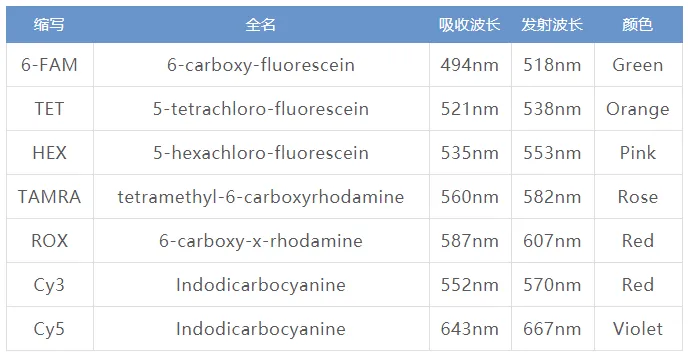
5-FAM, 6-FAM and FITC labeling are all Fluorescein labeling, and 5-FAM and 6-FAM are isomers of each other. Their chromophores are all fluorescein, and there is usually no difference in their use.
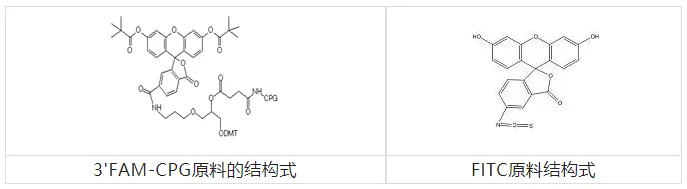
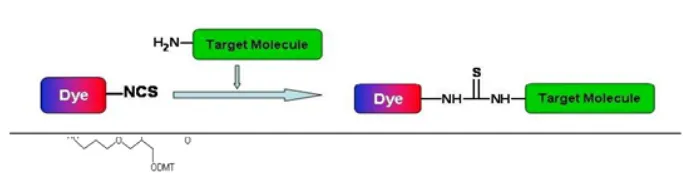
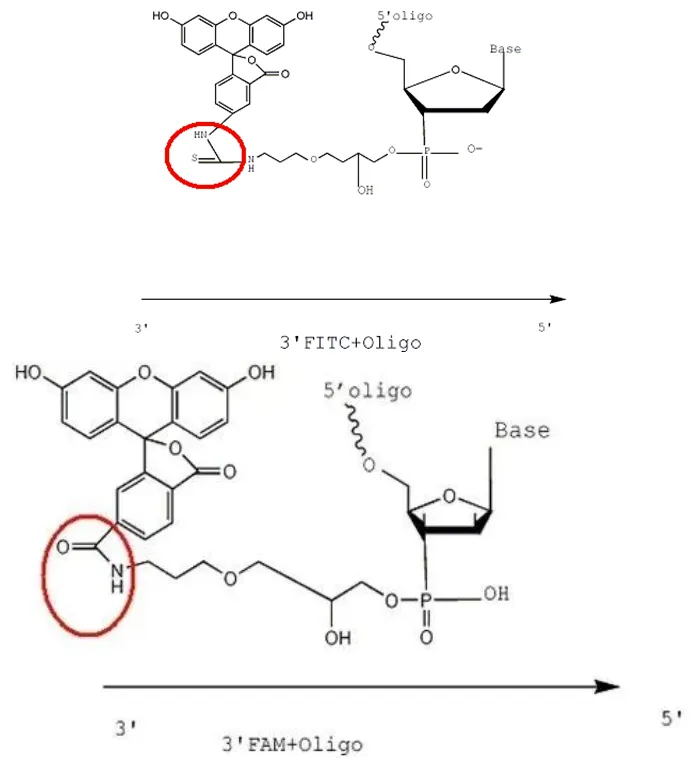
FAM is connected to Oligo through an amide bond, while FITC is connected to Oligo through a thiourea bond. The reaction process between -SCN and -NH2 on FITC is as follows:
The following figure shows the effect of 3'FITC and 3'FAM after connection with primers. The connection method of 5'FAM and 5'FITC is the same.
Double-labeled fluorescent Probes composed of quencher groups TAMRA, Eclipse or BHQ series dyes are often used as Hydrolysis Probes (Hydrolysis probes), or TaqMan probes, for real-time fluorescence quantitative PCR experiments.
TAMRA is a fluorescent dye. While quenching the reporter group, it emits fluorescence at a higher wavelength. The Eclipse and BHQ series are non-fluorescent dyes. When quenching the reporter groups, they do not emit fluorescence themselves. The fluorescence background of the probes is lower than that of TAMRA, and the detection sensitivity is higher.
2) The absorption spectrum coverage of TAMRA is narrow, and the types of reporter groups that can be matched with it are relatively few. Eclipse, on the other hand, has a wider absorption range (390nm-625nm) and can quense many types of reporter groups, such as FAM, HEX, TAMRA, ROX, etc. The absorption spectrum coverage of the BHQ series dyes used in combination is broader, ranging from 430nm all the way to near-infrared, and there are more types of reporter groups that can be quenched, including Cy3, Cy5, etc. Therefore, a set of double-labeled fluorescent probes can be composed of Eclipse or BHQ series dyes for multiplex PCR.
The following principles can be referred to
1) The TaqMan probe should be positioned as close as possible to the amplification primer (amplification product 50-150bp), but it must not overlap with the primer. 2) The length is generally 18-40mer. 3) The content of G-C should be controlled at around 40-80%. 4) Avoid the occurrence of consecutive identical bases, especially GGGG or more G. 5) Avoid using G at the 5' end of the primer. 6) Select a relatively large number of bases C. 7) The annealing temperature Tm should be controlled at around 68-70℃.
Some fluorescent groups also absorb light at 260nm, such as FAM, HEX, TAMRA, and TET. There may also be absorption values at 260nm, but the data has not been published, so they are not included in the calculation.
5' phosphorylation is added to the sugar ring at the 5' end of the primer through a B-cyanoethyl chemical reaction, rather than to the last base. 3' phosphate is attached to a solid support medium, so in the first cycle of synthesis, the base couples with it. 3' phosphorylation modification has the function of preventing the extension of polymerase.
S-oligos are formed when one oxygen in the phosphodiester bond between single nucleotides in oligonucleotides is replaced by sulfur. This modification is carried out at the time of joining (not after composition). After the bases are added, connection modification is carried out. The phosphoric acid between two bases can be converted into a double bond "S"(using thiogenated reagents) to replace the common double bond "O" (using iodine solution), and all bases connected to the phosphodiester bond can undergo this modification.
However, the 3' terminal base cannot undergo thiophosphorylation modification because when it dissociates from the solid support, the phosphate ester bond no longer exists and the 3' terminal base is OH. We can provide 5' modification for S-oligo. For instance, customers can customize the fluorescein labeling of S-oligo. The positions of S-oligos and common oligonucleotides on PAGE gels are the same.
5'Aminolinker(C6) is added to the primer 5' sugar ring in the form of phosphite amine through a B-cyanoethyl chemical reaction at the final step of the synthetic cycle, rather than to the last base.
The coupling efficiency of the 5' amino standard is over 95%, and the amino group has no absorbance value at 260nm. It has an absorbance value at 210nm. Its presence (agarose or acrylamide) cannot be detected by electrophoresis.
3'Aminolinker(C7) is only compatible with some 5' modifications, such as FAM, HEX, TET, Fluorescein, Biotin, Amine, and phosphate. Other 5' modifications (such as Alexa dyes) require an amino group to be linked to oligonucleotides, which makes it impossible for this dye to be linked to the 3' amino group.
Amino modification is a very simple and inexpensive method. Any kind of amino modification is acceptable. The 5' end C6 type works very well.
The colors in the liquid: HEX is pink, FAM is yellow, and TET is orange. FAM, HEX and TET are added in the form of phosphite amines through B-cyanoethyl chemical reaction at the end of the synthesis cycle, so they are added to the 5' terminal sugar of the primer rather than the terminal base of the primer. They are covalently linked to the sugar ring at the very end of the 5' end through a phosphodiester bond.
Oligonucleotides that have undergone these modifications cannot undergo thiophosphorylation modification.
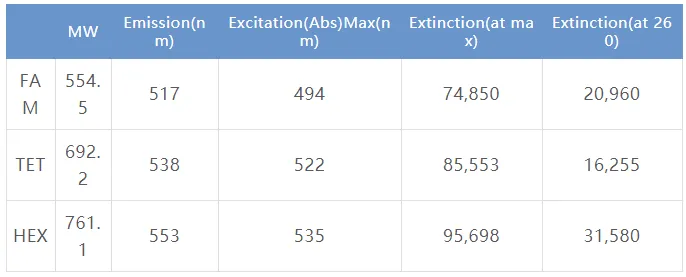
Note: The molar extinction coefficient is measured under the excitation light at the maximum nm. Because minor changes in pH or composition may affect the above data.

0756-8699969
Address: No. 88, Shuian 1st Road, Nanping Science and Technology Park, Xiangzhou District, Zhuhai City, Guangdong Province
Email: marketing@biori.com
Wechat official account |
Product consultation |
Join us |
Video Account |