
T7 RNA polymerase precisely recognizes the T7 promoter region (5 '-TAATACGACTCACTATAG-3). Starting from G in this region, it transcrifies subsequent DNA sequences into single-stranded RNA.
In vitro transcribed RNA has a wide range of basic science and application technology fields: structural research, basic RNA biology, CRISPR, lncRNA, mRNA vaccines and mRNA therapies, siRNA, etc. Different project have different requirements for the purity of RNA。
At present, T7 RNA polymerase can effectively, rapidly and efficiently provide RNA for in vitro synthesis, but sometimes dsRNA by-products may occur. Some RNA sequences form local spatial structures during transcription, especially the hairpin structure at the 3' end, which easily leads to the further extension of T7 RNA polymerase using RNA as a template, resulting in the generation of dsRNA.
In RNA therapy applications, dsRNA contamination from in vitro synthesized RNA can trigger an innate immune response because dsRNA affects multiple physiological and biochemical signaling pathways. Retinoic acid-inducing gene (RIG-I), Toll-like receptor 3 (TLR-3), and protein melanoma differentiation-associated antigen 5 (MDA5).
It can induce the production of type I interferons, inhibit translation by activating and upregulating protein kinase R (PKR), and also cause mRNA degradation in cells by activating the 2'-5' oligosine monophosphate synthase (OAS) enzyme family.
Therefore, for mRNA transcribed in vitro, reducing dsRNA contamination is particularly important. Gel or chromatographic purification methods are very time-consuming and inaccurate. The longer the RNA length, the worse the separation effect, and it is impossible to purify precisely encoded RNA.

In 2019, a literature reported a method: dsRNA in 16% ethanol buffer has a stronger binding ability with cellulose. Through the detection of J2 antibody, this method can effectively remove impurities of dsRNA (1). The article introduces that this method can effectively remove dsRNA within the range of 30 to 1,000 bp and efficiently recover mRNA.
However, when purifying 1K to 2kb mRNA, the recovery rate drops to 65-85%. Long mRNA chains may have their own local double-stranded secondary structures, which may be unfavorable for the recovery of long-chain mRNA when binding with cellulose. It is unfavorable for the recovery of some Rnas that inherently contain natural double-stranded secondary structures, and may cause significant losses during the recovery of long-stranded mrnas.
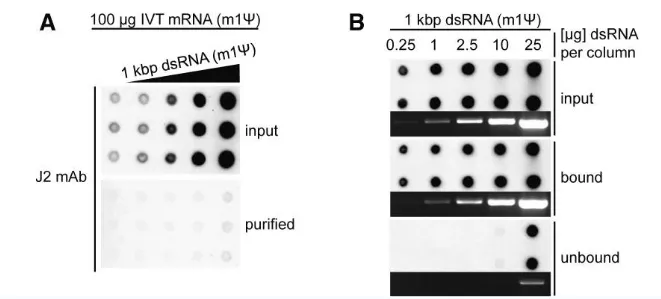
Figure 1 shows the removal of long dsRNA from IVT mRNA by cellulose chromatography
(Figure A) 0.02-20 ng of dsRNA/μg mRNA was doped into 1 Kb-long m1Ψ mRNA. Purify 100 μg of the above-mentioned RNA sample containing dsRNA impurities using a 0.14g cellulose centrifuge column. Then, spot blotting was performed using the J2 DsrNA-specific antibody.
(Figure B) 0.5-25 ng of dsRNA/μg mRNA is doped into 1 Kb-long m1Ψ mRNA. The mRNA without cellulose binding was tested respectively (Figure B -boud), and the mRNA purified by a 0.14 g cellulose centrifugation column was tested (Figure B -unbound). Then, spot blotting was performed using the J2 DsrNA-specific antibody.
A literature article in 2021 introduced that an immobilized DNA transcription template can effectively reduce the production of dsRNA in a high-salt environment (2). It is introduced that increasing the salt concentration will destroy the ability of T7 to bind to the promoter DNA, and at the same time, it will also inhibit the stability of the rebinding of T7 enzyme with the product RNA.
Under the covalent cross-linking of the N-terminal of the T7 enzyme with the template DNA, a local high concentration of the promoter will be generated near its binding site, which can bind to the T7 promoter even in a high-salt environment.
In a high-salt environment, the T7 enzyme transcribed to the 3 'end of RNA cannot recombine with the product RNA, avoiding the extension activity of cisprimers and significantly reducing the generation of longer double-stranded RNA impurities.
Specific approach: Perform 5' -biotinylation on the non-template chain and add Strep-tagII peptide tags to the T7 enzyme. The promoter complex was incubated with Strep-tactinxT-coated magnetic beads to form the Tethered in vitro transcription system as shown in Figure 2.

Figure 2
Under this system, the T7 enzyme can tolerate a NaCl concentration of 0.1-0.4M for efficient in vitro transcription.
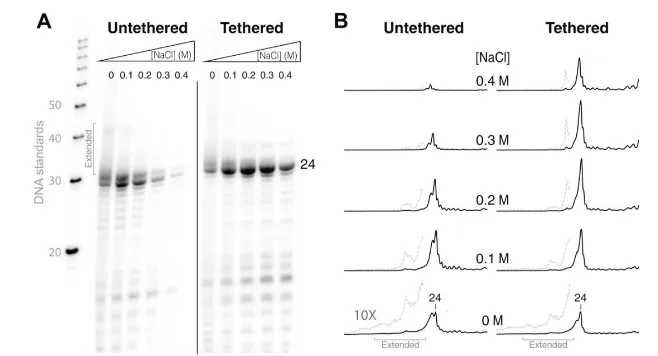
Figure 3 (Figure A/Figure B
Figures A and B: Tethered in vitro transcription system. The T7 enzyme can be effectively transcribed under conditions of 0.1-0.4M NaCl, while the ordinary in vitro transcription of unTethered will significantly reduce the transcription yield. Moreover, the dsRNA above the main band of the Tethered in vitro transcription system is less than that of the unTethered, which can effectively reduce the production of dsRNA. The Tethered T7 transcription system introduced in this literature reduces the production of dsRNA, making up for the defect in the first literature that the cellulose membrane method is not conducive to the recovery of naturally occurring locally double-stranded secondary structure Rnas. However, the RNA tested in the experiments of this literature was a short RNA of 24nt, and the transcription of conventional long-chain mRNA was not described.
Two articles respectively introduce the removal of dsRNA and the prevention of dsRNA generation, which are innovative and provide valuable ideas for large-scale in vitro transcription reactions in industrialization.

Baorui Bio T7RNA Polymerase
In the process of mRNA drug preparation, to reduce dsRNA by-products, it is necessary to start from the root cause and reduce dsRNA during the transcription reaction process through a more superior reaction system and excellent enzymesBy-product。
Many heat-resistant T7 RNA polymerases on the market reduce the generation of dsRNA by enhancing the thermal stability of T7 and transcribing it at high temperatures (42℃-50℃). This strategy, although effective, is also severely limited in industrial applications. The main problems lie in the relatively low yield of individual reactions during high-temperature transcription, the more complex temperature control requirements for the industrial preparation of mRNA stock solutions, and the fact that high-temperature reactions are not applicable to many mRNA pharmaceutical project.
After multiple rounds of screening, Baorui Biotech has launched T7 RNA Polymerase 3.0, which can significantly reduce the production of dsRNA. Spot blotting shows that the dsRNA is much less than that of different types of competing T7 RNA Polymerase, and it does not require a reaction at 50℃. mRNA with low dsRNA content can be transcribed in high yield and stably at a reaction temperature of 37℃.
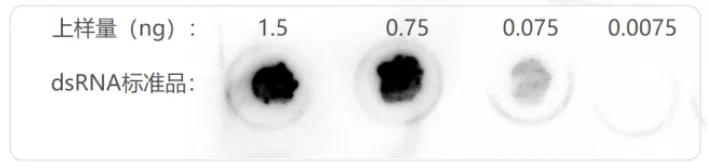
Figure 4 shows spot blotting of dsRNA standards using J2 DsrNA-specific antibodies
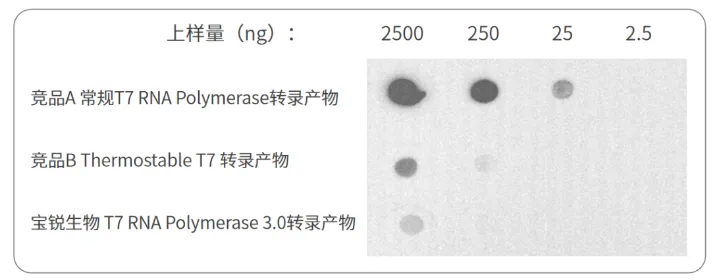
Figure 5 Spot immunoblotting tests of T7 transcription products from different manufacturers
Spot blot, as a qualitative detection method for dsRNA content, can be intuitively seen from the comparison of Figures 4 and 5 that the Baorui T7 RNA Polymerase 3.0 can effectively reduce the generation of dsRNA. The content of by-product dsRNA detected in the same amount of transcription products is much less than that of the conventional T7 and high-temperature resistant T7 competing product groups. Moreover, under A single transcription system, the yield of Borui T7 RNA Polymerase 3.0 is similar to that of competing product A (Figure 6).
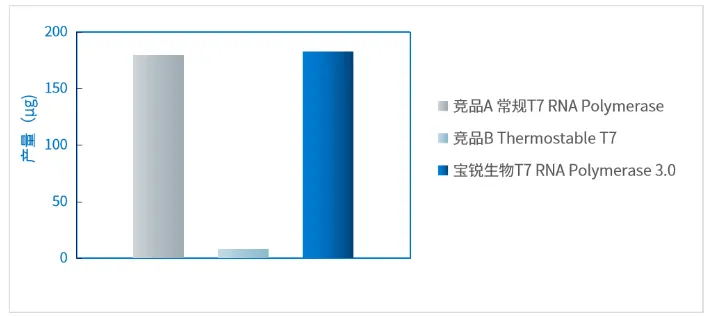
Figure 6 Comparison of transcription yields of different types of T7 RNA Polymerase
The dsRNA in the mRNA stock solutions of different types of T7 transcription products was quantitatively detected using the double antibody sandwich enzyme-linked immunosorbent assay (Figure 7). Only 0.48μg/mg of dsRNA was detected in the mRNA prepared by the transcription of Baorai T7 RNA Polymerase 3.0. It has met the dsRNA residue requirements for IND application (1μg/mg), which can effectively reduce immunogenicity and provide assistance for the research and development of mRNA vaccines and drugs (Table 1).
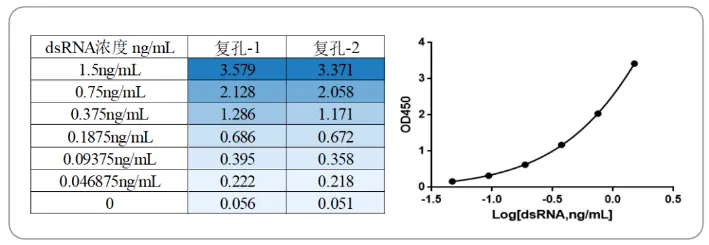
Figure 7 Detection of dsRNA standard curves by double antibody sandwich enzyme-linked immunosorbent assay
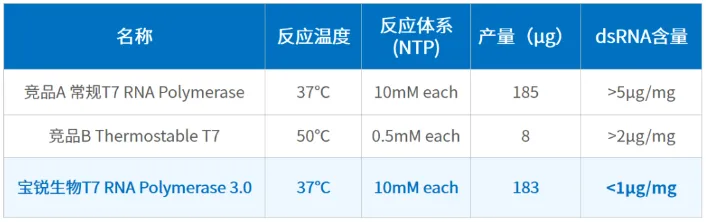
Table 1 Different types of T7 applications of in vitro transcription
In the future, Baorui Biology will continue to develop and iterate to achieve higher qualityWe strive to provide support for the development of the mRNA vaccine industry with various mRNA enzyme raw materials!
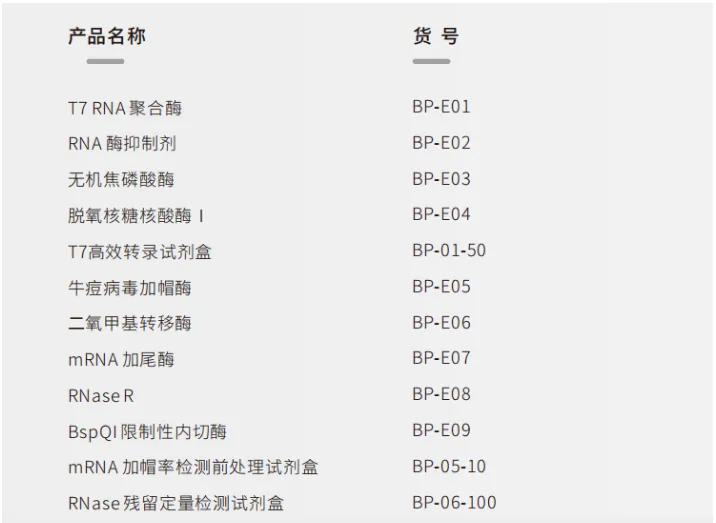
Recommended products

Scan the code for a trial
References
1:A Facile Method for the Removal of dsRNA Contaminant from In Vitro-Transcribed mRNA.Mol Ther Nucleic Acids. 2019 Apr 15; 15: 26–35.doi: 10.1016/j.omtn.2019.02.018
2:High-salt transcription of DNA cotethered with T7 RNA polymerase to beads generates increased yields of highly pure RNA.J Biol Chem. 2021 Sep; 297(3): 100999.doi: 10.1016/j.jbc.2021.100999
0756-8699969
Address: No. 88, Shuian 1st Road, Nanping Science and Technology Park, Xiangzhou District, Zhuhai City, Guangdong Province
Email: marketing@biori.com
Wechat official account |
Product consultation |
Join us |
Video Account |