Today, we bring you A classic article in the field of mRNA research. This paper explores the influence of different forms of poly (A) tails in mRNA drug development on mRNA preparation and subsequent translation, which has a profound impact on the sequence design of subsequent mRNA vaccines or drugs。
The Poly(A) tail, as the 3' terminal structure of mRNA, is composed of multiple adenylate (A) residues, and its length and distribution are crucial for the function of mRNA. In numerous scientific studies and experiments, this structure has been widely understood and recognized. This structure plays a regulatory role at multiple levels of gene expression.

When transcribing mRNA in vitro, Poly(A) tails can be added in two ways: one is to encode them in the DNA template, and the other is to enzymatically add them separately after transcription. The PCR method is suitable for small-scale production, but its high cost and mutation risk limit its large-scale application. The production cost of plasmids is relatively low and the risk of mutation is small, but there is A problem of recombination, especially for long Poly(A) sequences.
Studies have shown that Poly(A) encoded by templates can produce homogeneous products, but the composition of the products after enzymatic polyadenylation is difficult to control. Reducing RNA production steps can lower costs. In addition, the enzymatic polyadenylation of mRNA needs to be carried out under alkaline conditions. However, mRNA is sensitive to alkaline hydrolysis, which will reduce the quality of mRNA (especially when the transcript is greater than 3kb). Long Poly(A) sequences can be stably cloned using linear particle systems such as pEVL or pJAZZ, but there are limitations. The ideal solution is to have A stable and highly efficient Poly(A) tail encoded by the plasmid template.

A study was conducted on whether the segmentation of Poly (A) tails would affect the recombination of high-copy plasmid vectors in Escherichia coli: to generate recombinant RNA transcripts with Poly (A) tails, plasmid vectors that clone DNA sequences downstream of the target genes were constructed. Considering that PABP requires at least 12 adenosines to bind, but the binding of A single PABP to Poly(A) is insufficient to support translation, sufficiently long fragments such as Poly(A)3 × 40_6 and Poly(a)2 × 60_6 can ensure that each fragment binds more than 3 copies of PABP. Therefore, the composition of different Poly (A) and interval separators was designed (Figure 1).
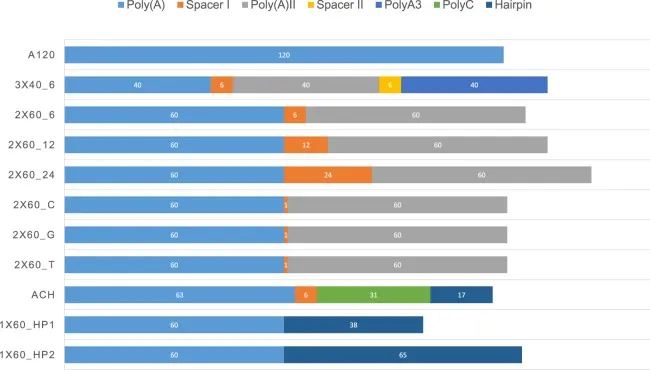
Figure 1
A120:120A;
3×40_6:40A+6 nt NsiI restriction site +40A+6 nt NsiI restriction site +40A+6 nt NsiI restriction site; 2×60_6:60A+6 nt NsiI restriction sites +60A;
2×60_12:60A+12 nt NsiI restriction site +60A;
2×60_24:60A+24 nt NsiI restriction site +60A;
2×60_C:60A + C + 60A;
2×60_G:60A +G + 60A;
2×60_T:60A + T+ 60A;
ACH: 63A+6 nt NsiI restriction site +31 PolyC+17 Hairpin;
1×60_HP1:60A+38 Hairpin;
1×60_HP2:60 A+65 Hairpin.
Compared with continuous Poly (A), separated Poly (A) can significantly reduce the plasmid recombination rate.
Different protein-coding regions were cloned into PUC57-kanamycin vectors containing different Poly(A) sequences, and then transformed into Escherichia coli for screening. The results show that as shown in Figure 2, the recombination rate of Poly(A)120 format exceeds 50%. Splitting Poly(A) into Poly(A)3 × 40 or Poly(A)2 × 60 can reduce recombination, among which the recombination rate of Poly(A)2 × 60_6 plasmid is the lowest.
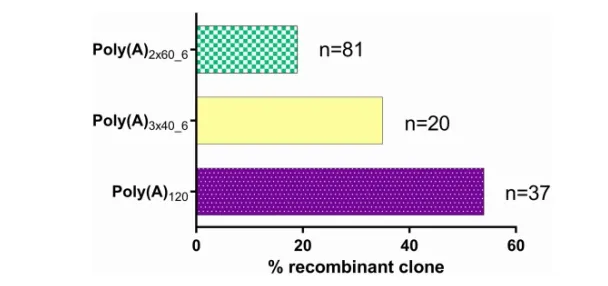
Figure 2Quantify the recombination of the poly (A) tail of A120 and the segmented poly (A) tails of 3 × 40_6 and 2 × 60_6.
PolAfter y (A) is separated, the translation efficiency does not change significantly compared to before the separation.
Different Poly (A) tails have an impact on the stability and expression of mRNA. The results are shown in the figure. At different time points, the level of d2EGFP protein in the segmented poly (A) construct is comparable to that of the control. The mRNA yield was calculated and it was found that the segmented poly (A) construct had a higher yield at 4-24 hours (Figure 3).
Similarly, experiments encoding luciferase mRNA demonstrated that the segmented poly (A)2 × 60_6 structure significantly increased the protein level independently (Figure 4-A). Different modifications and different Poly(A) formats have no difference in the number of mrnas. The production efficiency of the segmented Poly(A)2 × 60_6 structure in modification1 and 2 is higher (Figure 4-C). Compared with the ACH (Figure 1) constructors, the amount of luciferase expressed by the structures with Poly (A) tails was significantly increased, further confirming the decrease in the translation efficiency of the ACH constructors.
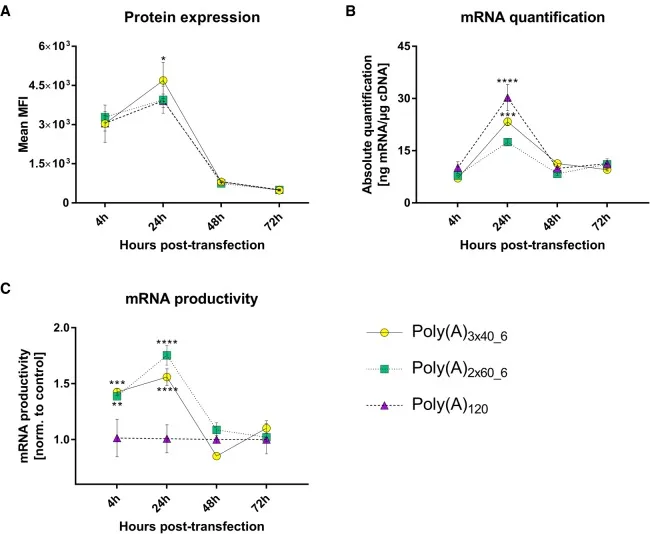
Figure 3Quantitative determination of d2EGFP protein expression and different polymer-containing (A) d2EGFP mrnas in A549 cells after transfection.
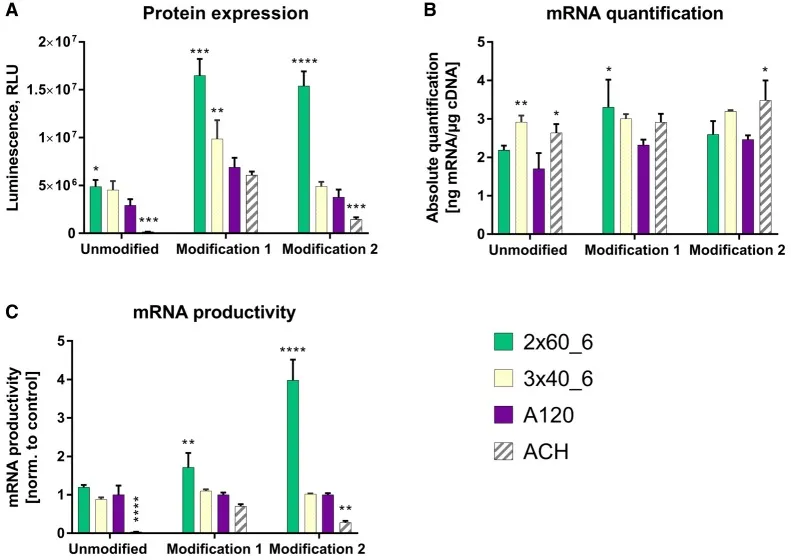
Figure 4Quantitative determination of luciferase expression and different poly A luciferase mrnas in A549 cells 24 hours after transfection.
Compared with Poly(A)120 with intracellular reporter proteins (d2EGFP and luciferase), the recombinant reduction and mRNA yield were comparable or higher. Therefore, the Poly(A)2×60_6 format with additional physiological targets was tested. The optimized hEPO sequence was cloned onto the PUC57-kanamycin vector, and mRNA was generated using the same modification group as above. Transfection experiments were conducted in human HEK293 cells, and the protein concentration was determined by ELISA (Figure 5).
The results showed that there was no significant difference between the two Poly(A) formats at different doses, time points or modifications.
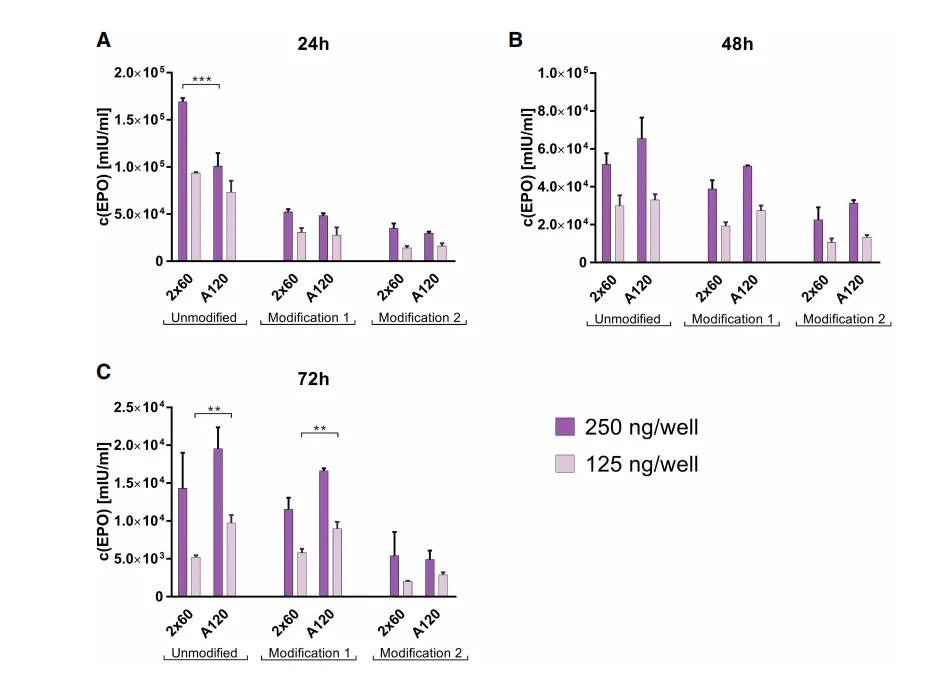
Figure 524 hours (A), 48 hours (B), and 72 hours (C) after transfection with Poly(A)120- or Poly(A)2×60-containing EPO mRNA
The level of human erythropoietin protein secreted in the supernatant of HEK293 cells was detected by ELISA.
The CFTR mRNA constructs of Poly(A)2×60_6 or Poly(A)120 were studied. Unmodified CFTR mRNA was transfected into 16HBE14o- cells. At 24 and 48 hours after transfection, the CFTR protein was detected by western blot. It was found that the use of segmented Poly(A)2×60_6 had no negative impact on protein yield compared with the conventional Poly(A)120 (Figure 6).
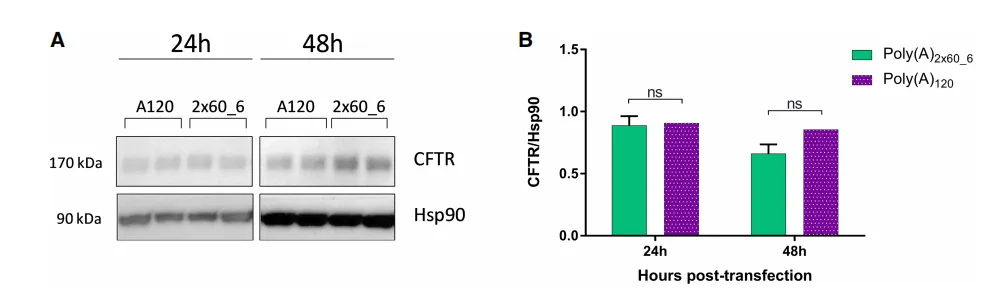
Figure 6The relative quantification of CFTR protein in 16HBe14O-lysate was determined by western blot.
By studying the specific Poly(A) interval length, two novel luciferase structures were constructed, containing 12 and 24 nt intervals respectively. After transfection of A549 cells, it was found that the mRNA expressions of two Poly(A) formats of luciferase were decreased. The specific effect of modification may be due to the influence of the spacer region on the binding of PABP to Poly(A). Increasing the interval length to more than 6 nt shows no significant translation or stability advantages.
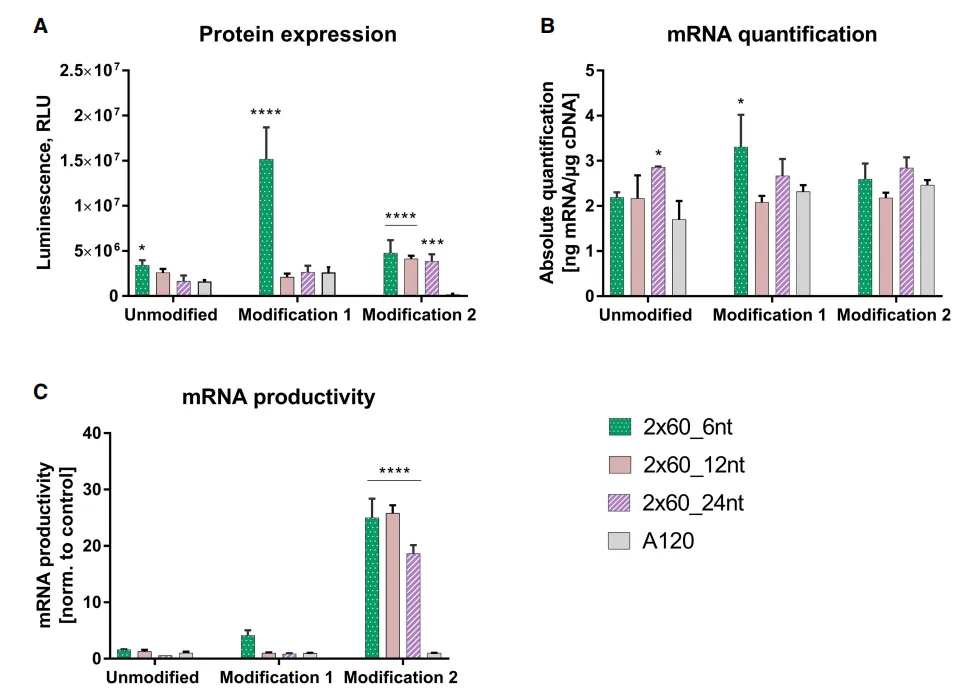
Figure 7:Quantitative determination of luciferase expression and different poly (A) luciferase mRNA in A549 cells 24 hours after transfection.
No matter which of C/T/G serves as the spacer, their translation efficiencies are close.
Three Poly(A) sequences spaced at C, T or G intervals were constructed, and their luciferase mrnas were compared in A549 cells. The results showed that compared with the standard Poly(A)120, the luciferase expression of all segmented Poly(A) constructs was higher (Figure 8), and with a few exceptions, the mRNA levels were similar (Figure 9). Single nucleotide-spaced Poly(A) fragments may enhance translation efficiency and reduce recombination rate. The study recommends the use of segmented Poly(A) regions with 6 or single nucleotide spacings, as it has no negative impact on protein expression and mRNA half-life, while reducing plasmid recombination.
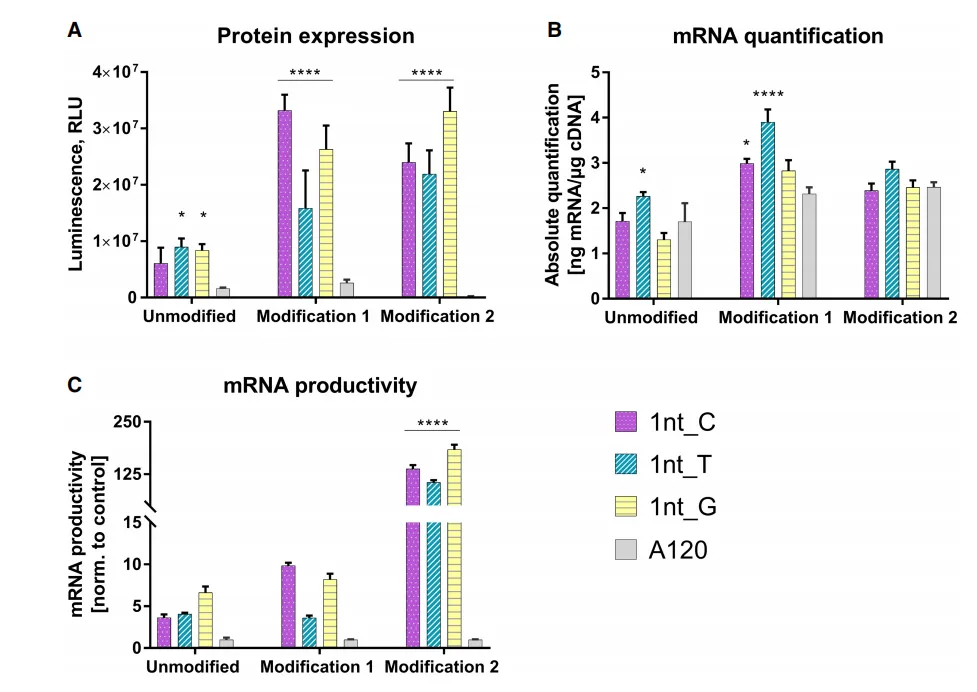
Figure 8Quantitative determination of luciferase expression and different poly (A) luciferase mRNA in A549 cells 24 hours after transfection.
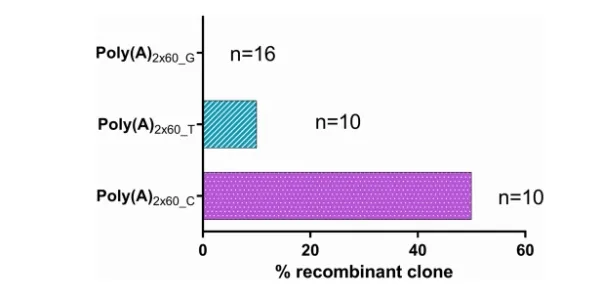
Figure 9The recombination rate of segmented Poly(A) tails was quantitatively analyzed using single nucleotide spacers. (n) The total number of luciferase clones tested in A specific Poly(A) format.
Item Number: BP-11-10
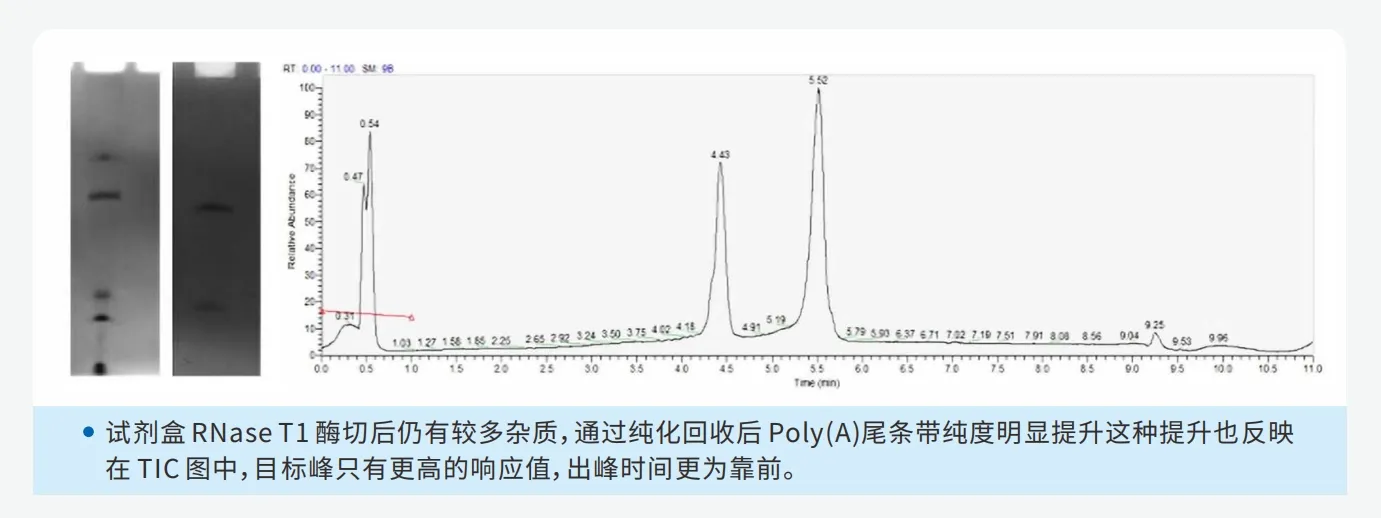
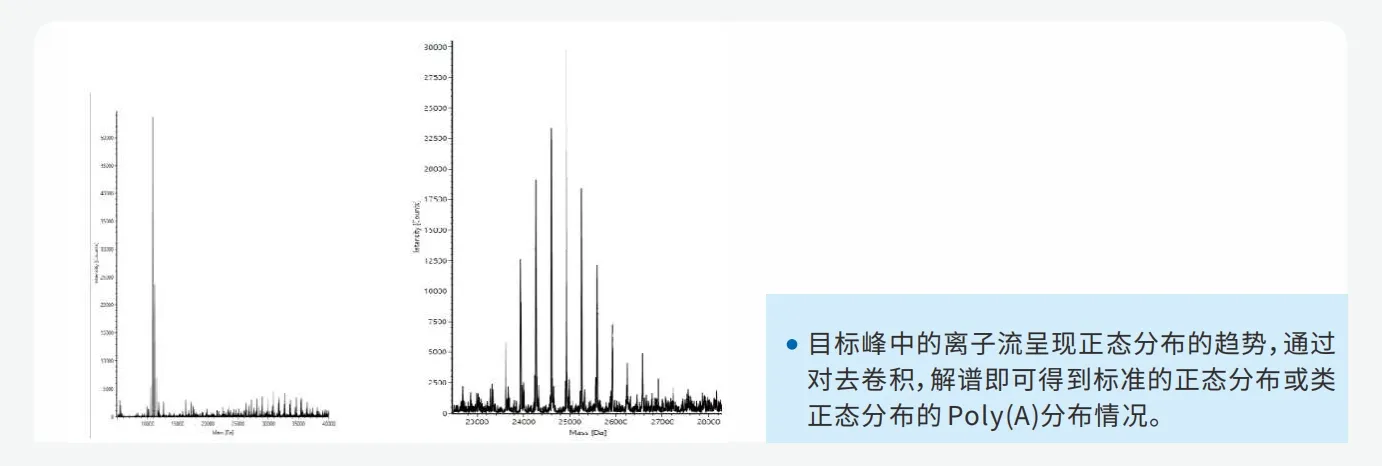
The detection of Poly(A) tail distribution of mRNA is a complex process that requires meticulous operation. The control of experimental conditions, sample processing, enzyme selection and concentration, as well as subsequent data analysis and other steps may all affect the final result. Therefore, when conducting Poly(A) tail distribution detection, it is necessary to strictly follow the experimental procedures, ensure the quality and purity of the samples, and obtain accurate and reliable results.
Based on this, Baorui Biotech has launched the Poly(A) tail distribution detection pretreatment kit for mRNA for the first time. It can efficiently and quickly obtain the Poly(A) tail distribution of mRNA for mRNA sequences with different characteristics and different types of Poly(A) tails。
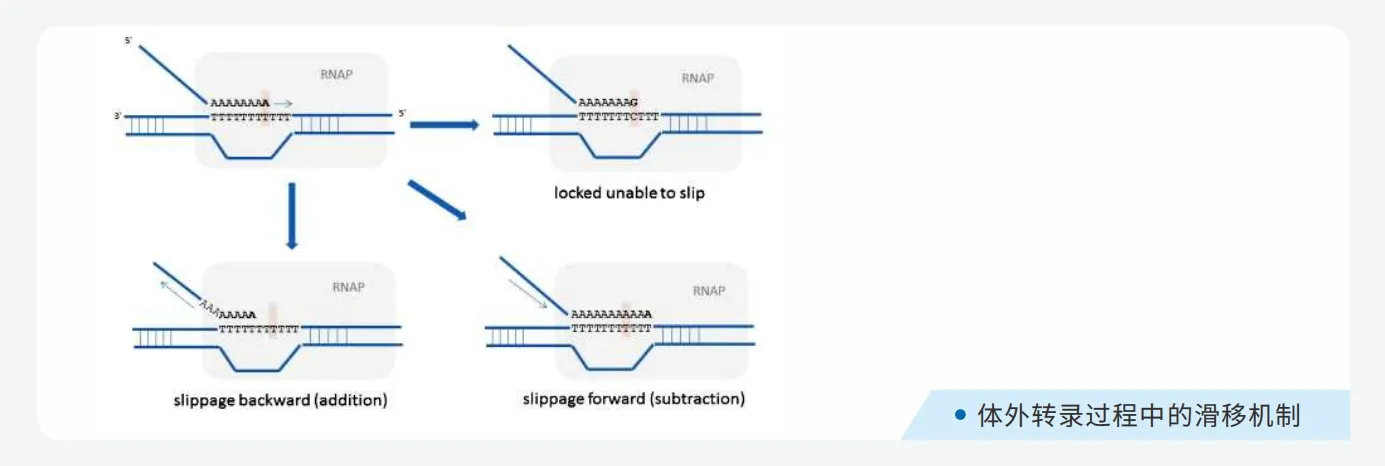
References

0756-8699969
Address: No. 88, Shuian 1st Road, Nanping Science and Technology Park, Xiangzhou District, Zhuhai City, Guangdong Province
Email: marketing@biori.com
Wechat official account |
Product consultation |
Join us |
Video Account |