I. The Concept of DNA Methylation
Epigenetics refers to the phenomenon where the phenotype of an individual organism undergoes hereditary changes without altering the nucleotide sequence of the genome. DNA methylation is currently the most deeply studied epigenetic modification. In short, it refers to the chemical modification process in which an active methyl group is transferred to a specific base in the DNA strand under the catalysis of DNA methyltransferase, using S-adenosylmethionine as the methyl donor. In mammals, it mainly generates 5-methylcytosine (5-mC).
Ii. Regulatory Role of DNA methylation
In prokaryotes, the main function of 5mC is to establish a restriction modification system, thereby recognizing and protecting bacterial DNA from interference by external DNA.In eukaryotes, the function of DNA methylation is more complex, mainly because DNA methylation has the function of expression regulation in eukaryotes.
In plants, alterations in DNA methylation usually lead to morphological defects in plants, such as changes in leaf shape and root structure.
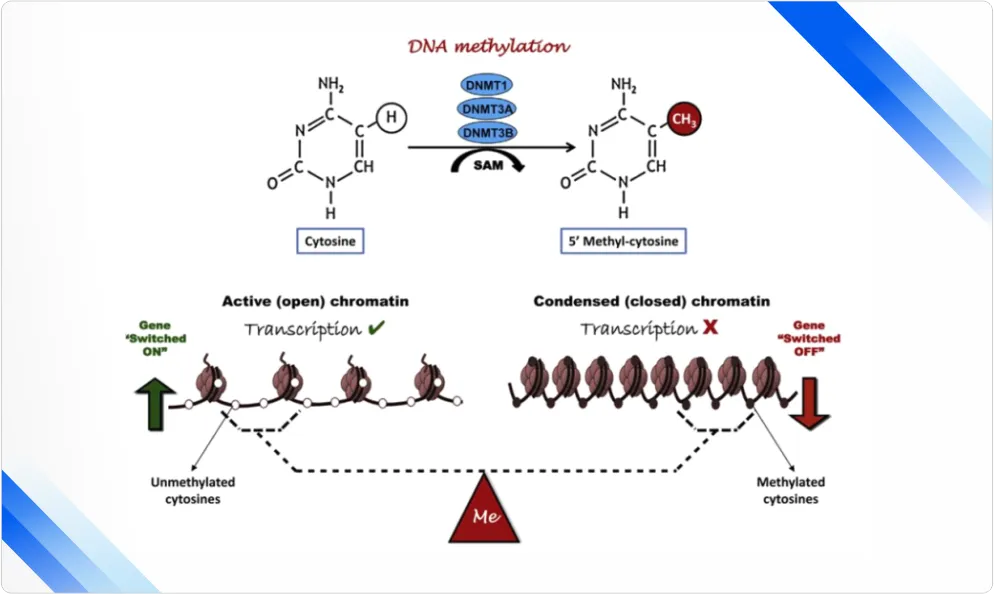
Figure 1The influence of DNA methylation modification on transcription
Iii. Evolution of DNA Methylation Analysis Methods
Liquid chromatography
The basic principle is that DNA samples are hydrolyzed by DNase, alkaline phosphatase and exonucuclease. After chromatographic separation, the overall methylation level is obtained by calculating the proportion of methylation bases in genomic DNA. However, information about the location where methylation occurs cannot be obtained, and it is no longer widely used at present.
Two-dimensional electrophoresis
Restriction endonucleases cut certain genomic regions rich in CpG sites, and the enzyme-digested fragments were separated by two-dimensional gel electrophoresis. This method is mainly applied in site, region or organ targeted research to assess the methylation status at the genomic level. However, its resolution is relatively low, and thus the analysis technology based on two-dimensional electrophoresis is gradually being replaced.
Microarray hybridization
Microarray hybridization technology has greatly promoted DNA methylomics analysis, and its resolution is higher than that of two-dimensional electrophoresis technology. In methylation sequencing technology, three techniques, namely sulfite conversion method, methylation-sensitive restriction endonuclease digestion and immunoprecipitation targeting methylated fragments, adopt different approaches in the pretreatment of DNA samples, but all subsequent steps apply microarray hybridization technology. The emergence of microarray technology has promoted our understanding of DNA methylation patterns on a broader level. Although an increased sample size can achieve a relatively more economical and comprehensive DNA map, the advantages of sequencing technology in terms of accuracy and depth have gradually made it a trend to replace chip platforms.
High-throughput sequencing technology
The first-generation sequencing-based methylation analysis is suitable for analyzing DNA methylation at single nucleotide resolution. In the 1990s, the development of sequencing based on bisulfite transformation (the "gold standard" for DNA methylation analysis) promoted breakthroughs in sequencing methylation analysis. In the methylation analysis based on NGS technology on the second-generation sequencing platform, due to the segmentation of long DNA fragments, the reading length is shortened, and longer methylation information patterns are lost, requiring large-scale bioinformatics computing. Third-generation sequencing can detect DNA methylation of long-read single molecules in real time by virtue of unique signals from 5MCs of other nucleotide bases. Therefore, long-read sequencing has promoted the next revolution in high-throughput methylomics analysis.
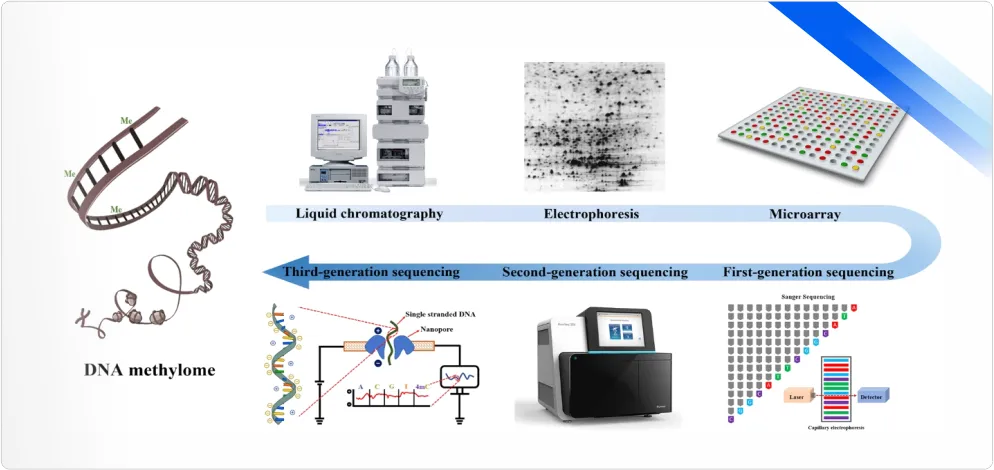
Figure 2The evolution of DNA methylation analysis methods
Iv. Common Methods for Whole-Genome DNA methylation Analysis
1. Sample pretreatment
Genomic DNA was fragmented through restriction endonuclease digestion or ultrasonic treatment.
2 Intermediate steps
Genomic DNA can undergo MBD enrichment, antibody enrichment, bisulfite transformation or TET oxidation.
MBD enrichmentImmunoprecipitation of methylated DNA is carried out using proteins capable of binding to methylated DNA. This technology can identify highly methylated regions in the genome, but methylation cannot be analyzed at the level of individual bases.
Antibody enrichmentA technique that uses antibodies or methylated DNA-binding proteins to capture and enrich methylated DNA can also identify highly methylated regions in the genome, such as CpG islands, but it cannot perform single-base level analysis.
Bisulfite conversionThrough the process of chemical deamination, the unmethylated cytosine (C) is converted to uracil (U), while the methylated cytosine remains unchanged.
TET oxidationFurther catalyze the methylated 5mC into 5caC.
3 Methylation detection
Analysis is conducted through microarrays or high-throughput sequencing platforms.
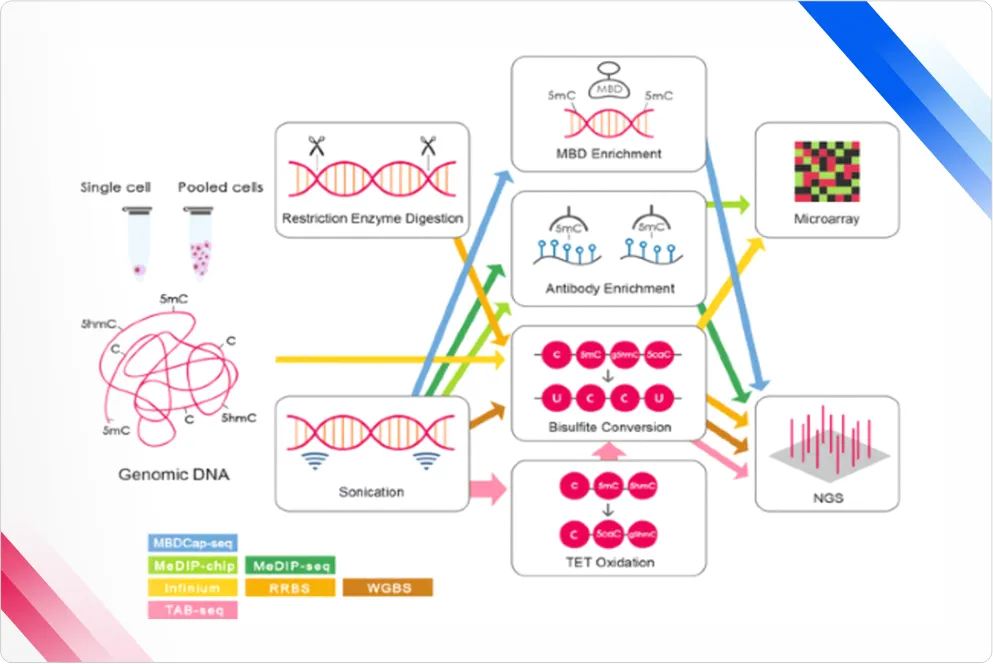
Figure 3- Schematic diagram of the principles of common methods for whole-genome DNA methylation analysis
V. Common Methods and Steps for Whole-Genome DNA methylation Analysis
The main steps of the commonly used methods for whole-genome DNA methylation analysis are summarized as shown in the following figure. Among them, the methods using restriction endonuclease digestion in the DNA sample pretreatment step are MRE-Seq (methylation-sensitive restriction endonuclease sequencing) and RRBS (sulfite sequencing).
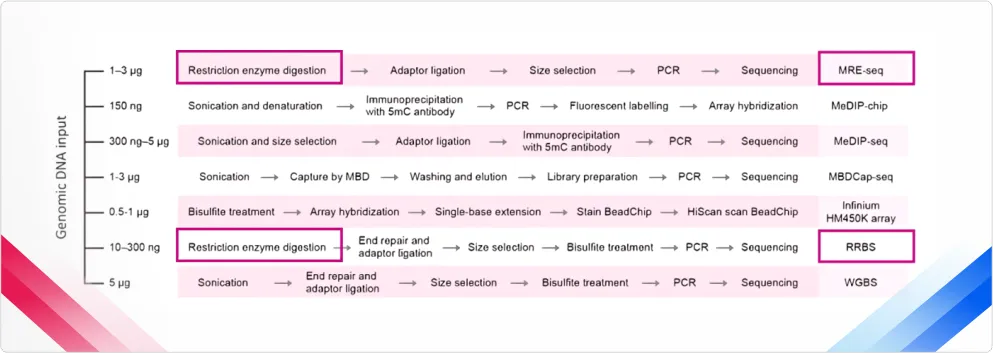
Figure 4- Main steps of DNA methylation detection technology

Sulfite sequencing
(RRBS)
Steps
Genomic DNA is first digested by specific restriction endonucleases to produce fragments (typically within the range of 50-300bp) with CpG at the end.
2. The 3 'end of the sticky double-stranded DNA produced by enzymatic digestion is repaired and an A tail is added (A-Tailing).
3. Add a connector. The function of the coupling: The methylation sequence coupling can prevent the deamination of cytosine during the bisulfite conversion process.
4. Gel electrophoresis is used, and the required fragment size is selected for purification.
5. The selected DNA fragments were treated with sulfites to deaminate the unmethylated cytosine into uracil.
After PCR amplification and purification, the DNA products are adapted to the sequencing platform for sequencing.
Method advantages
High sensitivity: It can target methylation regions that are difficult to analyze using conventional sulfite sequencing and repetitive sequences of many tumor types, making it highly suitable for methylation status analysis in developmental biology.
Disadvantages of the method
The restriction endonucases used in RRBS may not cover all CPG-enriched regions and may miss some site information.
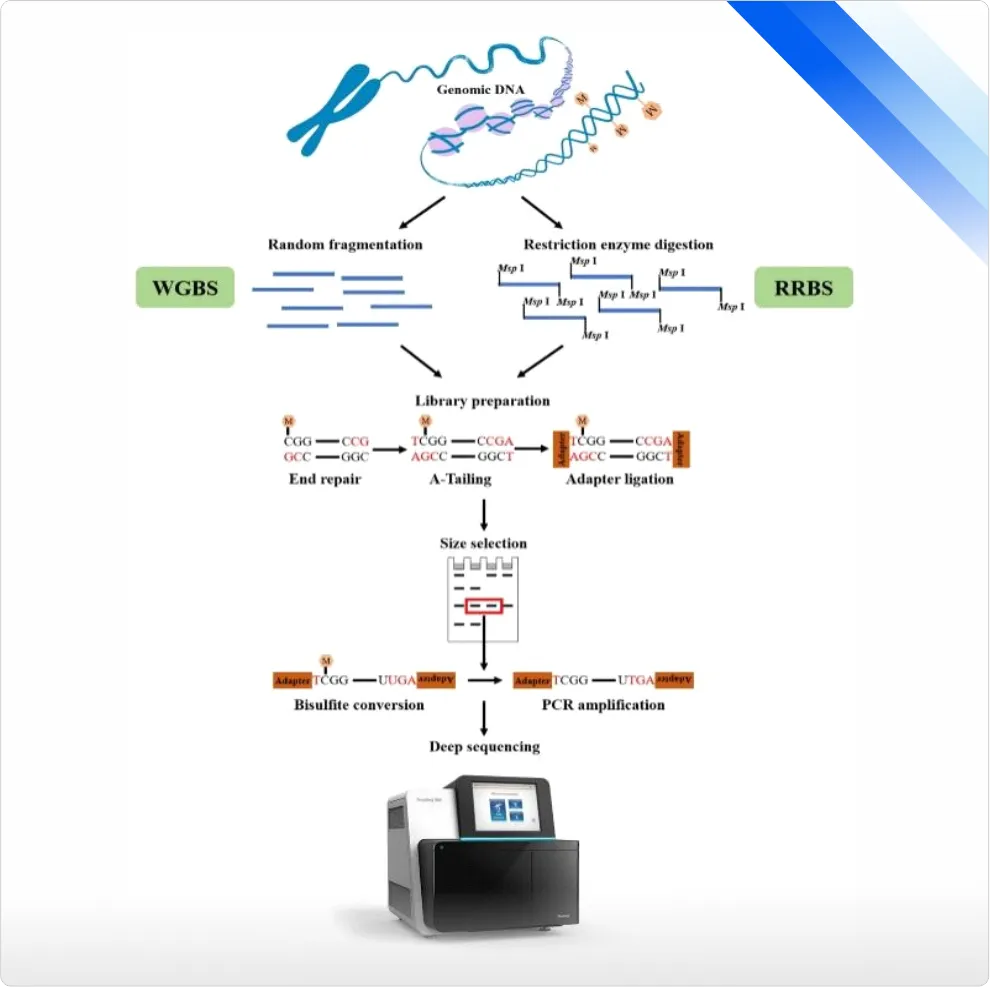
Figure 5- Schematic diagram of the main steps of RRBS
Methylation-sensitive restriction endonuclease sequencing
(MRE-Seq)
MRE-seq enables allele-specific DNA methylation scanning and can cover a wider range of genomic regions than traditional array hybridization.
Steps
MRE-seq scans the genome with multiple methylation-sensitive restriction enzymes (such as HpaII (CGG), HinP1I (GCGC), and AciI (CGC), etc.) to cut unmethylated CpG sites.
After the products were combined, the fragments were sorted out, and terminal repair reactions and single nucleotide linker ligation were carried out. PCR amplification and purification were performed before sequencing on the machine.
After the sequencing results are compared with the reference genome, the unmethylated CpG sites can be further converted to methylation levels.
Method advantages
Re-seq is a DNA methylation analysis method with single CpG resolution, suitable for regions with low CpG density.
Disadvantages of the method
However, MRE-seq depends on different restriction enzymes. The distribution of restriction sites in the genome limits its coverage range, and some incomplete digestion may lead to certain false positive results.
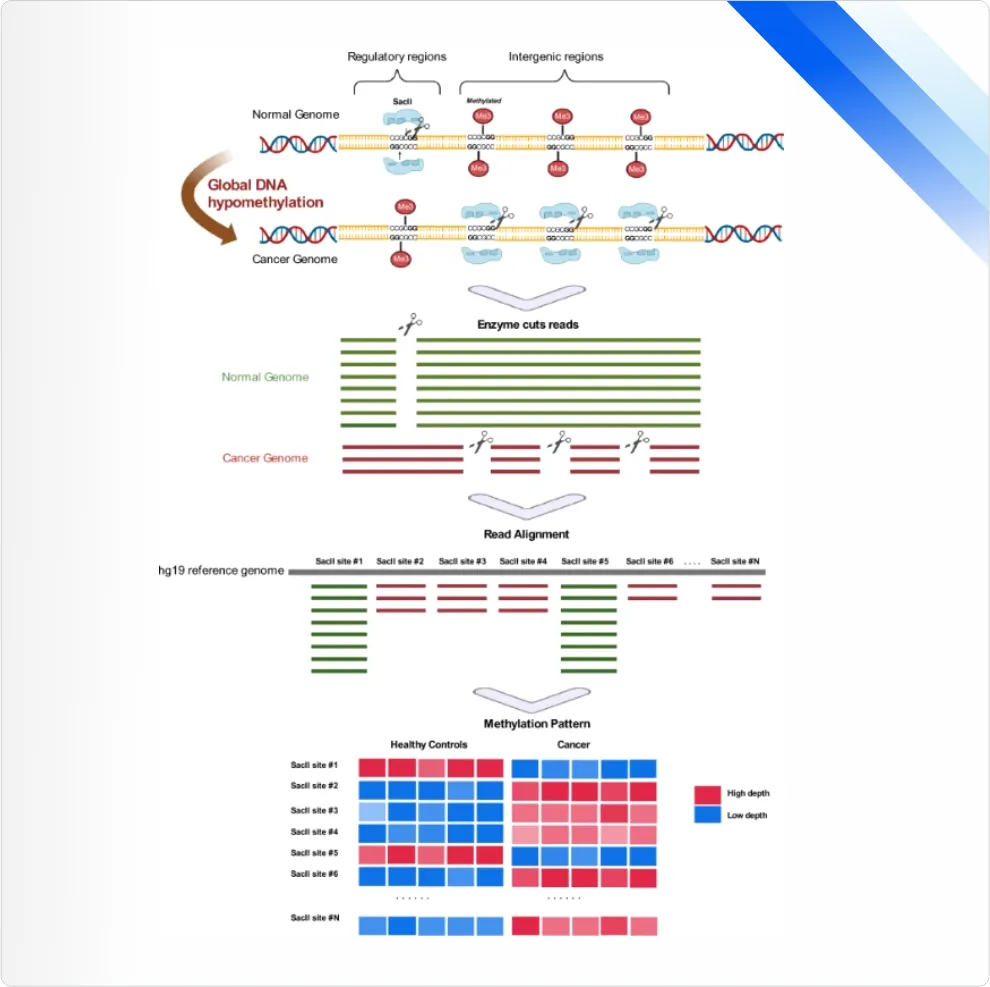
Figure 6- Schematic diagram of the main steps of MRE-Seq
HELP-Seq ligation-mediated PCR enrichment of HpaII microfragments technology(HELP)
HELP (HpaII tiny fragment Enrichment by Ligation-mediated PCR), treated with HpaII and its methylation-insensitive restriction endonuclease MspI, was used to compare methylation sites within and between genomes. Then methylation sequencing is achieved.
Steps
Digestion with HpaII restriction endonuclease.
2. Oligonucleotide ligation: This oligonucleotide generates terminal cohesion with the terminal copolymer produced by restriction endonucleases. This can be used as a template for PCR primers for ligation-mediated PCR (LM-PCR). The product size ranges from 200 to 2000 bp and can be analyzed and amplified using various platforms.
3. Co-hybridize into the customized genomic microarray.
4. Sulfite sequencing.
Method advantages
HELP detection features stability, quantification and accuracy. HELP detection can be used for any genomic microarray and also for any combination of restriction endonuclease heterolytic isomers with different sensitivities to cytosine methylation of the target sequence.
Disadvantages of the method
Only query HpaII sites, and the resolution is relatively low when applied to arrays. To increase the number of CPGS evaluated, MRE and array-based detection incorporated multiple parallel MRE enzymatic hydrolysations.
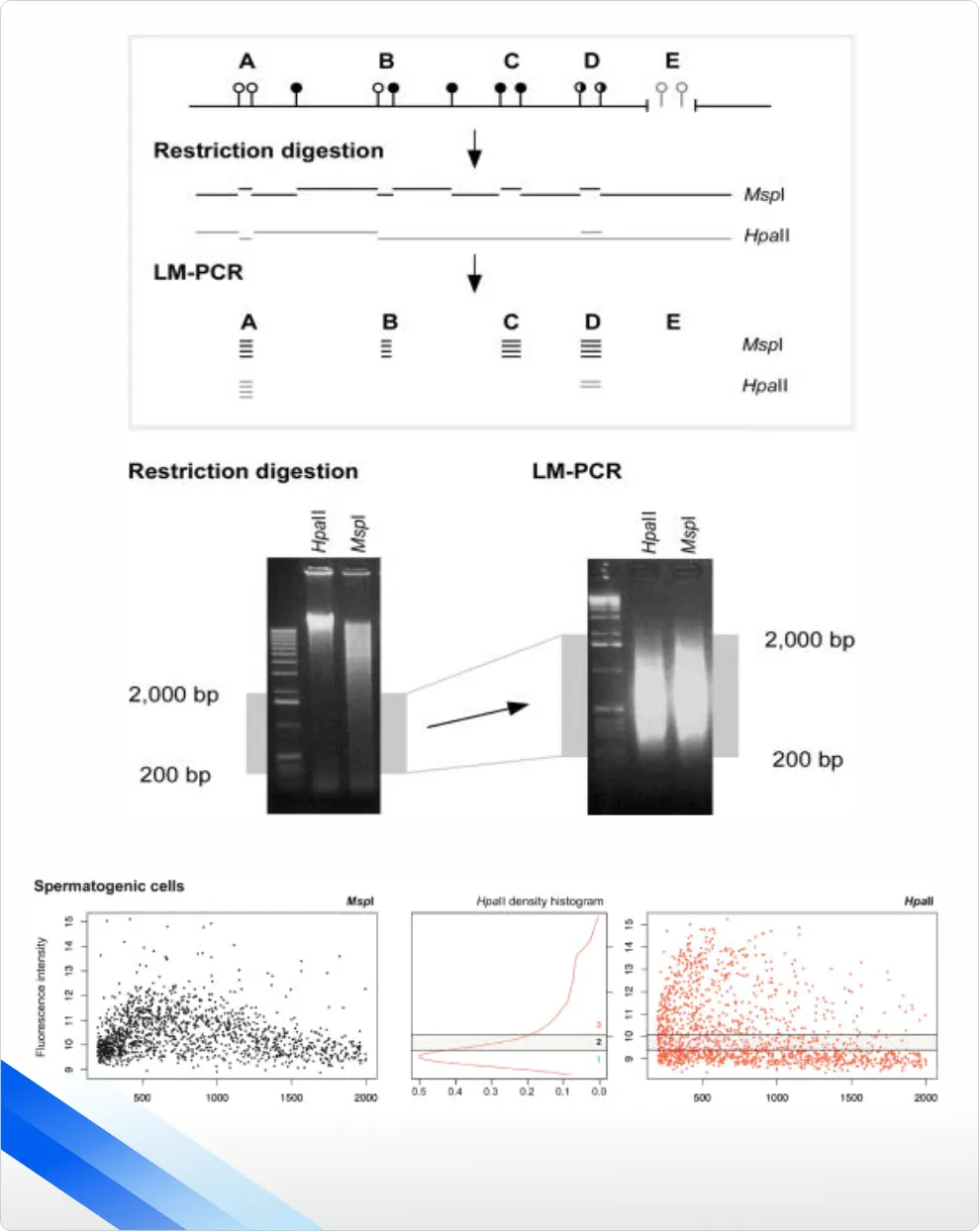
Figure 7- Schematic diagram of the main steps of HELP
Baorui Methylation-sensitive endonuclease
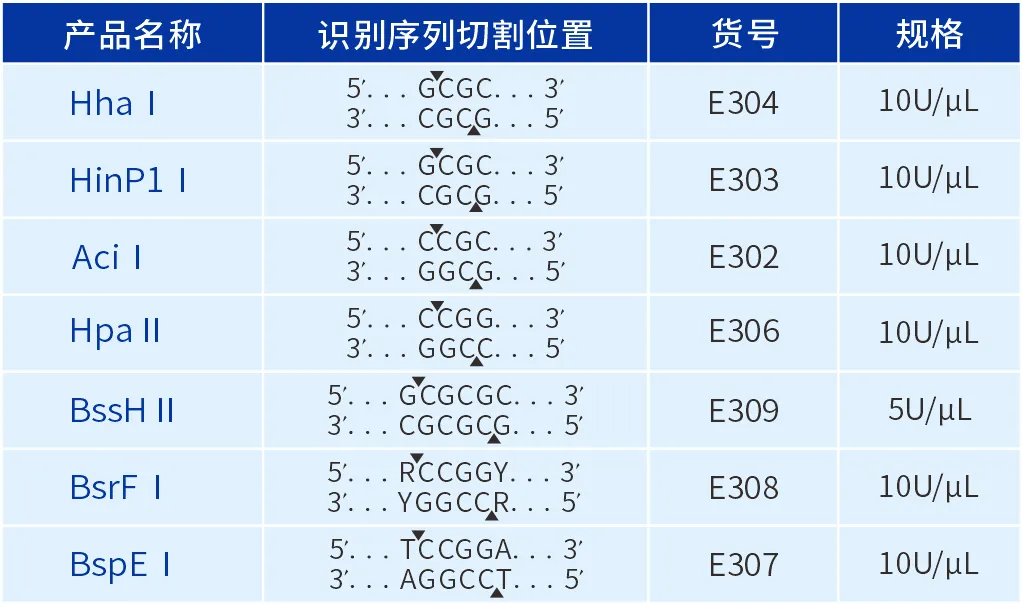
产品:HinP1 I, Hha I, Aci I, Hpa II, BssH II, BsrF I, BspE I.
Product features
Specificity: Enzymatic digestion has strong recognition specificity and the products are clear.
High efficiency: Verify that the enzymatic digestion efficiency is high. Reach or exceed imported products.
High fidelity: Overnight enzymatic digestion, with extremely low asterisk activity.
Recommended products
Li S, Tollefsbol TO. DNA methylation methods: Global DNA methylation and methylomic analyses. Methods. 2021 Mar;187:28-43.
Papanicolau-Sengos A, Aldape K. DNA Methylation Profiling: An Emerging Paradigm for Cancer Diagnosis. Annu Rev Pathol. 2022 Jan 24;17:295-321. doi: 10.1146/annurev-pathol-042220-022304. Epub 2021 Nov 4.
Ball MP, Li JB, Gao Y, Lee JH, LeProust EM, Park IH, Xie B, Daley GQ, Church GM. Targeted and genome-scale strategies reveal gene-body methylation signatures in human cells. Nat Biotechnol. 2009 Apr;27(4):361-8.
Li D, Zhang B, Xing X, Wang T. Combining MeDIP-seq and MRE-seq to investigate genome-wide CpG methylation. Methods. 2015 Jan 15;72:29-40.
Kwon HJ, Shin SH, Kim HH, Min NY, Lim Y, Joo TW, Lee KJ, Jeong MS, Kim H, Yun SY, Kim Y, Park D, Joo J, Bae JS, Lee S, Jeong BH, Lee K, Lee H, Kim HK, Kim K, Um SW, An C, Lee MS. Advances in methylation analysis of liquid biopsy in early cancer detection of colorectal and lung cancer. Sci Rep. 2023 Aug 19;13(1):13502.
Khulan B, Thompson RF, Ye K, Fazzari MJ, Suzuki M, Stasiek E, Figueroa ME, Glass JL, Chen Q, Montagna C, Hatchwell E, Selzer RR, Richmond TA, Green RD, Melnick A, Greally JM. Comparative isoschizomer profiling of cytosine methylation: the HELP assay. Genome Res. 2006 Aug;16(8):1046-55.

0756-8699969
Address: No. 88, Shuian 1st Road, Nanping Science and Technology Park, Xiangzhou District, Zhuhai City, Guangdong Province
Email: marketing@biori.com
Wechat official account |
Product consultation |
Join us |
Video Account |