Preface
Restriction endonucleases are a class of enzymes used to recognize specific deoxyribonucleotide sequences and cleave the phosphodiester bond between two deoxyribonucleotides at specific sites in each chain. In molecular biology research, restriction endonucleases are widely used in the construction of physical maps of DNA genomes, gene localization and gene isolation, base sequence analysis of DNA molecules, related DNA molecules and genetic engineering, and gene engineering editing.
In the past few years, the industrialization of mRNA vaccines and gene therapy has developed rapidly. The launch of the COVID-19 mRNA vaccine has rapidly promoted the development of the industry. The urgent demands of the actual situation and the unlimited clinical application prospects of mRNA technology itself both make mRNA of great significance in the biological industry. mRNA vaccines belong to the third generation of vaccines and are essentially nucleic acid vaccines. After being introduced into cells through optimized design, exogenous mRNA can be translated by the intracellular protein assembly system, thereby generating corresponding antigens and activating the immune system.
The large-scale production of mRNA mainly relies on in vitro transcription. Under the action of RNA polymerase, a DNA template undergoes enzymatic reactions using NTP as the substrate. Generally, the transcription yield of 1μg of DNA template can reach about 100-200μg. During this process, the DNA template, as an important information carrier, undertakes significant tasks. Although similar "one-pot" mRNA preparation processes have been launched on the market at present, DNA, as an intermediate product in the mRNA production process, still plays an irreplaceable role in the research of batch-to-batch stability, process stability and other aspects.
DNA templates used for transcription are typically prepared in two ways. The first is by PCR. Primer design usually selects the upstream of the T7 promoter and the downstream of the poly(A) template to obtain a template sequence with the T7 promoter. This method of preparing DNA templates through amplification is still feasible in the research stage. However, due to the complex temperature control of PCR, the application of PCR in preparing templates is limited in the industrial production of mRNA.
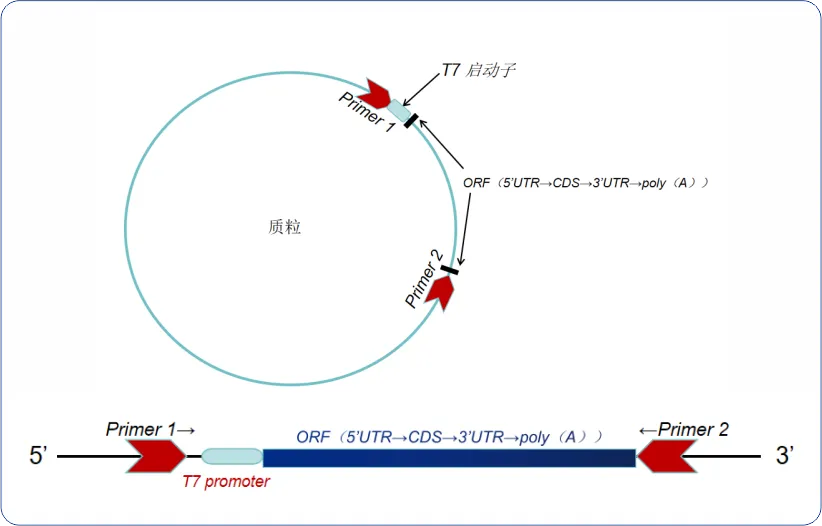
Schematic diagram of in vitro transcription template sites prepared by PCR amplification
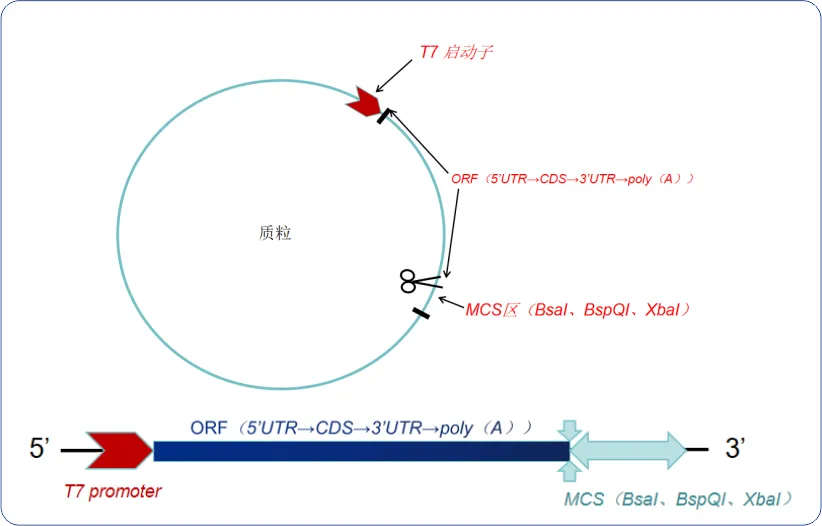
Schematic diagram of in vitro transcription template sites for the preparation of restriction endonucleases
Thanks to the development of gene therapy, the industrial production of plasmids has a history of several decades and is relatively mature. Researchers have found that using plasmids as templates for the industrial production of mRNA has inherent advantages. With the development and purification process of plasmids in gene therapy, qualified plasmids for mRNA production can be obtained rapidly.
The plasmids used in gene therapy usually have a closed circular superhelical structure. During the mRNA preparation process, RNA polymerase can efficiently transcribe the downstream sequence of T7 with the help of the T7 promoter in the plasmid. The termination of transcription in vivo often occurs through ρ -dependent and ρ -independent methods, while in vitro transcription is limited by the special structure of plasmids and often requires the artificial creation of transcription termination sites.
For the sake of stability and immunogenicity, the template design of mRNA usually requires the addition of A poly(A) sequence with a length of 70-110 at 3'. Therefore, the transcription termination site is often limited to the end of the poly(A) sequence, and restriction endonucleases become the preferred choice. This process is called plasmid template linearization.
01 Suitable for process amplification
The preparation of templates using restriction endonucleases only requires the addition of an enzymatic digestion process on the basis of purifying the plasmid, and then the recovery of the linearized template is carried out again using the upstream plasmid purification platform. According to actual needs, the enzymatic digestion system is relatively easy to scale up. In the industrial production field of mRNA, this process is often achieved by means of bioreactors.
02 Not affected by the sequence
There are an extremely rich variety of restriction endonucleases, and there are multiple options for restriction endonucleases used in the linearization of plasmid templates. Therefore, when using restriction endonucleases to prepare linearization templates, it is not affected by the internal sequence, and different restriction endonucleases can be flexibly selected.
03 No additional complex impurities will be introduced
The enzyme digestion reaction system is simple and the components are clear. After the reaction is completed, only simple chromatography is needed to effectively remove the protein molecules and various small ions in the reaction products. The purity of the enzyme digestion products after preliminary purification has basically met the requirements of downstream transcription experiments.
The differences between restriction endonucleases used for mRNA preparation and common restriction endonucleases:
01 High efficiency and stability
Although the linearization of plasmid templates is a relatively simple step in the entire mRNA production process, the quality of the linearized templates directly determines the quality of downstream transcription products. Therefore, it is particularly important to select an efficient and stable restriction endonuclease, which also places higher demands on the stability of restriction endonuclases in terms of batch and storage.
02 Animal-free formula and production process
Due to the strict quality requirements of GMP-grade excipients, in the production of endozyme, from the culture and fermentation of the bacterial cells to the preparation of the enzyme stock solution, all animal-free reagents and excipients are used. The reaction buffer solution used in conjunction also uses animal-free reagents during the preparation process.
03 Avoid generating 3' protruding ends
Restriction endonucleases used to prepare linearized templates usually recognize sites outside the cleavage sites. Therefore, through sequence design, the modified plasmids can produce complete and individual poly(A) structures when cleaved with such restriction enzymes, which is more beneficial to the stability of downstream mRNA and eliminates the influence of redundant sequences after poly(A). In addition, the 3' protruding terminal sequence can increase the generation of by-product dsRNA, enhance the immunogenicity of mRNA products, and bring difficulties to the subsequent drug administration clinical stage.
04 Choose enzymes with a reaction temperature of 37℃ as much as possible
For industrial production, temperature control is a rather cumbersome process. Most biological reactions need to take place at 37℃ due to the participation of enzymes. Some special restriction endonucleases require higher temperatures. In essence, such restriction endonucleases are not suitable for process scale-up. Therefore, when choosing endonucleases, it is advisable to select those with a reaction temperature of 37℃ as much as possible, which is more conducive to industrial production.

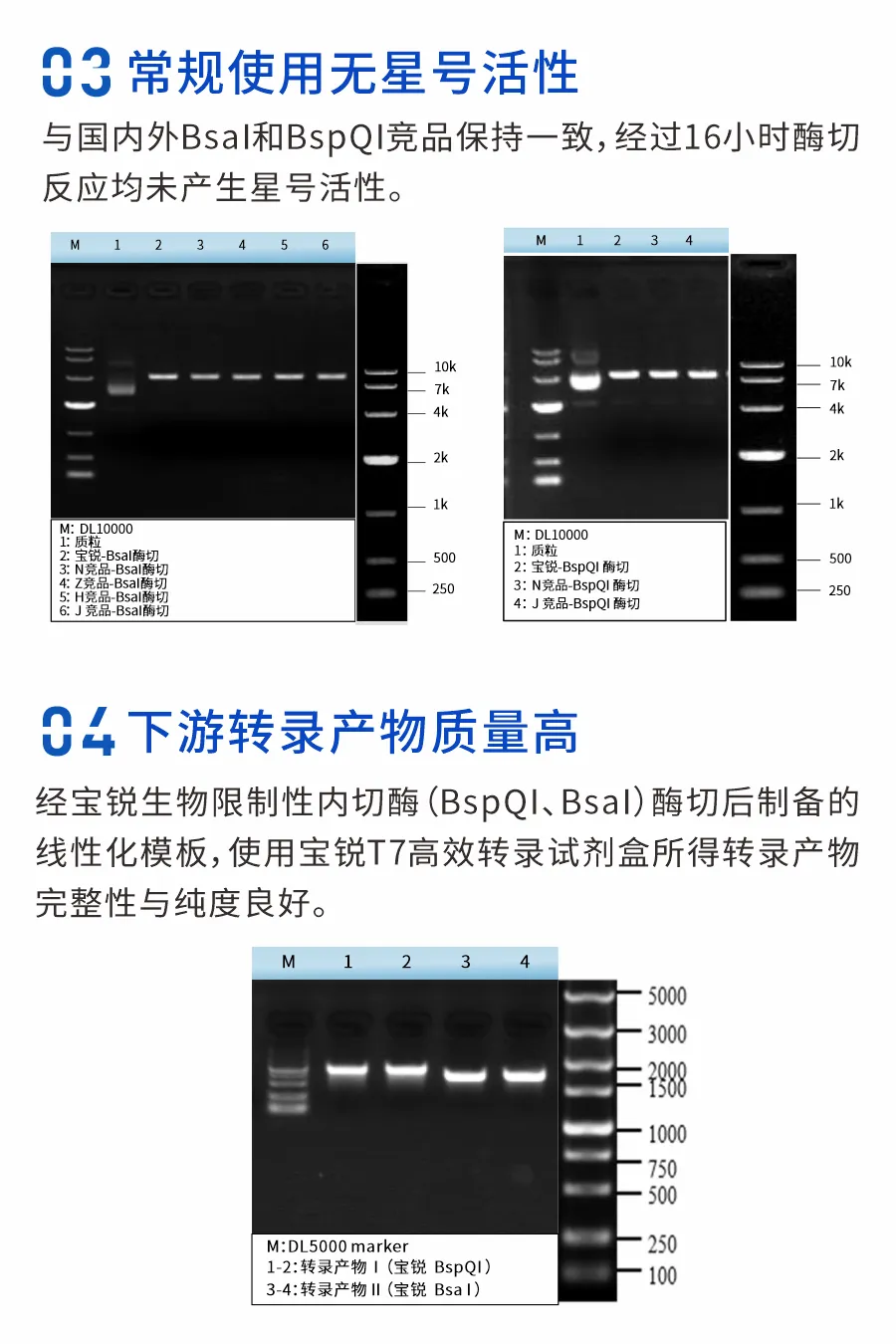
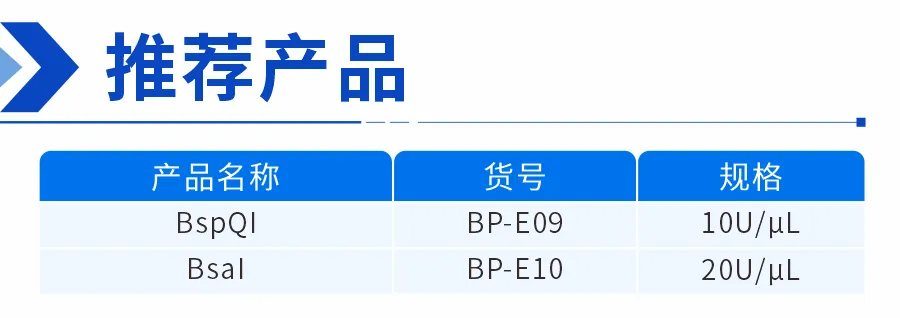
Baorui BiologyCommitted to serving the development of mRNA vaccine technology, we independently developed and launched GMP-grade BsaI and BspQI restriction endonucleases. The recognition and cleavage sites of the two enzymes are as follows:
3'........CCAGAG(NNNNN)↑.......5'
3'.......CGAGAAG(NNNN)↑..........5'
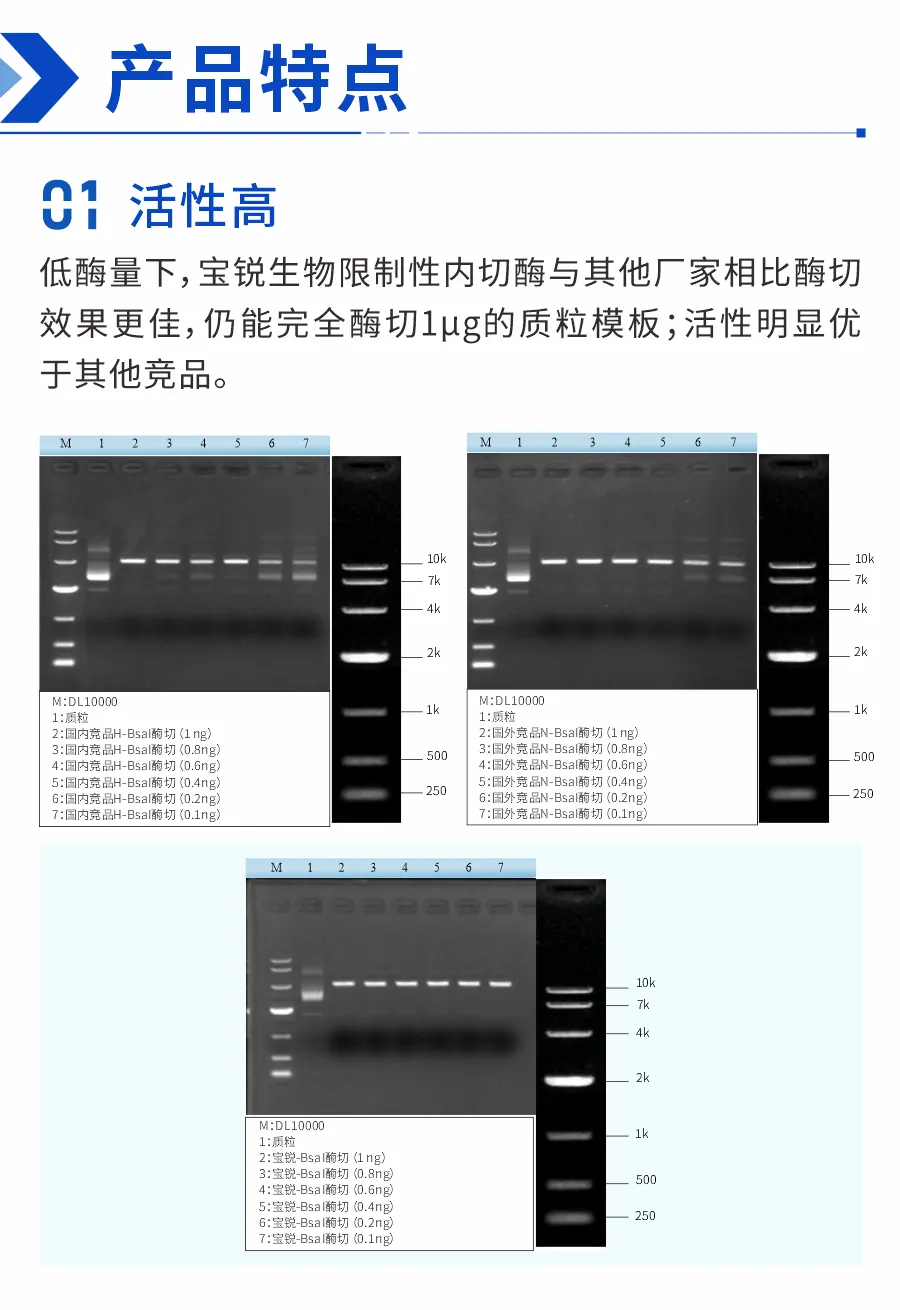
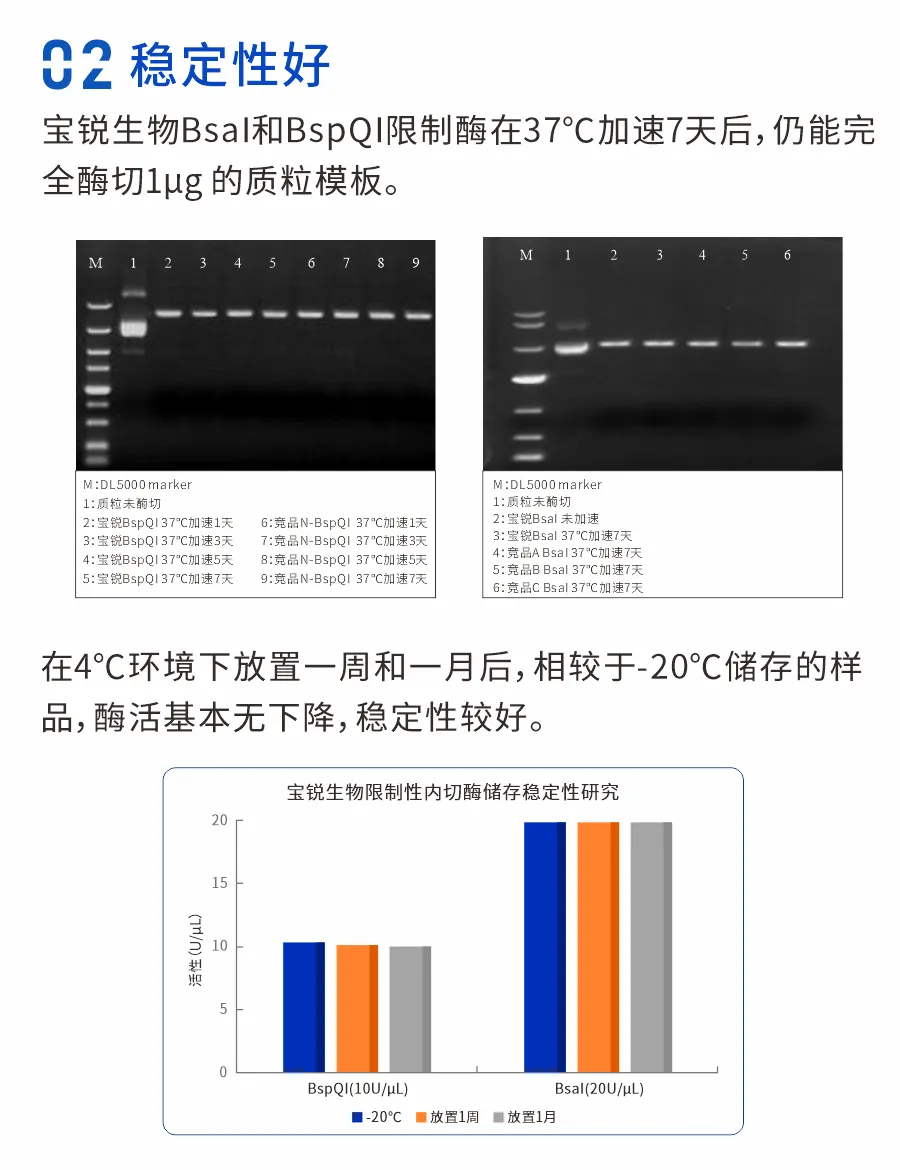
More restriction endonucleases(Xhol, EarI, etc.
About to be launchedStay tuned!
0756-8699969
Address: No. 88, Shuian 1st Road, Xiangzhou District, Zhuhai City, Guangdong Province
Email: marketing@biori.com
Wechat official account |
Product consultation |
Video Account |