A long-neglected pollution risk
In the field of biopharmaceuticals, the prevention and control of mycoplasma contamination has long been a consensus in the industry. However, it belongs to the same phylum membranophyta as MycoplasmaSpiroplasmaIt has not received the same level of attention for a long time.
This "regulatory blind spot" is being broken - the 2025 edition of the Chinese Pharmacopoeia has for the first time explicitly included spiroplasma testing as a mandatory inspection item for the quality control of animal cells used in production, marking the full alignment of China's biopharmaceutical regulatory system with international standards.
Spiroplasma has become a regulatory focus due to its unique biological characteristics: the absence of a cell wall structure makes it "immune" to conventional antibiotics such as penicillin. It is extremely small in size and can penetrate 0.45μm sterilizing filter membranes. It mainly parasitizes on plants and insects and can be introduced into the production system through plant-based raw materials or insect cell lines. Once contamination occurs, it will lead to inhibition of cell proliferation and metabolic disorders, ultimately affecting the quality and safety of biological products.

Spiroplasma belongs to the class Mollicutes and is closely related to Mycoplasma, but there are significant differences in their pathogenic spectrum and host range.
The main sources of spiroplasma contamination are threefold: carrying by insect cell lines themselves, introduction of plant-based raw materials (such as plant protein hydrolysates, yeast extracts, etc.), and cross-contamination in the production environment.
For products that use the insect cell-baculovirus expression system (such as some recombinant proteins and virus-like particle vaccines), the risk of spiroplasma contamination is particularly prominent. Once spiroplasma invades the cell culture system, it will lead to inhibition of cell proliferation and metabolic disorders, ultimately affecting the quality and safety of biological products. Therefore, the mainstream regulatory authorities around the world have all incorporated spiroplasma detection into the quality control system of biopharmaceuticals.

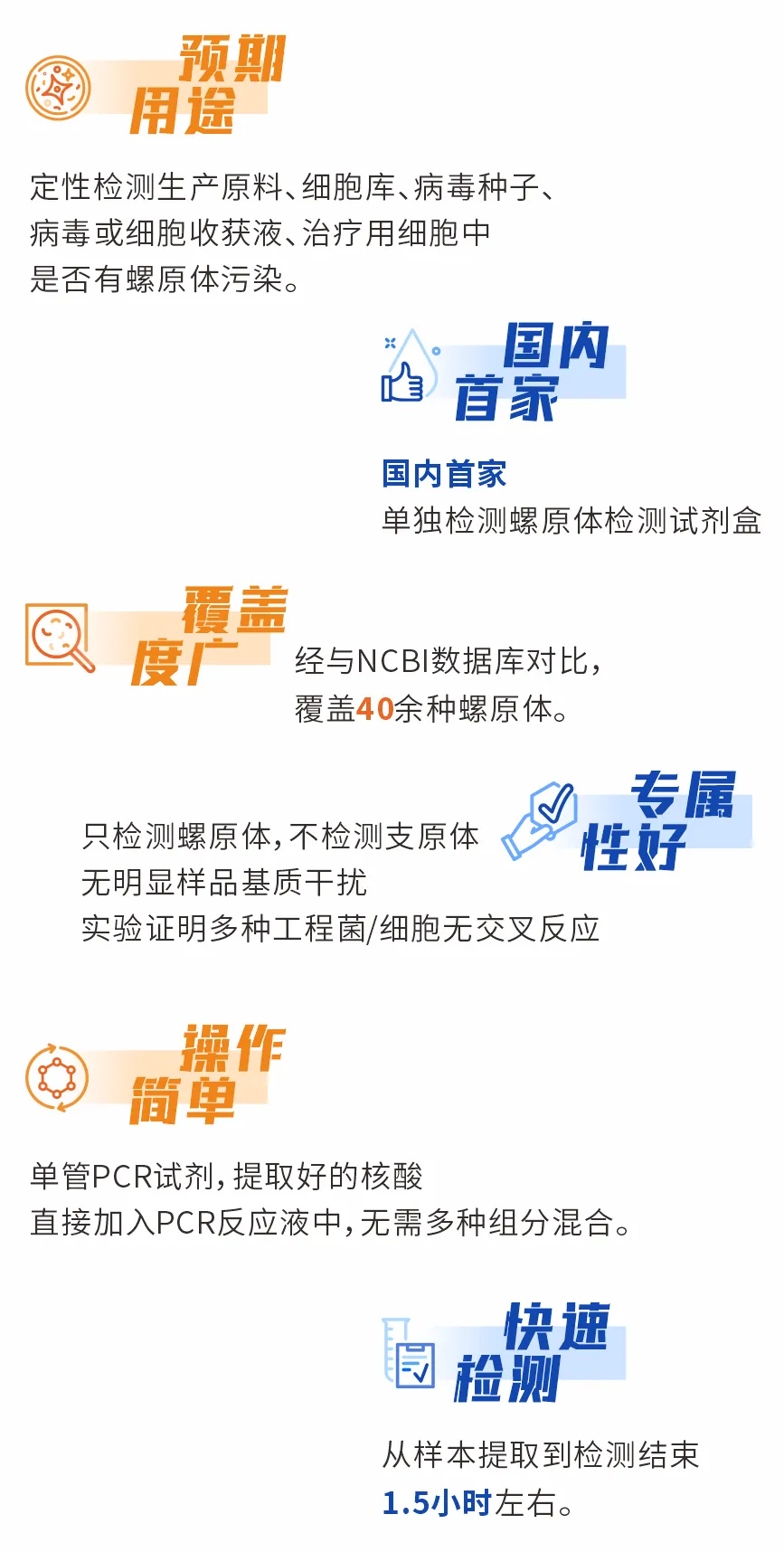
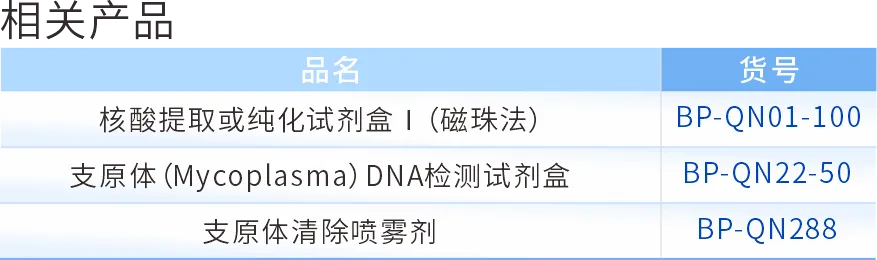
The Baorui Biological Spiroplasma DNA Detection Kit (PCR-fluorescence probe method) combined with the Baorui Biological Nucleic Acid Extraction or Purification Kit I (magnetic bead method) has the following features:

1. Chinese Pharmacopoeia (2025 Edition): First included, filling the gap
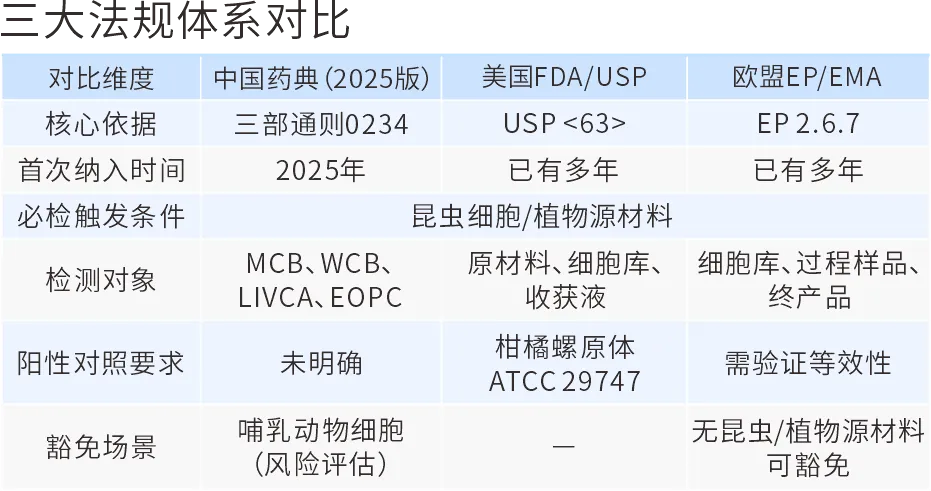
The most notable content in this update is the General Chapter 0234 of the 2025 edition of the Chinese Pharmacopoeia, Part III, "Preparation and Quality Control of Animal Cell Matrices for the Production of Biological Products". Compared with the 2020 version, spiroplasma examination has been explicitly listed as a mandatory test item for the first time.
It is worth noting that the 2025 edition of the pharmacopoeia has revised the sample types for mycoplasma/spiroplasma testing - clearly defining them as "culture supernatant" or "cell suspension", in line with international requirements.
2. United States Pharmacopeia/FDA: Risk-oriented, Full-chain Control
The requirements of the US FDA for spiroplasma detection are mainly reflected in USP Chapter <63> "Mycoplasma Detection" and the guidelines for characterizing vaccine cell matrix.
Core principleWith "risk orientation" at its core, the testing requirements are strongly bound to insect cells and plant-based materials.
Special technical requirementsWhen conducting the test, a positive control of spiroplasma (such as citrus Spiroplasma ATCC 29747) should be added. For commercial derived strains, verification data equivalent to the characteristics of standard strains should be provided to ensure clear traceability.
3. European Pharmacopoeia /EMA: Method validation, full-chain control
The requirements of the European Union for spiroplasma testing are mainly reflected in EP 2.6.7 "Mycoplasma Testing" and the EMA Quality Control Guidelines for biological products.
Core principleEmphasis is placed on method validation and full-chain control, which puts forward higher requirements for the applicability of detection methods.
Special requirementsTests can be conducted with reference to EP 2.6.7, and the requirements for method validation are more stringent.
References
1. Chinese Pharmacopoeia 2025 Edition, Part 3.
2. United States Pharmacopeia <63> Mycoplasma Tests.
3. European Pharmacopoeia 2.6.7 Mycoplasma.