In the industrialization process of cell and gene therapy (CGT), lentiviral vectors have become the mainstream delivery tools for CAR-T, TCR-T and gene-edited cell drugs due to their high transfection efficiency and strong integration stability.
However, replication virus (RCR/RCL) contamination has always been a core risk point throughout vector production, cell preparation, and finished product release, and it is also one of the most frequently occurring CMC defect items in the inspections by NMPA, FDA, and EMA.
It is widely believed in the industry that the design of three-plasmid/four-plasmid packaging systems theoretically cannot generate self-replicating viruses. However, in actual production, the risk of contamination cannot be completely eliminated. There may be homologous recombination among packaging plasmids, transfer vectors, and endogenous reverse transcription elements of the host, resulting in RCR/RCL with self-replicating capabilities. Once mixed into the final product and reinfused into the human body, the viral genome randomly inserts into the host chromosome, easily activating proto-oncogenes and inducing secondary tumors.

To effectively prevent clinical safety hazards and compliance risks in declaration caused by the contamination of replicating retroviruses (RCR) and replicating lentiviruses (RCL), the world's three authoritative drug regulatory agencies, NMPA, FDA, and EMA, have successively issued a number of special regulations, systematically standardizing the methodological requirements, quality control nodes, and result determination standards for RCR/RCL testing.
Among them, the CDE's "Technical Guidelines for Pharmaceutical Research and Evaluation of In Vitro Gene Modification Systems (Trial)" clearly states that at the four major nodes of packaged cell banks, virus harvest solutions, modified cell intermediates, and final preparations, RCR/RCL testing must be carried out, and a combination of indicator cell culture method and qPCR gene copy number quantification can be selected for release.
FDA 2020 "Testing of Retroviral Vector-Based Human Gene Therapy Products for RCR During Manufacture and Patient The "Follow-up" stipulates that for each batch of vectors, at least 1% of the batch size or 1×10⁸ TU (take the lower value) should be randomly inspected. The sensitivity of the detection method should reach the level capable of detecting single copies of RCR/RCL. During the follow-up stage of clinical trial subjects, samples should also be retained for retesting of the copy number.

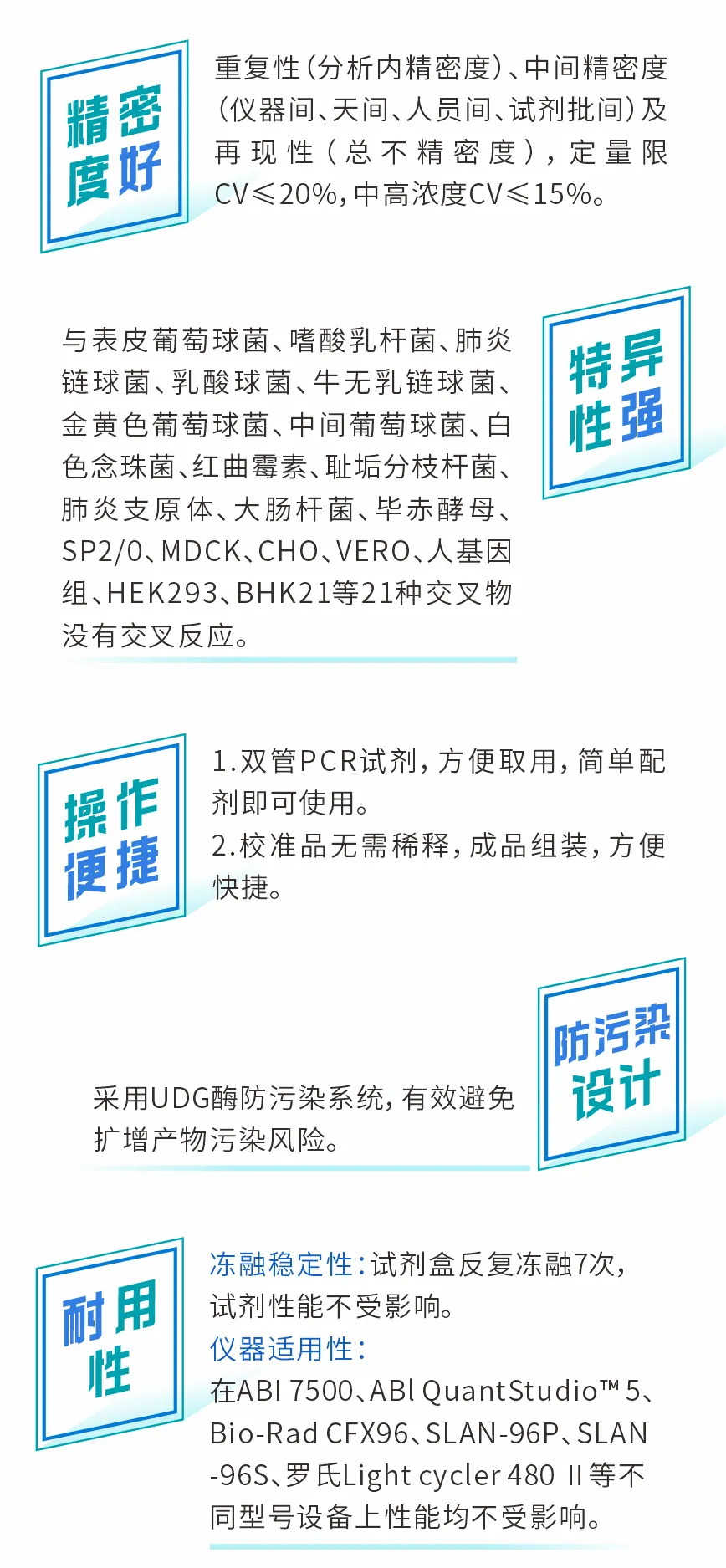
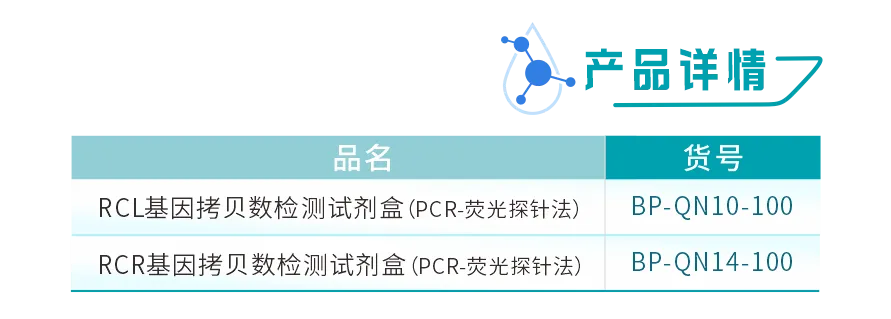
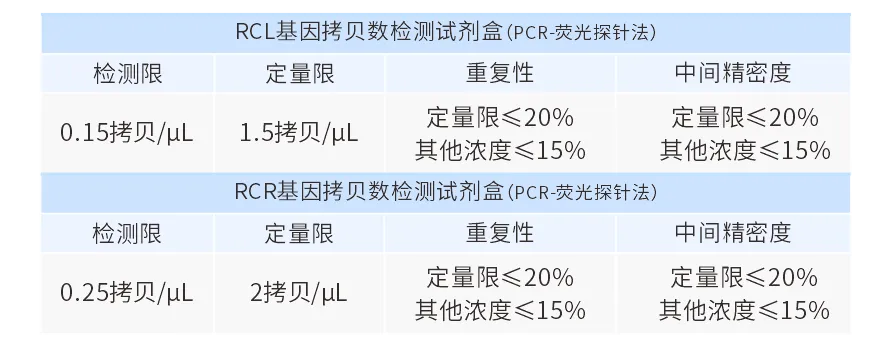
Baorui Biotech's RCL Gene Copy Number Detection Kit (PCR-fluorescence Probe Method) /RCR Gene Copy Number Detection Kit (PCR-fluorescence Probe Method) is designed with primer probes specifically for the RCL/RCR characterization genes.
The calibrators of the kit are prepared as ready-to-use calibrators after being calibrated by digital PCR technology, without the need for dilution before use. They have the following features:

"Technical Guidelines for Pharmaceutical Research and Evaluation of In Vitro Gene Modification Systems (Trial)"
2. Technical Guidelines for Pharmaceutical Research and Evaluation of Cell Therapy Products (Trial)
3.《Testing of Retroviral Vector-Based Human Gene Therapy Products for RCR During Manufacture and Patient Follow-up》
4.《Guideline on Development, Production, Quality and Control of Gene Therapy Medicinal Products》