CHO host cell proteins (HCPs) are key process-related impurities in biological therapeutic products such as monoclonal antibodies, fusion proteins, and vaccines expressed by CHO cells. Trace residual HCP may pose an immunogenic risk. HCP residue detection is a core project for process characterization, process control and product release. The key raw materials such as antigens and antibodies in this kit are all independently produced by Zhuhai Baorui Biotechnology Co., LTD. The kit has undergone comprehensive methodological performance verification in accordance with regulations such as the United States Pharmacopeia, the Chinese Pharmacopoeia, and the European Pharmacopoeia, meeting the technical requirements for HCP detection set by domestic and international biopharmaceutical regulatory authorities. The detection limit (LOD) of this kit is approximately 0.5 ng/mL, and the limit of quantification (LOQ) is approximately 1 ng/mL.
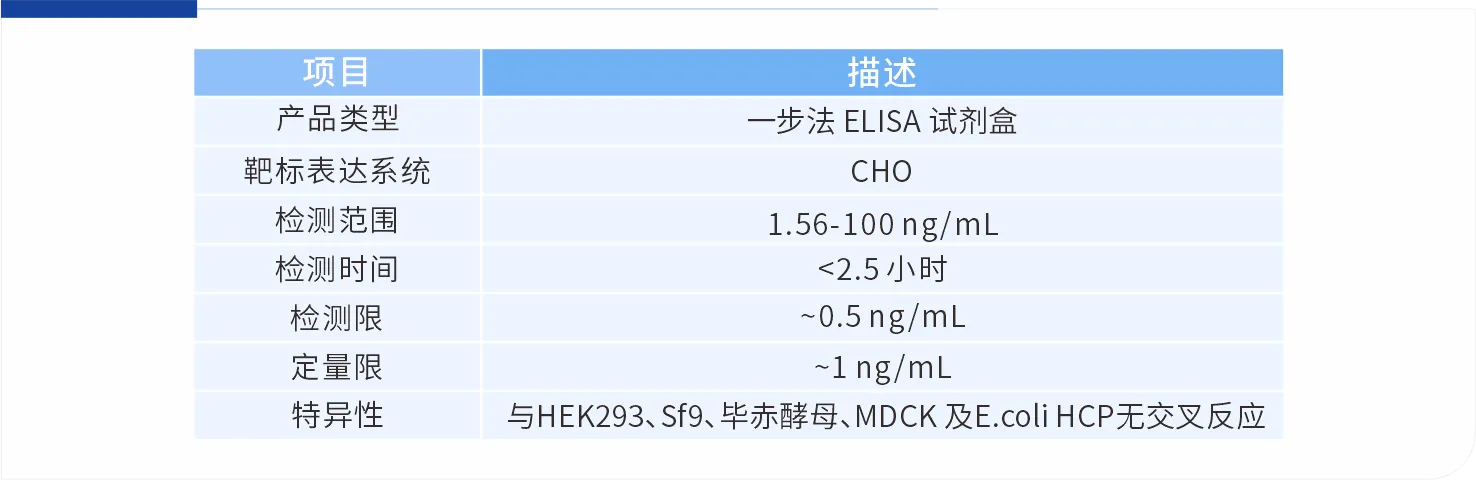
 Biological products (recombinant proteins, antibodies, vaccines, etc.) for expression and amplification using CHO cellsThe quantitative detection of the host protein can be used for monitoring the HCP content and releasing QC products during the process development.


Calibration curve (detection range)
Overview: Test the standard substances provided by the kit and one blank sample. Each concentration was repeatedly detected three times, and a total of three independent experiments were conducted. The calibration curve was fitted using a four-parameter logistic regression model.
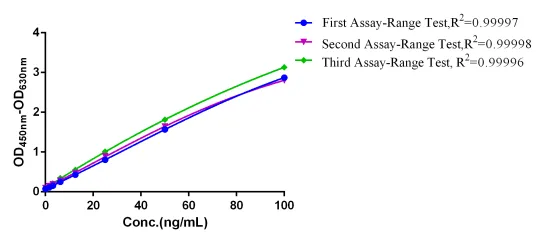
Figure 1 Test results of the detection range
Conclusion: In the three repeated experiments, the calibration curve R² of the four-parameter model fitting was ≥ 0.99, and the RE and CV at all concentration points were ≤ 15% (the highest and lowest concentration points were ≤ 20%). The detection range of this kit is 1.56-100 ng/mL.
2. Accuracy
Overview: Prepare calibration curves within the verified range. Set five quality control (QC) levels - ULOQ, high (H), medium (M), low (L), and LLOQ, and repeat the testing of each level three times.
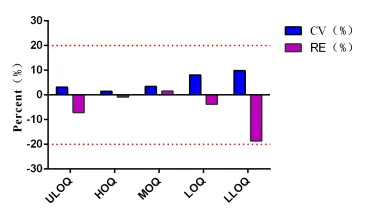
Figure 2 Accuracy test results
Conclusion: The CV and RE at each concentration point of ULOQ, high (H), medium (M), low (L), and LLOQ were all ≤20%.
3. Repeatability
Overview: Prepare calibration curves within the verified range. Prepare QC samples of high, medium and low levels, and conduct 8 parallel repeated tests for each level.
Table 1 Repeatability Test Results
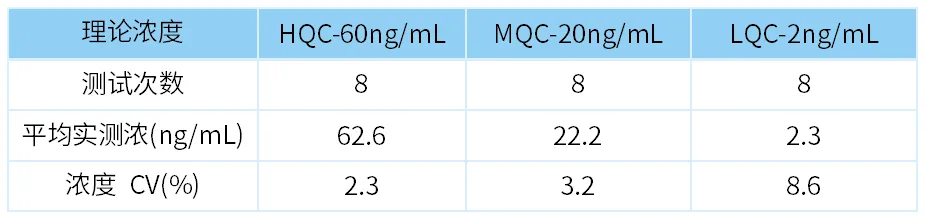
Conclusion: The CV at each concentration point is ≤20%, which meets the requirements.
4. Precision between people, during the day, between instruments, and between batches
Overview: Simultaneously prepare calibration curves and HQC, MQC, and LQC samples to test the precision among different analysts, different dates, different instruments, and different batches.
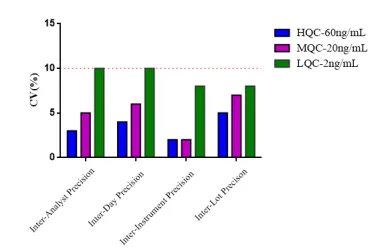
Figure 3 Precision test results
Conclusion: Among the five QC concentration levels used for accuracy assessment, all RE values are within 20%. The CV values of different analysts, different dates, different instruments and different batches are all below 20%, which meets the standards.
5. Specificity
Overview: Prepare calibration curves within the verified range while preparing potential interferers. Select the low (L) QC level as the final spiked concentration.
Table 2 Results of Specificity Tests
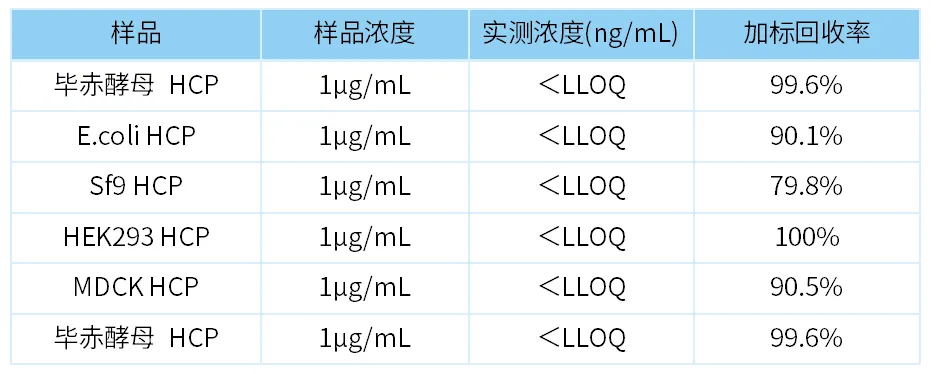
Conclusion: This kit has no cross-reaction with host cell proteins such as Pichia pastoris, Sf9, MDCK, E.coli or HEK293 at a concentration of 1 µg/mL, and the spiked recovery rate is within an acceptable range.