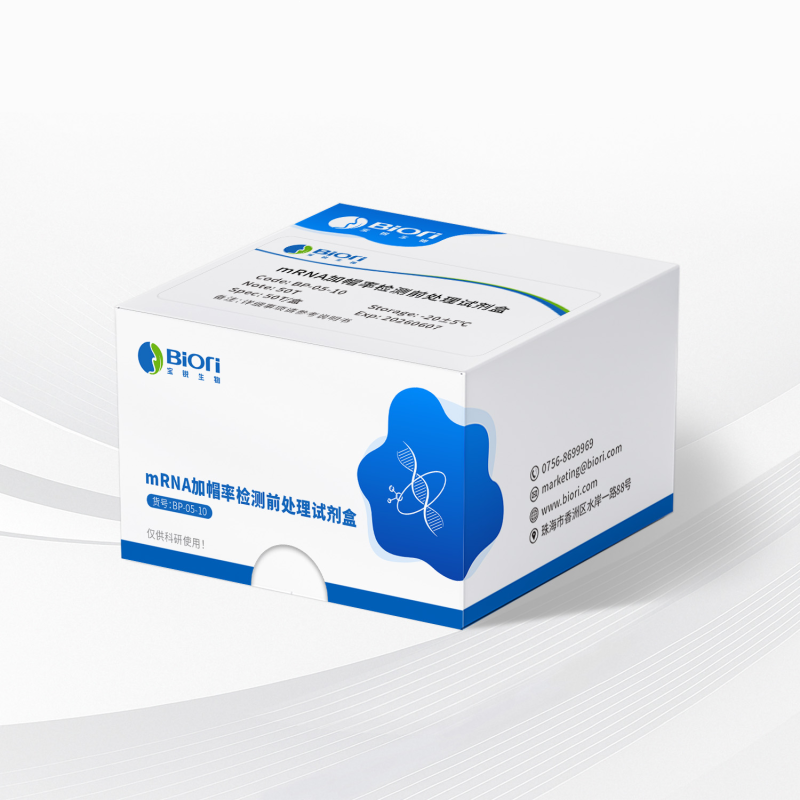
The capping rate is an important quality attribute indicator for various mRNA drugs, including mRNA vaccines, and it is a necessary verification data for the application of mRNA products. At present, the determination of capping rate is mainly carried out by liquid chromatography-mass spectrometry. There is a difference in molecular weight between capped mRNA and uncapped mRNA in the order of hundreds. Compared with the molecular weight of intact mRNA in the hundreds of thousands, it is difficult to precisely analyze the difference between capped and uncapped samples. Therefore, the analysis of the capping rate first requires processing long mRNA fragments into small ones, transforming the differences of the hundreds of thousands into those of the hundreds of thousands.


Product Name: Varicoxvirus Capping Enzyme Product Number: BP-E05
Product Name: dimethyltransferase Item Number: BP-E06
Product Name: mRNA Capping Kit Item Number: BP-04-50
1. Urea glue result graph
Description: After enzymatic digestion and recovery, validation was conducted using urea gel.
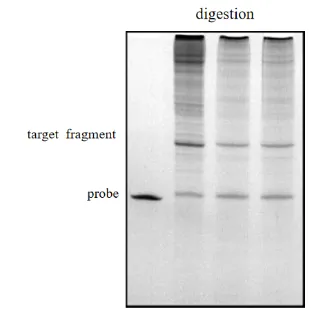
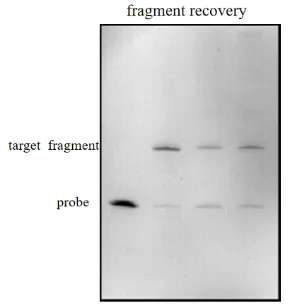
Figure 1: Electrophoresis images of urea gel after enzymatic hydrolysis (left) and recovery (right)
Conclusion: The fragments after impurity washing and recovery were detected by Urea-PAGE and it could be clearly seen that all fragments except the target band and the probe band had been washed clean. The presence of the probe in the sample will not affect the subsequent liquid chromatography-mass spectrometry (LC-MS) determination. On the contrary, the probe band with a known molecular weight can be used as a scale for subsequent determination.
2. The LC-MS result graph after detection pretreatment
Description: The result graph obtained after the pre-processing of the capping rate detection.
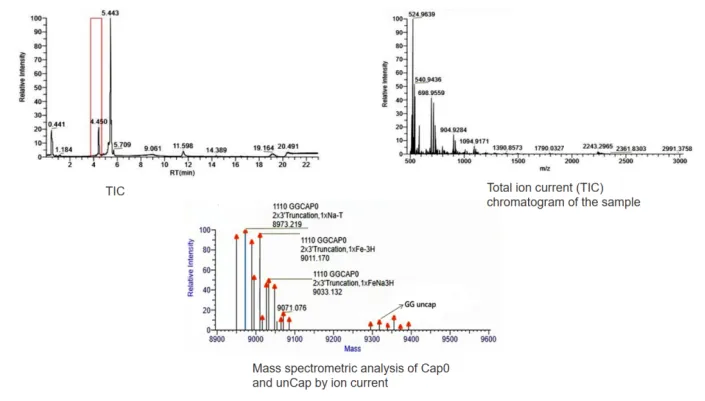
Figure 2: The on-machine result graph of the reagent kit after processing.
Conclusion: The instrument reading spectra of the samples processed by the capping efficiency detection pretreatment kit show a high response signal, and the target peak is single.
3. Precision test
Description: Synthesize two RNA segments that differ by one base as standards for uncap and cap.
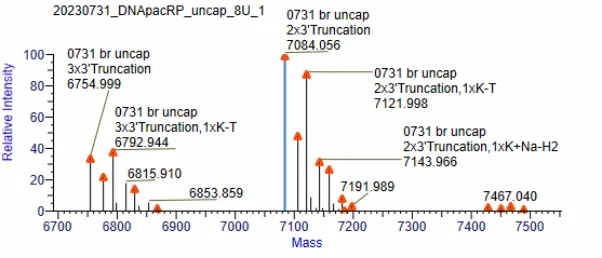
Figure 3 Results of uncapped RNA detection
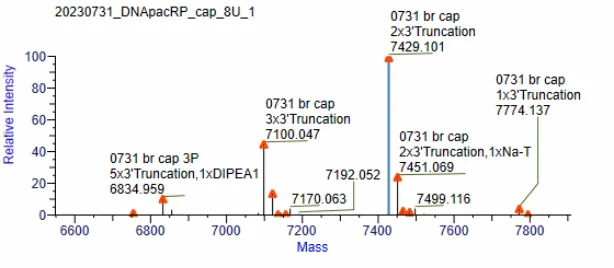
Figure 4 Results of capped RNA detection
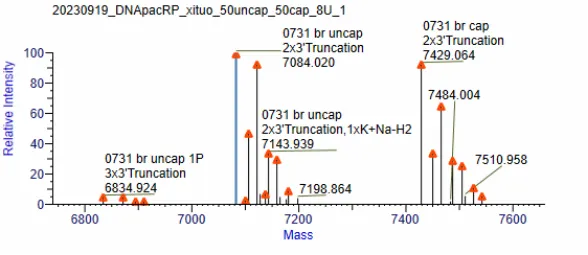

Figure 5 shows that 50% uncapped RNA is mixed with 50% capped RNA, and then the mixture is treated using this kit
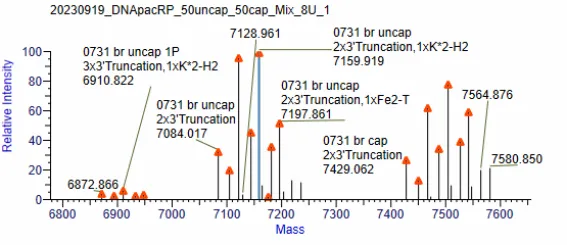
Figure 6 shows that 50% uncapped and 50% capped RNA were first treated with the kit and then mixed in a 1:1 ratio
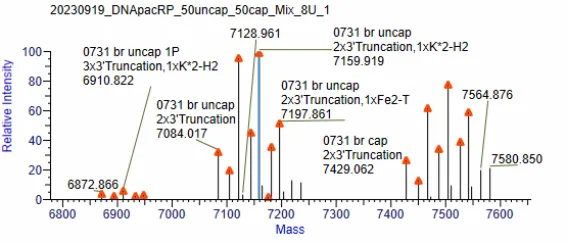
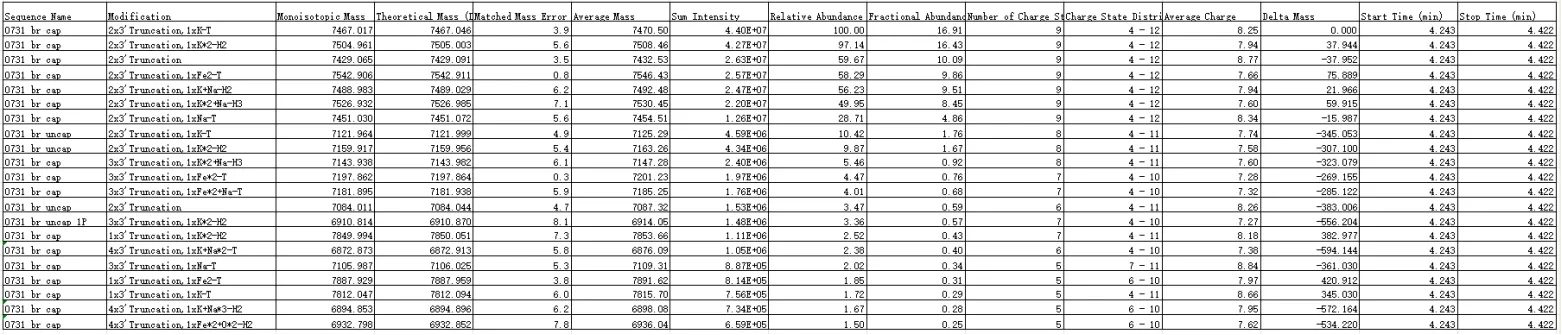
Figure 7 shows that 5% uncapped RNA was mixed with 95% capped RNA, and then the mixture was treated using this kit
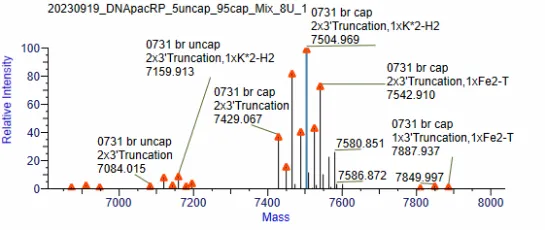
Figure 8 shows that 5% uncapped and 95% capped RNA were first treated with the kit and then mixed in a 1:1 ratio
Conclusion: The results of the capping rate test show that after the samples processed by this kit are placed on the machine, the difference coefficient between the capped and uncapped samples mixed in different proportions after processing and the actual feeding ratio is less than 5%, demonstrating that this kit has excellent accuracy and sensitivity.
4. Verification of the operability and repeatability of the reagent kit
Description: Different laboratory personnel process the same sample in accordance with the operation manual of the reagent kit.
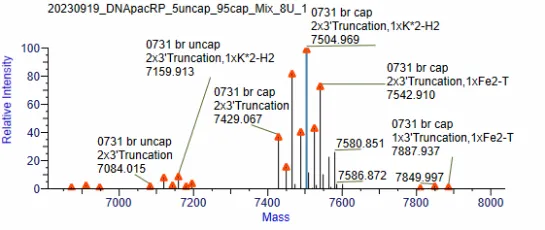
Figure 9 shows the LC-MS on-machine detection results of sample A after pretreatment in Experiment A
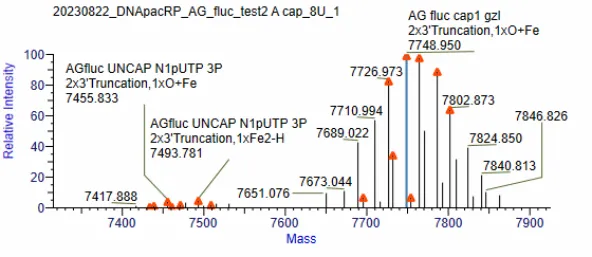
Figure 10 shows the LC-MS on-machine detection results of the sample of experimental subject B after pretreatment
Conclusion: When different laboratory personnel processed the same sample according to the kit operation manual, the on-machine test results were consistent, indicating that the Baorui capping rate detection pretreatment Kit is easy to operate and has good result reproducibility.
5. Verification of the applicability of the kit
Description: This kit can meet the capping rate requirements of capped samples prepared by different capping methods. Pretreatment: Samples prepared by enzymatic capping and co-transcription capping with different cap analogues, after pretreatment with this kit, can effectively detect uncap and CAP when tested on the machine.
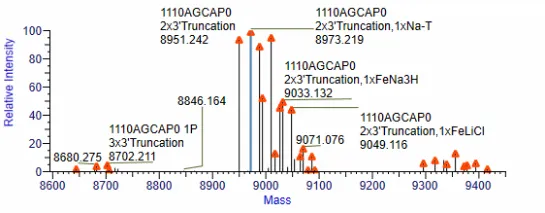
Figure 11 shows the LC-MS on-machine detection results of the samples before enzymatic capping
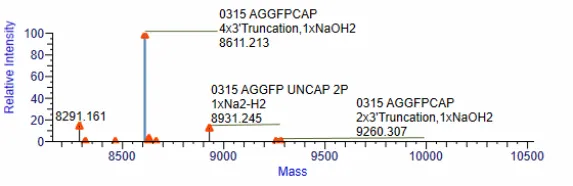
Figure 12 Results of LC-MS on-machine detection of co-transcription capping pretreatment samples
Conclusion: The results show that the Baorui capping rate detection pretreatment kit has good adaptability and can meet the requirements of samples with different capping methods and co-transcription of cap analogues.