The by-product dsRNA generated during the IVT reaction strongly stimulates RNA receptors within cells, triggering innate immune signals. BaoruirawThe T7 RNA Polymerase 3.0 independently developed and multi-stage purified has high transcriptional catalytic activity for different templates and different nucleic acid types. Compared with the common T7 RNA Polymerase, the content of the by-product dsRNA produced by transcription of T7 RNA Polymerase 3.0 was significantly reduced. T7 RNA Polymerase 3.0 can precisely recognize the T7 promoter region (5'-TAATACGACTCACTATAG-3') and, starting from G in this region, transcribed the subsequent DNA sequence into single-stranded RNA, using natural nucleotides or modified nucleotides as substrates. Through short-term in vitro transcription incubation, under an appropriate reaction buffer system, users can efficiently obtain a large amount of RNA products from DNA through this enzyme.

1. Effectively control the generation of dsRNA.
2. Wide transcriptional compatibility: Suitable for linearized templates of different lengths and transcriptions of various nucleotide types.
3. The integrity of the transcription samples is high.
4. Transcription is consistently efficient.
5. Strong transcriptional driving force: During the transcription process, it has an impact on Mg2 +Low dependence.
6. The product has good stability.

The solution is clear and transparent, with no visible foreign substances.
There is no activity of exonuclease or endonuclease.
Protein purity ≥95%.
No DNase or RNase activity.

——【GMP】
Product Name: T7 RNA Polymerase Product Number: BP-E01
Product Name: RNase Inhibitor Item Number: BP-E02
Product Name: Inorganic pyrophosphatase Item Number: BP-E03
Product Name: DNase Ⅰ Item Number: BP-E04
1. Detect the content of double-stranded RNA (dsRNA) in the transcription products
The dsRNA content in the transcription products was precisely quantified by ELISA, thereby verifying the regulatory ability of T7 RNA polymerase 3.0 GMP grade (low dsRNA) on dsRNA during the transcription process.
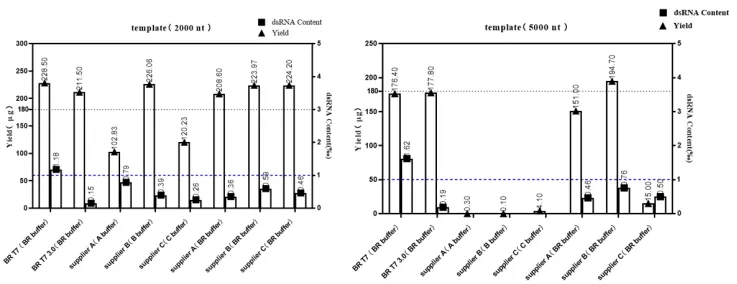
Figure 1 shows the dsRNA content results of T7 RNA polymerase transcription products provided by different suppliers (left: 2000 nt; Right: 5000 nt).
Conclusion: The analysis of double-stranded RNA content indicates that when transcribed linearized templates of different lengths, the content of double-stranded RNA produced by T7 RNA polymerase 3.0 is relatively low. Compared with the content of double-stranded RNA produced by wild-type T7 RNA polymerase, the level of double-stranded RNA produced by this enzyme was reduced by 7 to 8 times. Compared with T7 mutant products from other suppliers, this product has more advantages in controlling the generation of double-stranded RNA.
2. Template compatibility testing
Description: To verify the compatibility of T7 RNA polymerase 3.0 with templates of different lengths and nucleotide types during transcription.
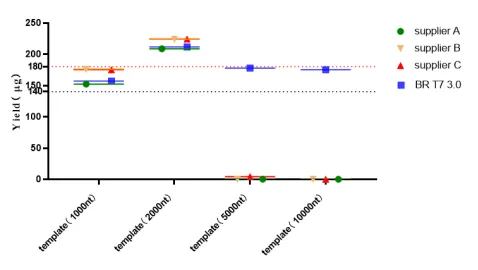
Figure 2 Transcriptional performance results of T7 RNA polymerase 3.0 in templates of different lengths
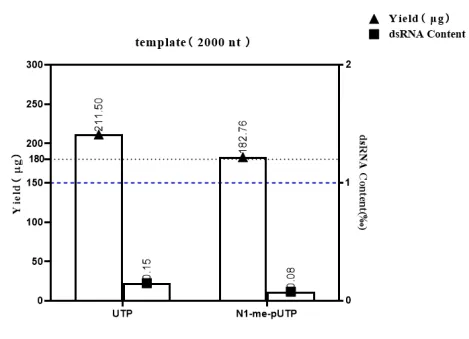
Figure 3 shows T7 RNA polymerase 3.0 used to evaluate the transcriptional performance of modified and unmodified mrnas
Conclusion: Yield analysis indicated that when using linearized templates of different lengths and nucleotide types for transcription, the transcript yield produced by T7 RNA polymerase 3.0 remained at a relatively high level.
3. Transcription product integrity detection
Description: The integrity of the transcription product of T7 RNA polymerase 3.0 was verified by capillary electrophoresis.
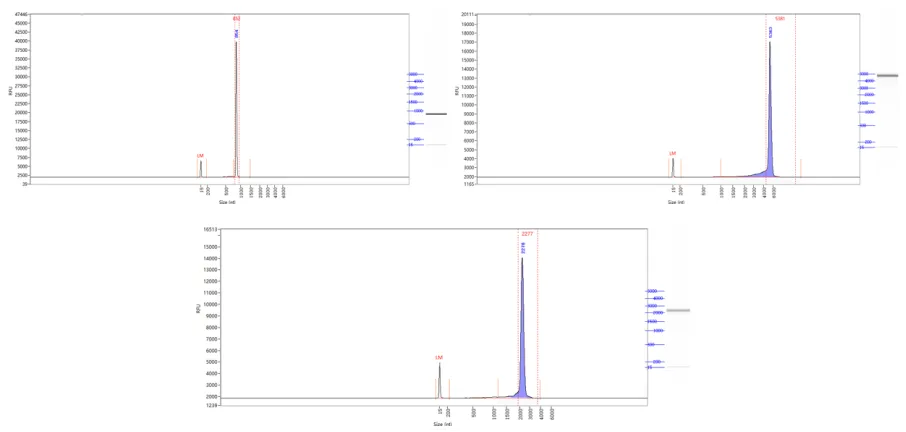
Figure 4 Capillary electrophoresis analysis results for detecting the integrity of mRNA samples (three different lengths)
Conclusion: Capillary electrophoresis data indicate that the transcription product of T7 RNA polymerase 3.0 has high integrity.
4. Enzyme activity curve
Description: To explore the transcriptional efficiency of T7 RNA polymerase 3.0 at different transcription time points.
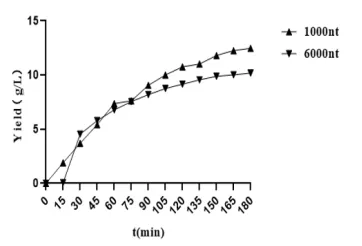
Figure 5 Results of the enzyme activity curve
Conclusion: When transcribing linearized templates of different lengths, T7 RNA polymerase 3.0 can maintain a consistently high transcription efficiency.
5. Transcriptional driving force verification test
Description: To verify the dependence of T7 RNA polymerase 3.0 on Mg²⁺ in the transcription reaction buffer during transcription.
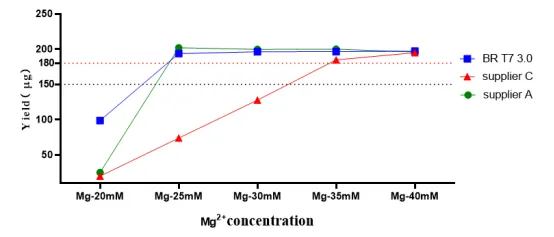
Figure 6 Mg²⁺ -dependent detection results of T7 RNA polymerase
Conclusion: The experimental results show that Biori T7 RNA polymerase 3.0 can still maintain a strong transcriptional driving ability at a relatively low working Mg²⁺ concentration (e.g., 20 mM), and its performance is superior to that of the T7 RNA polymerase provided by the supplier. This indicates that T7 RNA polymerase 3.0 has a relatively low dependence on Mg²⁺.
6. Stability test
Description: The stability of T7 RNA polymerase 3.0 was verified through in vitro transcription experiments after long-term storage at 37℃.
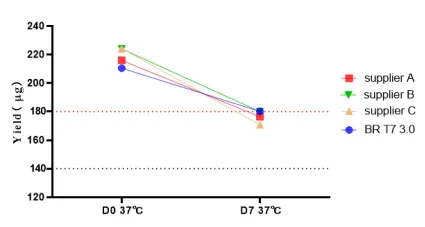
Figure 7 Transcription results of T7 RNA polymerase 3.0 after storage at 37℃
Conclusion: After 7 days of accelerated treatment at 37°C, T7 RNA polymerase 3.0 GMP grade (low double-stranded RNA) still maintained a high transcriptional yield.